
Eight Instances Where Jesus Stood up to Injustice, Exclusion and Inequality
And none of them involved holding the Torah in front of a Temple
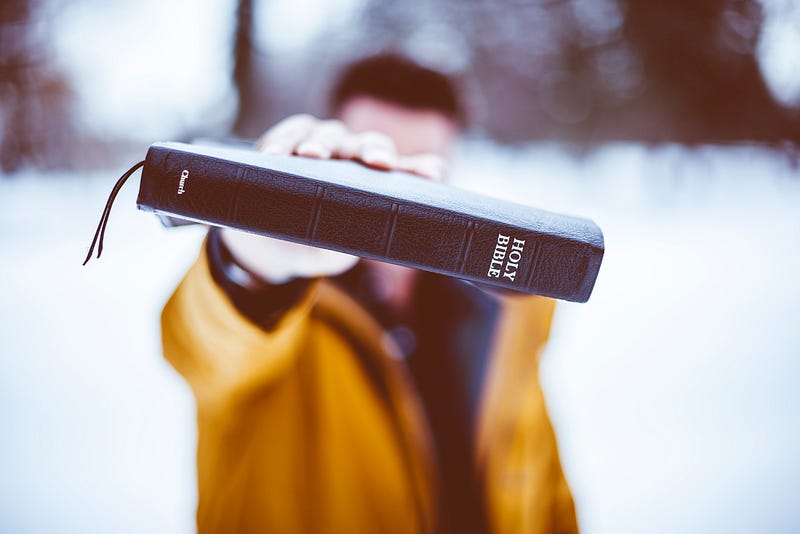
Yet again, faith has been weaponised as President Trump poses in front of the St John’s Episcopal Church in Washington DC; brandishing a Bible, the highest symbol of the Christian faith after delivering a message of dominance and clearing peaceful protesters off a public road. A couple of days later, the family of George Floyd found solace in a faith-filled memorial service filled with readings from the Bible.
Against this backdrop, the oppressor professing faith and the oppressed being comforted by faith, I was curious to explore what Jesus did when confronted with social issues.
First thing I discovered, Jesus was not a meek and mild ‘do-gooder’ coddled and cosseted by his disciples but a sun-burnt Middle Eastern carpenter turned itinerant preacher boldly pressing a message of truth and freedom. As an alternative leader, he encountered situations in which he had to tackle issues directly or air his opinion. Here are nine instances where he made his stance clear.
1. His first speech
The sermon on the mount was kind of an inauguration speech for Jesus and he used it to share his manifesto. In his speech, he sided with the poor, the mourners, the hungry, the merciful and extended his blessings to them. He drew a line in the sand with this speech, declaring the principles behind how he would apportion justice. Matthew 5–7
2. Healing the man with the withered hand
Jesus was in the synagogue on the sabbath, a day set apart for rest according to the law. He saw a man with a withered hand, and healed the man. In the eyes of the Pharisees, this was deemed work, so they confronted him, accusing him. Instead of backing down, Jesus retorted, challenging the injustice of leaving a man to suffer in the guise of upholding the law. Matthew 12:9–14
3. Judging a woman caught in adultery
The sentence had been passed on a woman caught in the very act of adultery. The scribes and pharisees brought her to Jesus, curious to see if he would uphold the judgment. She was guilty and her fate was to be stoned to death. Jesus ignored them and in his silence, gender-based discrimination was exposed. He challenged the sexism that was the order of the day and freed the woman from a horrible death. John 8:2–10
4. Going after the lost sheep
Inequality and discrimination were rife amongst the Pharisees and they were annoyed with Jesus for eating with sinners. In response to their attitude, Jesus responded, ‘Suppose one of you has a hundred sheep and loses one of them. Doesn’t he leave the ninety-nine in the open country and go after the lost sheep until he finds it?’ With this parable, Jesus recognized that all lives matter, but in the face of discrimination, he would focus on the life that was discriminated against. Luke 15:3–5
5. Responding to the faith of a Canaanite woman
In this story, Jesus’s disciples barred a woman from seeing Jesus. This blatant discrimination because she was from a different tribe. Jesus acknowledged the difference, but listened as she made her case, and despite the rules, he showed her mercy. His stance was clear, the tribal difference did not matter, who she was within was what mattered. Matthew 15:21–28
6. Reacting to children playing around
Social exclusion was a norm around Jesus, so the disciples thought they were doing Jesus a favour by telling off the children and driving them away from Jesus. ‘Hey, stop it’ he said, ‘let them come close, because they are the future owners of the kingdom.’ He was not going to accept anyone being excluded in his activities. Mark 10:12–14
7. He aligned with the hungry, poor and imprisoned
When Jesus was asked about those who showed an authentic faith. His answer embraced the down-trodden, the excluded, the oppressed and the poor. “Whatever you do to the poor, the hungry or the one in prison, you have done to me,” he said. Matthew 25:31–40
8. Chatting with the Samaritan woman
In speaking with a Samaritan woman at the well, and asking her for a drink, he addressed the tackled prejudice, sexism, and racism prevalent in his time. So much so that his own disciples saw him and marvelled. (They were shocked). John 4:8–26
What Would Jesus Do?
The evidence from the Bible is so clear, that even a child could predict how Jesus would react in situations of injustice, exclusion and inequality.
He embraced the poor and needy
He touched lepers
He chatted openly with women
He refused to condemn sinners
He stood against tribalism, racism, sexism, oppression and injustice. He did not carry the book of the law, it was in his heart. In this story, I set out to explore where Jesus belonged.
In a book, held high and lifted up by the President in a photo for all the world to see, or in a church with people gathered sorrowing over a man who died an unjust death.
I am pretty sure where he would be, are you?