
Eight Great Reasons To Raise A Child In Spain
Why did I take my Cuban family there and not my English homeland?
My husband, four-year-old daughter, and I left Cuba in 2021 after the economic situation got too much to bear. My husband is Cuban and I grew up in Britain but I have a Netherlands passport too, so moving to Europe post-Brexit was an option for us.
We wanted a Spanish-speaking place where family matters, where life was relatively cheap, and the weather was better than in the UK. So we chose Spain.
Here are some other reasons -
1. Free early years education
Spanish public schooling is free for children from three to 18 years of age.
Most families take advantage of this. Even though Spain’s compulsory education doesn’t start until the age of six, the OECD reported in 2017 that 95% of three-year-olds and 97% of 4-year-olds were in school.
In the UK, childcare is expensive, with only 15 hours provided free at ages three and four, and was one reason we chose not to move back there from Cuba.
After 18 months of lockdown in Cuba, where nursery/kindergarten was also free if only it had been open, Loren was desperate to go to school and make friends. I wanted to go wherever we could give her that.
Spain offers public kindergarten, private schooling, and a government-subsidized option called ‘concertada.’ All public schools in the Basque country teach primarily in the Basque language, while the few ‘concertada’ schools teach in Spanish and English too. We chose one of the latter, which costs us 25 euros a month fees plus lunches (we could feed her at home during her two-hour lunch break, but we don’t live nearby).
Her lunches sound better than mine. On the menu this week were -
- MONDAY: carrot puree, chicken escalope with oriental vegetables in sweet and sour sauce, fruit and bread
- TUESDAY: beans, fish in tomato sauce with salad, yogurt, and bread.
2. Playparks everywhere!
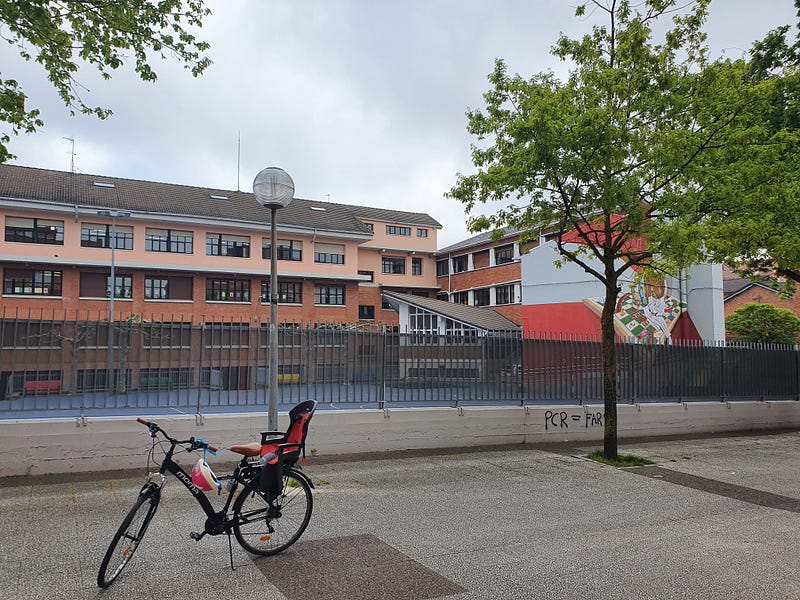
In Cuba, safe, well-maintained playparks were hard to find. Landing back in the UK was a joy as we could take Loren to a different one every day. Even so, you often find yourself in a park within a park, with other parents for company, while child-free people hang out somewhere else.
In Spain, play areas are on every plaza, every few streets, and anywhere people might walk. It’s like children are an integral part of society! Oh wait, they are…
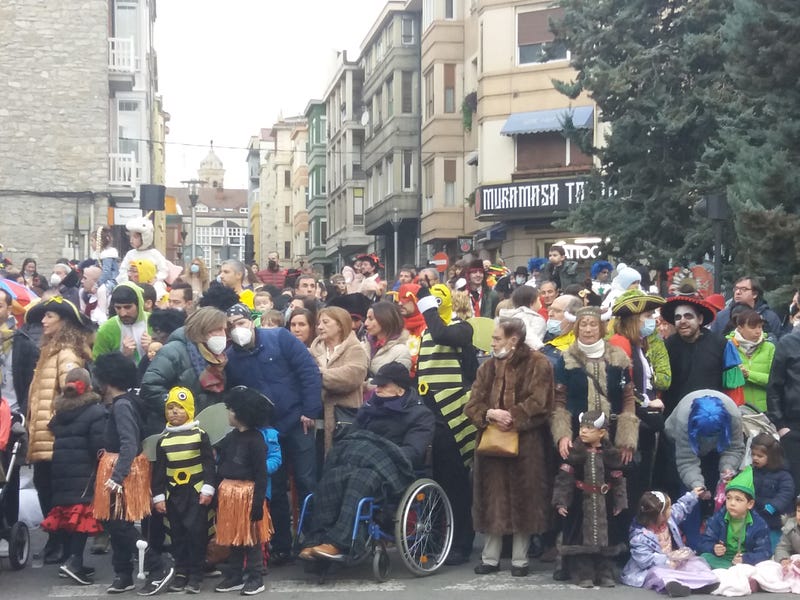
Parents sit with all generations of family, friends, and other families, enjoying a nice drink and tapas, watching as their offspring play happily and raucously in the plaza some meters away. You don’t see much helicopter parenting here.
3. Kids can go where you go
No one frowns when you take your kids inside a bar or have them out with you at 10 pm at night. I don’t want to do that all the time (my British side still can’t be OK with such, well, relaxed parenting), but it works well for me that I can.
Recently, for example, my husband had a gig with his Cuban band in a central bar, and they started playing at 8 pm on a Saturday. So we all headed down early, did some shopping, got in a couple of beers, and went to his gig.
Loren and I enjoyed dancing with the small crowd. She loves feeling part of it all. We got her a snack dinner of croquettes from the bar (lunch is the main meal of the day here), and she and I headed home on the bus before dark.
4. Free healthcare
Spain has a high-quality healthcare system, guaranteeing universal coverage for all residents.
Private healthcare is also available at a decent price. It allows you direct access to health specialists without having to go through your doctor. We might take it up at some point, but we’ve been happy with state-provided services thus far.
One negative is that items such as Ibuprofen and other basic medicines are only available in pharmacies and are not cheap unless you come with a doctor’s prescription.
Many medicines can be bought over the counter almost anywhere in the UK at a very good price. In Cuba, medicines of all kinds were in dire shortage by the time we left. What we did buy, we often got on the black market, or we stocked up whenever we left the island.
5. Spanish food is good!
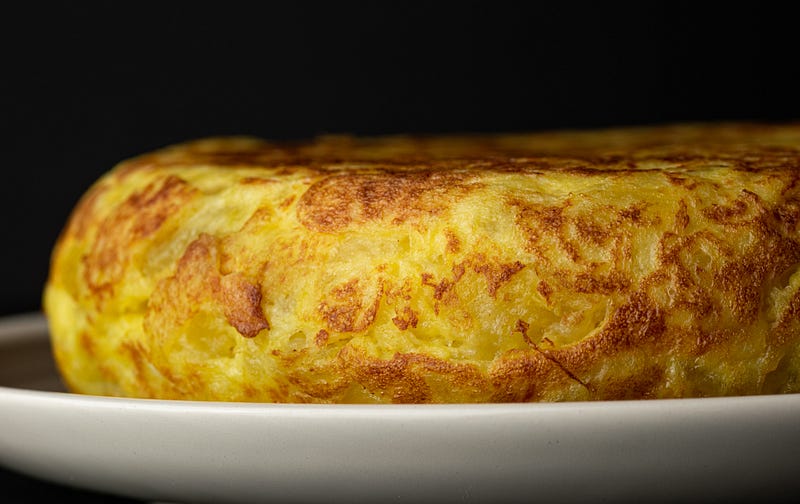
You can find foods bursting with flavor or simple and well suited to children’s under-developed taste buds. So your kids can enjoy the food while you do too! Many restaurants don’t have specific children’s menus, but as tapas are widely available across the country, some kind of snack is always available to keep a child’s hunger at bay — croquettes, Spanish omelets, mini hamburgers.
The Basque Country, where we live, is famous for ‘pintxos,’ more complex than simple tapas, like finger food made of a combination of multiple ingredients together, often on bread. We’ve been able to get our daughter to try all kinds of new flavors and textures, things we only dreamt of in Cuba.
6. An outdoor and open life
Loren spent her first three years in a country where life is lived on the street. In Cuba, there are no closed doors, sometimes because there aren’t actually doors, but rather sheets acting as curtains. Privacy is limited, and family is always welcome. The heat drives people outside, the Malecon of Havana being a favorite place to refresh and hang out.
While Spanish Basque Country does not have the climate of Cuba, it is still somewhere where life is lived as much as possible outside.
Loren does like using my tablet, that’s for sure, but she doesn’t need coaxing outside in the way some British kids I know do. The social life here is more attractive in her eyes than anything a screen can provide, at least thus far.
7. You’ll never run out of places to go and things to do
Spain is a country with such diverse geography, culture, language, and climate. You could spend a lifetime seeing it all.
The country is filled with active things to do with children. Kids can explore everything from castles and beaches in a culture that warmly embraces them, making it a superb place to visit or to live. The country is big, but there are good public transport options, as well as a great road network to explore in every direction.
8. It’s safe
I feel as safe here as I did in Cuba, which surprises many Americans who have been told so many times of the ‘dangers’ of Cuba. In the nearly ten years I lived in Havana, I knew very few people who had been affected by crime.
According to the OECD Better Life Index, Spain has a homicide rate of 0.6 murders per 100,000 inhabitants, compared to 6 per 100,000 in the US, for example, and much lower than the OECD average of 2.6 per 100,000O.
OECD figures also show that 83% of Spanish residents say they feel safe walking alone at night, compared to the OECD average of 69%.
The level of aggression on the street also feels much less to me than in England, for example. It’s rare to see gangs of teenagers appearing menacing or threatening, probably the result of such strong inter-generational relations.
The Saturday-night or after-football scenes you see in the UK, and some other countries just don’t happen here.
Time will tell whether we’ll stay forever in Spain. The last few years have shown us how uncertain the future can be and hard to plan.
For now, though, by moving to Spain, we’ve followed in the footsteps of 413,000 foreigners who arrived in the year 2020, for example.
By 2021, the population of Spain was 47.4 million people, including 5.4 million people with a non-Spanish nationality.
5.4 million people can’t be wrong.
Thanks for reading.
If you’d like to read some of my other stories, plus thousands of others on Medium, why not subscribe? Part of your subscription will help writers on Medium.
Just hit the link: https://juliegilders.medium.com/membership
Gracias!