
Eight Disturbing Facts About the Auschwitz Nazi Concentration Camp
Evil of Enormous Proportions — The Case of Auschwitz
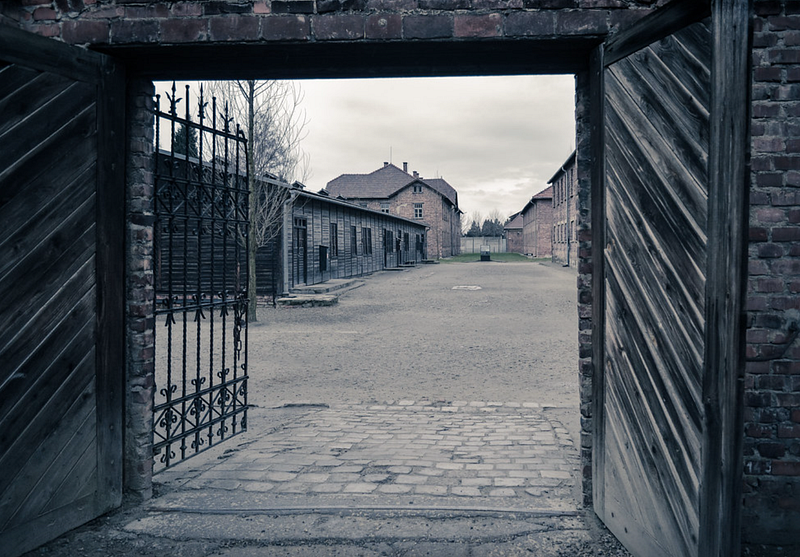
In 1940, at the height of Nazi barbarism, Auschwitz-Birkenau was built 37 miles west of Krakov, Poland. In a mere four and a half years, one-third of the entire Jewish population had been decimated — at least 1 million were massacred at Auschwitz. This infamous murder site was developed until it became the largest and arguably the cruelest — demonstrating the savagery of the Nazis in full display.
Jewish populations from all across Europe were systematically targeted and dragged to the site, where they were divided into groups — those who would be incinerated in gas chambers instantly and those who would live through the misfortune of forced labor.
Although we’ve become aware of the horrifying methods used by the Nazis, such as gassing victims to death, there is a surprising amount of grotesque information surrounding Auschwitz, of which little is widely known.
1. Orchestras and the March to Death
Yes, Nazi soldiers indeed were that sadistic. During World War Two specifically, a tradition was formed — a select number of Jewish performers were selected to form orchestras, which played popular German songs of the time. Not only would this be a source of entertainment for SS soldiers and guards, but it also doubled as a fantastic strategy for leading unsuspecting prisoners to their deaths in the gas chambers.
Jews who had been displaced from their homes and thrown into this new nightmare reality were to be given the perception that Auschwitz was not as dangerous as it seemed or that the stories they had heard were exaggeratedly untrue. All official events, daily calls to work, and new trains packed with future victims would be serenaded with music — a pretense of normalcy, even safety.
Auschwitz/Birkenau was unique in so far as having six different orchestras in one camp, where musicians were forced to play while watching their friends, family, community — even little children — march to their death. That is perhaps why the suicide rate of musicians was highest at this site compared to all others. They had to work with the constant threat of death hanging all around them and over them, every day — at the behest of just another sick SS soldier having a lousy day or deciding their time had come.
Fania Fenelon, a member of the women’s orchestra at Auschwitz, described it as having “clean clothes, daily showers, and a reasonable food supply..” while playing light-hearted, cheerful music to the marching of thousands of people to the gas chambers and crematoria.
2. Irma Grese — The Hyena of Auschwitz
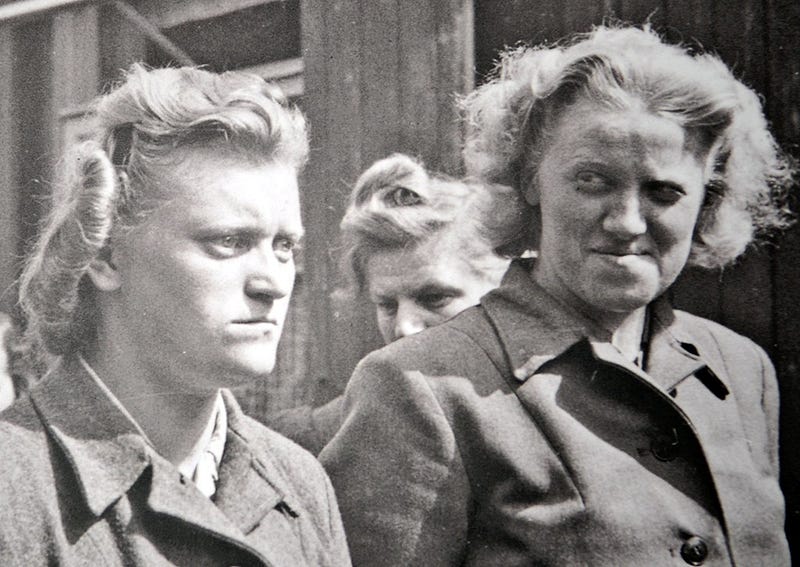
Perhaps it does not come to mind directly that SS soldiers included women as well, but what’s striking is that some of the cruelest SS soldiers were women. Known by the prisoners as the Hyena of Auschwitz, Irma Grese was an officer who put all her colleagues to shame when it came to the sheer wickedness toward prisoners.
In 1943, she rose to the rank of Senior SS Supervisor, the second-highest position a female officer could attain at the time — and had massive control and overseeing of nearly 30,000 Jewish women.
Quickly, she became known for carrying a whip and pistol while always wearing heavy boots and was notorious for beating women to death on any given day. She was also later found to have used the skin of some victims as lamp shades in her hut!
One female inmate doctor, Giselle Perl, spoke of Grese as,
“one of the most beautiful women I have ever seen… And yet Irma Grese was the most depraved, cruel, imaginative pervert I ever encountered.”
As a woman who had grown up breathing the ideological air of Nazism, voluntarily joined the Bund Deutscher Mädel (League of German Girls) during her teens, and had worked in Ravensbrück(a female-only concentration camp) in earlier years — Irma Grese proudly defended her beliefs until she was executed in 1945.
3. Sex for Survival? Camp Brothels
Although the physical atrocities are widely known, the systemic sexual abuse at the hands of the Nazis is lesser spoken of. By 1942, SS commanders decided that as an added incentive for workers, sex would be given as a “reward.”
Jewish and Soviet prisoners were never involved in these cases. Still, it was up to the SS soldiers to select whomever they wanted. Thousands of ethnic poles, Romani’s, and those considered “undesirable” — homosexuals, physically disabled, or even deemed that way just per the Aryan standard — were victims to these brothels in which they had to perform, under false pretenses and promises of their lives being spared, or eventually being freed.
Those forced to be prostitutes were young women in their 20s who had to service prisoners every evening between 8 and 10 p.m. What’s even more nauseating is that SS soldiers actually “supervised” the act as it happened — they would watch through peepholes and strict guidelines of 15 minutes were to be followed.
Nearly 200 women were forced into brothels such as these, reinforcing Nazi terror. Auschwitz stands unique again in having the two Doll Houses(as they came to be known), where the terrifying SS doctor Siegfried Schwela ensured that the women were sterilized, and race laws in the brothels were upheld.
The women could not be Jewish, as that would contradict the entire Nazi ideology and bring severe solicitous and shame upon their prided concentration camps — but they were undoubtedly abused and tormented.
4. Human Flesh? Science Experiments
The Nazis were known for conducting cruel scientific experiments on prisoners, but they took this to another level at Auschwitz. Josef Mengele, an SS doctor, was called the “Angel of Death” by prisoners who had studied at the Frankfurt I storied for Hereditary Biology and Racial Hygiene — a Nazi institute reinforcing their ideology about race.
At Auschwitz, Mengele set up an intricate and complex research structure — prisoners’ fates would literally be decided by his voice telling either “Right!” or “Left!” as he was given complete autonomy to choose prisoners to experiment upon.
Under the pretense of medical treatment for already terrified prisoners — he conducted some of the worst experiments imaginable on the human body.
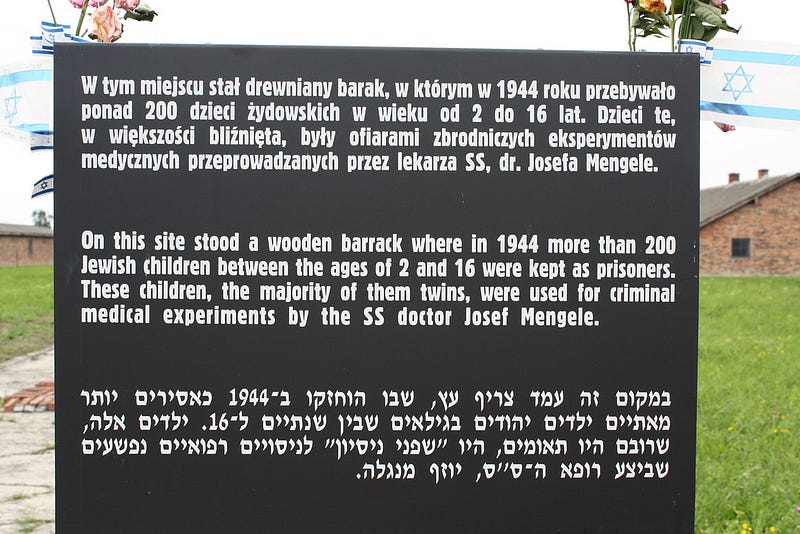
Injecting everything from chloroform to petrol inside “test subjects” — what is particularly repulsive about his actions is his persistent obsession with experimentation on twins. They provided to be excellent research subjects as they shared genetics — and also furthered the Nazi ideology that selective breeding could wipe out all they considered unacceptable or undesirable in society.
Massive selections took place where up to 3000 children were abused by Mengele. Injections of everything from petrol to chloroform, forced amputations and inseminations, plucking out eyes — only 200 of the 3000 twins at Auschwitz survived.
The Eugenics-based research ideas he helped make famous were so dangerous that they shook the scientific world to its core years after the end of WW2 and the end of Auschwitz.
5. The Bottom of the Barrel — Sonderkommandos
The Nazis ensured that agency was stripped from all prisoners in one way or the other — being gassed to death was undoubtedly a terrible fate but what was arguably worse was the job of leading others to such a fate.
Translating to “special detachments,” — a select group of Jewish prisoners (700–1000 of whom were active at any given time at Auschwitz) were kept alive, with a catch. They had to aid the Germans in the murder of other prisoners — other Jews.
Having no valid choice available to them, they were assigned all tasks related to the “extermination” of other prisoners — cutting the hair of female prisoners walking to be gassed, removing gold teeth and jewelry off corpses, and disposal of the bodies or whatever was left of them — which could mean upto 6000 bodies in a single day at the peak of Auschwitz’s running.
Although they were promised safety and special treatment for the profoundly inhumane work they were tasked with, they were also the ones the SS made sure to dispose of after a few months and replace. This was because they were the only direct and present witnesses to the extent of Nazi persecution.
Unsurprisingly, this group of prisoners also led a revolt against the SS in 1944, where one of the crematoriums exploded, and many nazi murderers were blown apart!
6. The Canada of Auschwitz
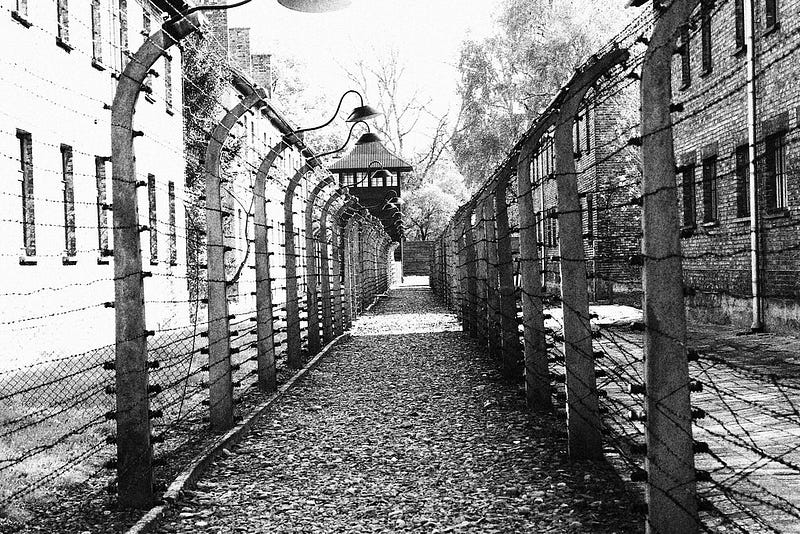
How did Canada end up in Auschwitz? Storage warehouses, where prisoners’ belongings were gathered to be sorted and shipped back to Germany, became known as the land of the plenty, often referred to as “Kanada.” This was a long-term tactic the Nazis used.
Jews were told to bring along their belongings when they would be dragged onto trains under the guise of “relocation” — all of which were taken off their person the moment unloading began. Their belongings became more valuable than their lives, in essence, as soon as they had the misfortune of stepping through the gates of Auschwitz.
Among the items discovered after liberation were nearly 8 tonnes of human hair — 400,000 men’s clothes and almost 840,000 women’s dresses — demonstrating just the scale of loss that had occurred. This was not a loss to the Nazis, who even sent a special SS Lieutenant to Auschwitz in 1943 to investigate possible theft in Kanada.
In reality, many prisoners preferred working there as it allowed them crumbs of liberty greater than elsewhere, such as growing out their hair or stealing extra food for their families. But the fact that the Nazis would profit so readily and heftily after mass murder is what stands out to be genuinely petrifying.
It’s estimated the Nazis obtained nearly 60 million Reichmarks, close to 125 million pounds today, from the slave labor and belongings of those at Auschwitz alone.
7. 144 — No Escape
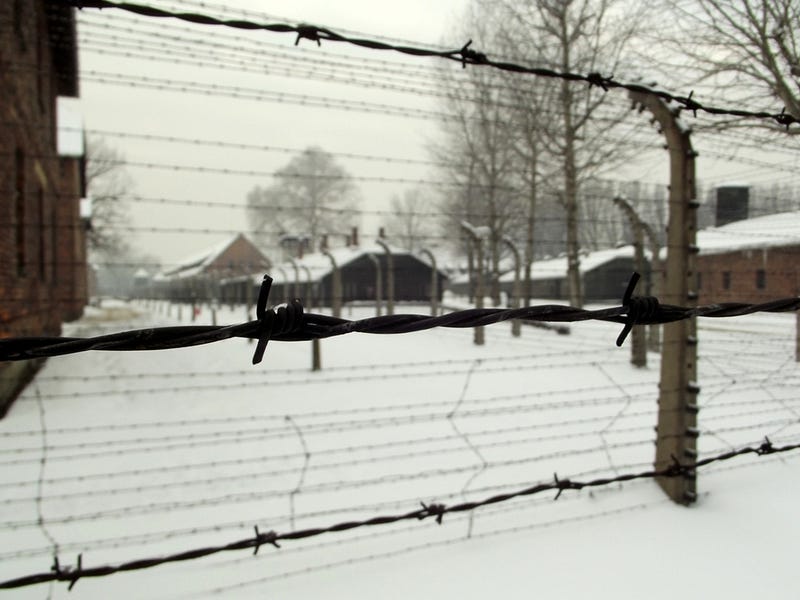
The Nazi regime had ensured that the option of escaping Auschwitz was considered impossible for prisoners through merciless indoctrination but also through physical restraint.
Guards were ordered to shoot on sight, so many became victims to machine guns and rifles even if they attempted to run away. Electrically charged barbed-wire fences prevented already malnourished and weakened prisoners from leaving, and constant surveillance was the default.
Of the 1.1 million that were enslaved there, only 144 were able to successfully escape Auschwitz — although it is historically recorded that hundreds of others died trying.
In 1944, against the direct orders of Adolf Hitler, one of the architects of Auschwitz- Heinrich Himmler — issued an order to destroy the gas chambers. Nearly 60,000 prisoners were taken on the infamous “death march,” — where they were led through southern Poland on their way to Germany.
Prisoners who were already at their end — those who could barely stand upright, never mind trek across rough fields — were brutally shot on sight, while nearly 7000 prisoners were left at Auschwitz altogether.
Not only was the SS attempting to destroy all evidence of their crimes as it was becoming clear that they would not come out on the winning side — many Nazis still believed that the remaining prisoners could be used as forced laborers for the Third Reich and its continued supremacy.
8. The Final Solution
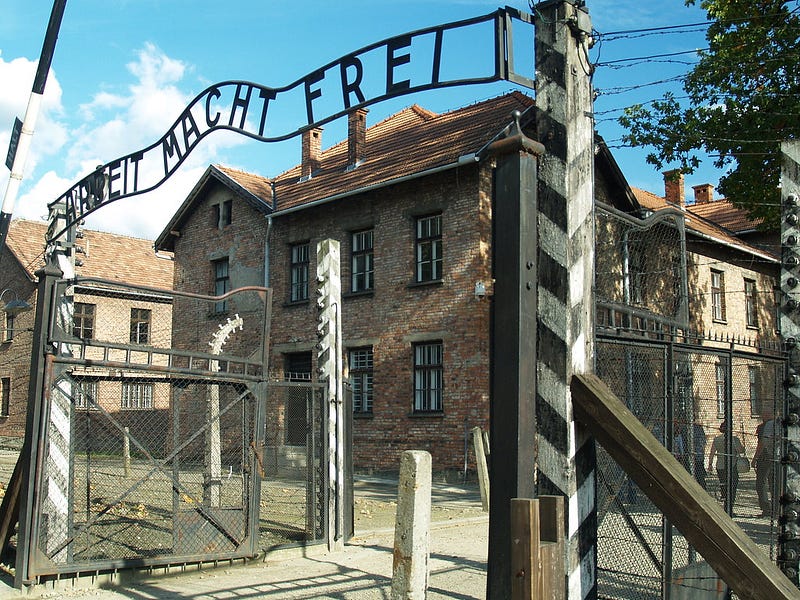
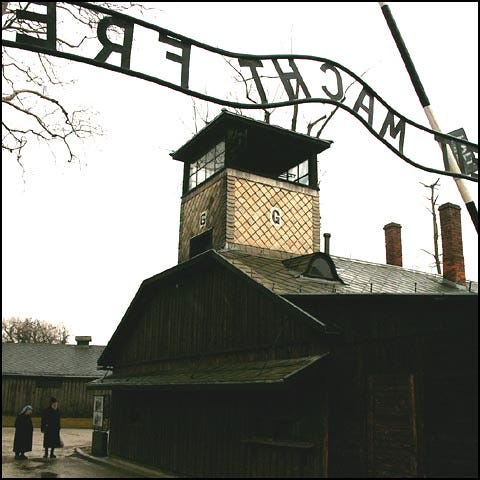
What perhaps makes Auschwitz stand out as the primary center for Nazi cruelty is that it was part of what they called the “Final solution” — a plan to exterminate every Jew off the face of the planet. They purposefully gave it a neutral name, and the gates of it clearly stated,
“ARBEIT MACHT FRE!” (Work sets you free)”
This was to make it appear like a working site only. Gassing victims would be told to undress simply for disinfection and tricked into entering gas chambers from where their screams could not be heard. The Nazis were playing an excellent game of disguise — from the beginning of slowly stripping away fundamental rights to putting people on trains in the name of relocation and landing them exactly where it was planned — Auschwitz.
According to K.Tzetnik, a survivor, this gave rise to, “another planet…a place that functioned on different, unknown principles,” and by the time the rest of the world caught up to this newly fabricated and bewildered cruel reality, the loss had already become unfathomable.
Auschwitz was liberated in 1945, but it ended up being the largest concentration camp for those murdered — of the 1.3 million that were deported there, 1.1 were Jewish, and at least 1 million died there. They essentially had created a “factory of death” for the first time in history, along with a slave labor system that ensured them continuous profit — all while hiding it effectively for years.
Auschwitz stands out in Holocaust remembrance precisely because it digs deep at how necessary it is to remember the past and ensure it never needs to be lived by a human being again.
References
https://www.jewishvirtuallibrary.org/ten-facts-about-auschwitz
https://www.bbc.com/news/world-europe-50743973https://www.history.com/news/nazi-twin-experiments-mengele-eugenics


