
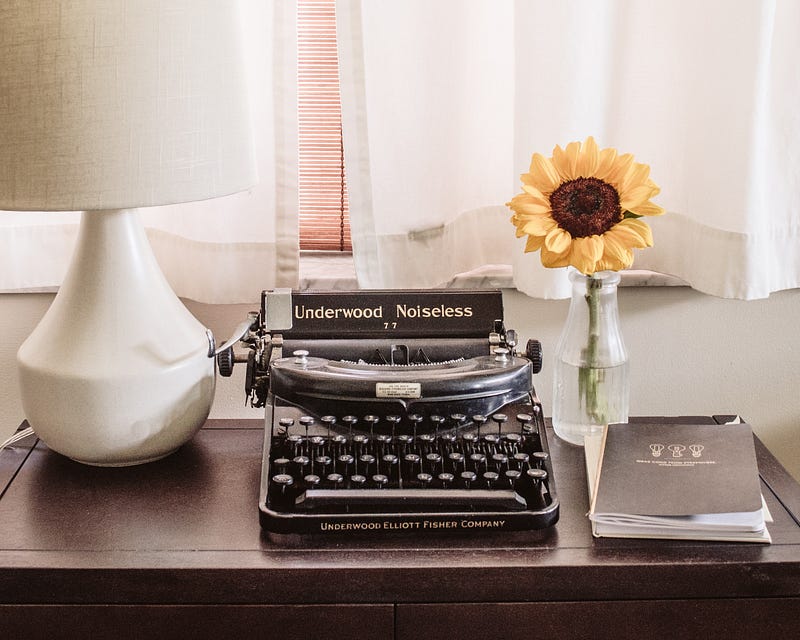
Effective Tools For Writers On Medium
For us, writing is not just a skill. It’s a way of life.
I discovered I can write on Medium in November 2019. I have no website, no blog, and I thought this might be good to try.
I was drawn into it by the quality of articles, credibility of Medium as a writing platform. It’s clean and ad-free! I can just read here all day, no problem. Just like a recruiter looking at a candidate’s social media pages for more juice, I googled Medium to see what writers have to say about it.
To be 100% transparent, my main intention in being here is to see if I can earn a six-figure income. That’s what the top writers said! And I found that it’s true. I earned $12 in December 2019. The zeros are missing. Then I started getting into the works of other writers, engaged with the writing community on Facebook and Twitter.
People are here to write.
Writing is self-expression. It’s an art, a skill we develop and master. Anne Lamott, author of the book Bird By Bird says that ‘writing motivates you to look closely at life as it lurched by and tramps around.’
It makes us look at life with awe and wonder, every single day. But it’s not all wonder and joy.
It’s also a business. You put out an idea, turn it into a product (that’s your content), the more people buy or read your product, the more money you get. So this needs organization and planning.
Here are the tools that make organizing and planning easier for me:
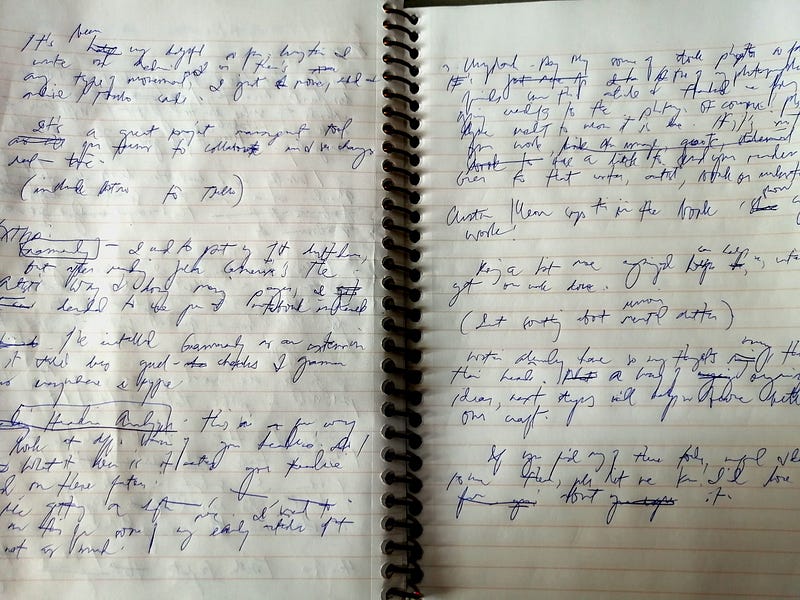
Notebook. I wrote about using the Morning Pages as a way to creative recovery. Because of that, my first drafts are now written in longhand. The reason is simple: it feels good! After rewriting my first draft, still, by pen & notebook, I transfer my article into Medium as a new story.
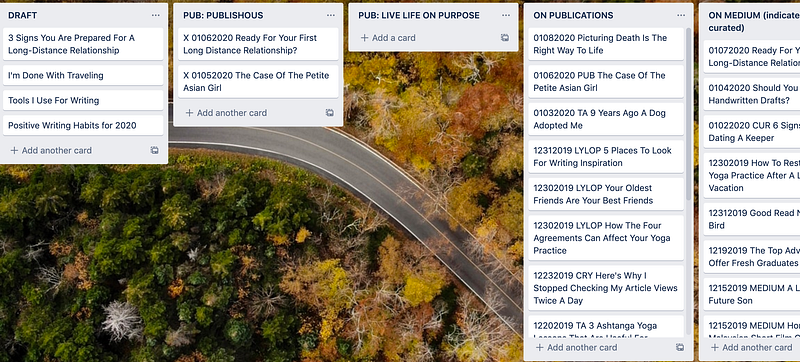
Trello. This is a great tool for project managers, sales teams working on a campaign, developers building websites, etc. Trello is ‘a collaboration tool that organizes your projects into boards. In one glance, Trello tells you what’s being worked on, who’s working on what, and where something is in a process.’
Using this tool, I track where the articles are (draft, submitted, or published?), whether they’ve been rejected once or twice (this article got rejected by PS I Love You, so I published it on my page and it became quite a popular read), and the number of published articles I have.
Here’s a snapshot of how my Trello board looks like:
Grammarly. This is a life-saver. It checks grammar, word count, spelling — things that we sometimes miss because we enjoy writing too much. Grammarly can be installed as an extension in Chrome and can be downloaded in Mac OS and Microsoft.
Unsplash. All the photos you see on my articles are from this website. Remember to always give credit to the photographer. There’s no reason not to. Austin Kleon, in his book Show Your Work, calls this as showing attribution. He told his readers to
Give credit. Show attribution by giving shoutouts to the people who helped you stumble into good work!
Headline Analyzer by Coschedule. This is a fun way of seeing how a bot decides whether your headline is good or not. You just need to type your headline or title idea, click Analyze Now and see how it scored. I don’t use this for all my articles. I gathered that whatever title that I can think of, works, as long as it’s 1) not boring and 2) intimately tied to the body of my article.
From William Zinsser, author of On Writing Well, said
Writing is a powerful search mechanism and one of its satisfactions is to come to terms with your life narrative. Another is to work through some of life’s hardest knocks — loss, grief, illness, addiction, disappointments, failure, and to find understanding and solace.
Being a bit more organized can help us, writers, to do the work we love. Stephen King, in his book On Writing, said this simple statement, ‘if you want to be a writer, read a lot and write a lot.’ If we want to write a lot, let’s do ourselves a favor by getting rid of mental clutter.
We already have too many thoughts running through our heads. Finding a way of organizing and planning in a way that works us, fits our lifestyle will help us get better in our craft.
If you enjoyed this article, you might like these articles on writing too:
Odyssa writes, practices Ashtanga yoga, and works remotely.
Follow her tweets here. Subscribe to her weekly letters to hear her thoughts on Ashtanga yoga, shifting from the office desk to remote work, writing (of course) plus bits and pieces of her personal life.


