Past Is Prologue
The Art of Reclaiming Your Roots
A conversation on migration, lineage, and family with Morgan Jerkins, author of ‘Wandering in Strange Lands’
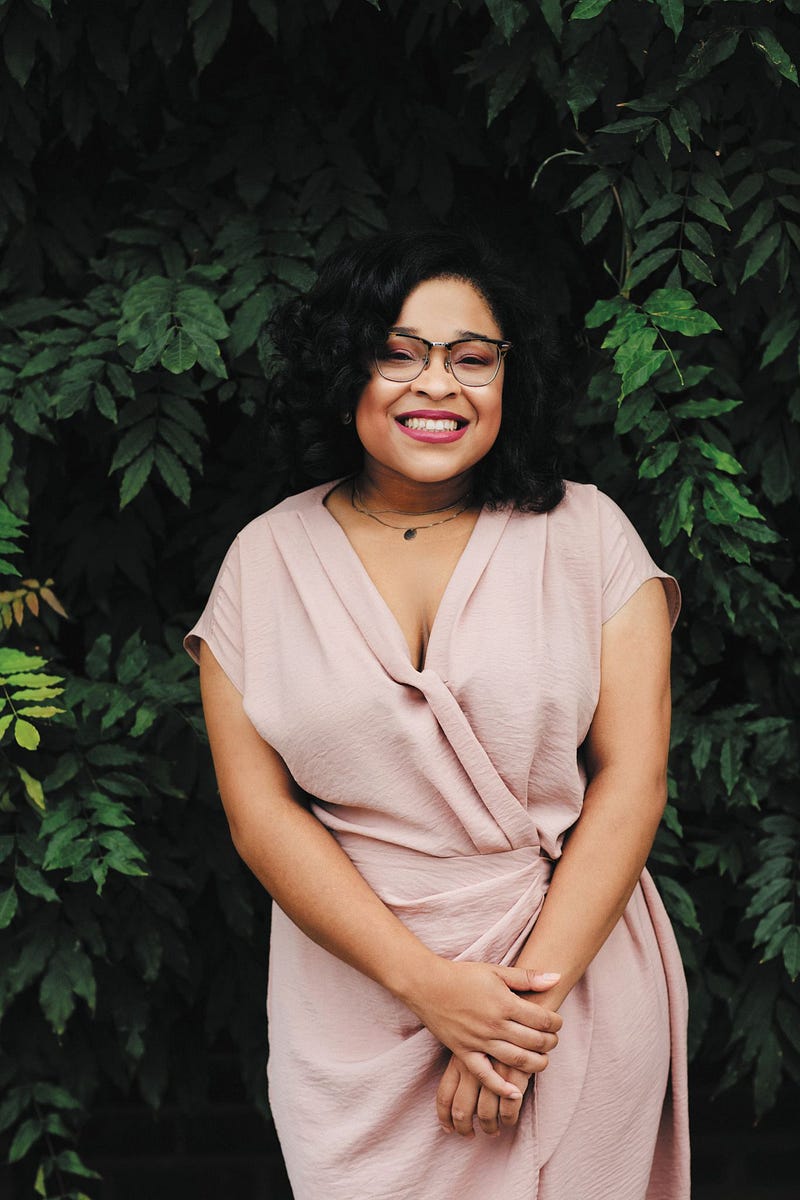
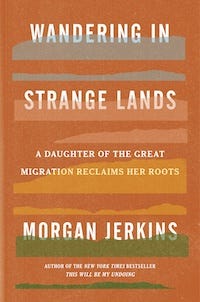
Morgan Jerkins is a New York Times bestselling author, a senior editor at our sister publication ZORA, and a daughter of the Great Migration. In her forthcoming book, the highly anticipated Wandering in Strange Lands: A Daughter of the Great Migration Reclaims Her Roots, Jerkins takes readers — and herself — on the journey of several lifetimes in an attempt to report out and repair a lineage marred by slavery and migration. It’s a story about her family, and about any Black family for whom movement meant survival.
After hearing Morgan read an excerpt from the book, I asked if she’d be willing to share more about her research process, the discoveries she made, and any advice she can offer those looking to embark on a similar journey. The result of our conversation is below and has been edited for clarity.
Steph Georgopulos: When I recently heard you read an excerpt of Wandering in Strange Lands, the first person I thought of was my mom. It really hit me how she, and so many other people, have this desire to research where and who they come from but hit a wall at a certain point and don’t know where to go after that. And you having this background in journalism and storytelling—it’s a very powerful skill set for this kind of project. So my hope is to talk a bit about the process you went through to research your family and maybe help guide people who are interested in pursuing something similar.
I want to start by asking what led you to write this book when you did? Because it’s not an impersonal research project, where you start with a question and you learn some things and you’re done; it’s the kind of work that changes how you think about yourself and your family and, of course, history in general. So, it’s a huge investment of both time and emotion and knowing that you’re going to come out the other side as something else. What brought you to the point where you decided that this was your next book?
Morgan Jerkins: Well, thinking on it now, this is kind of embarrassing, but in the beginning I wasn’t even going to include my own family history. I just wanted to write about how Black people are connected with regard to intergenerational trauma and fears and superstition. And it was actually when I was telling people about the project, two professors who are based in Boston — Dr. Kerri Greenidge and Dr. Kendra Field — they were the ones who were like, “I think this is a migration story.”
Then, when I started writing the first couple drafts, it just wasn’t sticking, and my editors were like, “Yeah, you have to put more of yourself in it.” And so that was when I had to not just think about interviewing the people I’d met across the country, I had to interview my family, too.
Steph: What was that like?
Morgan: What was that like? They were ready to talk. I think the thing is, when I spoke to my grandfather, who at the time was, let’s see, he was 76. When I spoke to him, he was ready to start talking. It was interesting, because he was talking about things that my mother never heard about when she was growing up. Never. He just got to that point where I guess he felt safe enough to talk about it.
Steph: So it’s been a learning experience for your entire family, hearing stories they never knew existed. How did your family feel after the process?
Morgan: They liked it. Of course, I didn’t show them the drafts I was writing, because that’s too many cooks in one kitchen, but I treated it just like I treated it when I was interviewing people across the country. I had a recorder out in front of me so they could see it. I asked them questions, let them talk, tried to redirect them if they were getting too unwieldy, but most times, I didn’t have to do that—they just stayed on course.
I also got lucky because my family is really close, and we have a lot of relatives in the same area, so when I was interviewing my grandfather, his brothers were there. They’re all in their seventies and eighties, so even as I was asking him questions, they were talking and engaging in conversation with each other, so it was really cool.
Steph: What kind of questions were you asking?
Morgan: The first one was “Why did y’all leave the South?” I was never taught why my mother’s family left the South. I knew we had people in the South, but I never knew why we left. When I was growing up, they didn’t really talk about our family home in the South, “This is what we used to do,” I didn’t hear those stories. So it was very easy for me to just say, “Well, this is our Northern upbringing, and that’s it,” you know what I’m saying? So that’s how I started, just asking, “Why exactly did y’all leave?”
Steph: I feel like more and more people are starting to understand that what it really means to assimilate and become “American” is leaving behind the culture your family came here with — shedding accents, getting rid of anything considered “backwards” by white/American norms — there’s an incentive to not bring those things with you here, and a lot gets lost as a result. But at the end of the day, if your family didn’t arrive here enslaved, you will always have an easier time reclaiming your ancestor’s culture if you want to and researching your family line.
Morgan: Oh, yeah.
Steph: Can you talk about the challenges of researching your family, as the descendant of enslaved people? What are some of the roadblocks you had to overcome to write this book?
Morgan: Well, I think what’s hard is that a lot of stuff has been omitted throughout the years in Black families, for a lot of reasons. One of them could be illiteracy. For enslaved Black people, learning how to read and write was also a matter of life or death. And so who was in charge of really documenting our stories? Even with the WPA Narratives — the federal project that attempted to document slave stories in the 1920s and ’30s — that wasn’t us, that was outsiders. Our oral histories, a lot of times, aren’t considered as veritable or as truthful as documentation, but we have to think about who documentation is usually for. Documentation is usually for those who had the power over the written word and had access to institutions, and those people are usually white people.
Another challenge is that oftentimes, in marginalized communities — especially in Black communities — they don’t talk about the past because of intergenerational trauma. Like, “Why go back there and talk about these hard issues?” So they do it for protection, but that often has repercussions for later generations like myself — because if people don’t talk about it, then at a certain point, when their children or children’s children ask their parents questions, they’re going to be like, “I don’t really know.” It’s like the gaps just keep getting passed down from generation to generation.
When it comes to white people in this country, yes, at certain times there were certain ethnic groups of whites who faced discrimination, and we can talk about, for example, Italians and how they were discriminated against. Irish people, for example. But with regard to Black people in this country, white people as a whole don’t know what it’s like to be continually displaced, to be continually under state surveillance, to be vulnerable to various forms of state violence. They don’t know that, and that has a huge impact on how we have seen history, how we gauge which narratives are more truthful than others. How do we gauge which narratives are more important to promote, at the expense of others? And so that has to be taken into account.
Steph: I’m wondering, how does someone — someone who’s maybe not writing about this, but doing it to bolster their own sense of where they come from — how does someone know that they’re ready to embark on a project like this? How do you prepare for something like this, and where do you start?
Morgan: If you’re curious. I know that’s such a simple answer, but if you’re curious. If you want to know more, that’s when you know you can start. At the time, all I had was my Google Drive and a recorder with lots of batteries, and I was able to get a transcriptionist because I was on deadline. But you don’t need that. It just starts with curiosity.
I also tell people that I had subscriptions at Ancestry.com and Archives.com because they keep census records and marriage certificates and all those sorts of things, and they actually do have slave records in certain parts, like Louisiana slave records. They have slave records in partnership with the University College London (UCL), so British slave ownership in the colonies as well. And, of course, the best place to start is talking to the oldest people you know.
Steph: Yeah. That’s super important. My grandfather was born in 1914, and I really didn’t appreciate how much he’d seen until he was gone. Were there any relatives you found in records that you couldn’t place? Anyone who was just kind of a continued mystery that you found compelling?
Morgan: Yeah. I think it was my great-great-great-great-grandmother Carrie. I spoke about her in the book. She was a Louisiana Creole woman, but I didn’t know her last name, and it wasn’t until a year into researching and revising that I finally had a breakthrough. I have a cousin, a late cousin, his name is David Dewitt Turpeau Jr. He wrote an autobiography of our family years ago, but he never said Carrie’s last name. He goes into my great-great-great-great-grandfather’s history and his last name and all that, but he never talks about her last name.
And I was like, “Why is that?” And so I had to really read between the lines, and one of the things that I realized was that my grandfather at that time — I’m not going to keep saying great-great-great-great, because that’s a lot — but my grandfather at the time, he kept two separate families on each side of the bayou. And when I went down to St. Martinville in Louisiana, where they’re from, I realized they never had a marriage certificate. All this time, I thought they were married. So I was like, okay, he keeps two separate families on each side of the Bayou Teche, and they were never married. And then David writes in the book that when she died, he stood at the foot of the cemetery gate.
And so I said to myself, “That is weird. You had a family with this woman, but you stand at the gate? You don’t even go in to pay your last respects?” To me, that means their relationship was illicit or controversial to some degree. Otherwise, it just doesn’t make sense logically. And so that was hard. For a full year, I was like, “Why can’t I find anything more about this woman?”
I have a very famous cousin, her name is Maymie de Mena, and her real name is Leonie Turpeau — she was actually the granddaughter of Carrie and her partner Maturin. Maymie was one of the highest-ranking officers of the United Negro Improvement Association (UNIA), which was founded by Marcus Garvey. So I was able to look up academic papers on her, and those said that Carrie’s last name was Hill. But I knew that wasn’t true—or that it wasn’t her maiden name. My dad’s surname, Regis, was often interchanged with Hill, because they lived on a hill. So I knew that couldn’t be her last name.
Then, when I looked her up in census records with that name, Carrie Hill didn’t even exist. And adding on to that, when I saw academics write about Carrie Hill, nowhere did they say she was an enslaved woman; they said she was a Louisiana Creole woman. So, if that implied she was free, why couldn’t I find these records with her name, Carrie Hill?
Also, Carrie is a very modern name. That’s a very, very modern name, so I said to myself that it has to be a diminutive of something. I don’t know many women who were around in the 1850s with that name in Louisiana. I don’t know. It could be, but looking at Louisiana names, and particularly in that region of Louisiana, the Acadiana, which is the huge Francophone population, I could not find many Carries. And when I spoke to genealogists in that area, they could not find a Carrie either.
Steph: There are so many mysteries.
Morgan: Yeah. But that’s Black history though, right? Because Black history and Black families are like other Black families: There were illicit controversial forbidden affairs, there are knotty lineages, there are questionable paternities. There’s a whole lot of intrigue, and I’m not trying romanticize it, but it’s against the backdrop of, for many of us, enslavement. There had to be so many different subversive tactics to survive. And so doing this research was definitely a journey physically, but also just mentally. I felt like I had to become a sleuth on the job.
Steph: Oh, yeah. When you were talking about the second family, that’s something my mom and I were talking about recently. My mother’s mother’s side is from Grenada. From what I was told, my great-grandfather was stationed in Panama and helped build the canal, and my grandmother was born in Panama because of that. They moved to Chicago when she was three—I think around 1916. But when I looked into that side of my family more, at the records, I realized my great-grandfather was living in and out of the country at various times and was born here, not Grenada. I didn’t know you could move around like that back then. My mom mentioned he might have had some relationships sprinkled around Panama, Grenada, here and there. I was like, “Wow, how did he do that?”
Morgan: Yeah, right? And that’s the thing. With regard to this book, I wanted to let people know there’s so much movement. And with movement, sometimes you settle in one place and you fall in love and you have babies over here, and then you have to pick up and move, because sometimes you volunteer, there are forces bigger than your own, and then you go and have another family.
Steph: Do you have any other advice or tips for people who are going to start doing some of this research for themselves?
Morgan: Oh, yes. One of the biggest things I would tell people is pay attention to spelling, because someone might be related to you, but the name might not be spelled the same way in censuses and other records. So, for example, I’m related to Fontenot people. There are many different variations of that last name. There’s Fontenette. And there might be certain vowels changed.
But if you get a sense that like, “Okay, this might be another iteration of my name,” especially if you find people who were from the same area that your family is from, but their name has a different spelling, just go with it. Because just like nowadays, a lot of times it’s human error, it happens. Sometimes names aren’t spelled correctly. So I would say to pay attention to that.
When you talk to older family members, all you need to start, I lie to you not, is to ask them where they were born, if they know their parents’ names, and where their parents were from. Or how did their parents meet? Because however their parents met can also signify movement, right? So, for example, if you have someone who says, “Well, my family moved to Houston in the 1950s and lived in Frenchtown, Houston. I don’t know where my parents were from, but I know they met there.”
Well, Frenchtown, Houston, and the Fifth Ward was a huge community for Creoles in the mid-20th century, and that’s something you can look up on your own, but what was the demographic of people who moved there? What were the migratory patterns? Most people who moved to Texas around that time, they were from Louisiana. So it’s taking certain guesses like that.
In terms of tips with regard to Black people, you might come across a pit stop more often than not. Especially if your ancestors were enslaved, you might come across a pit stop. You might come across a gap or some type of collision course between what your parents or your elders tell you and what you find written in scholarly journals, academic articles, or even just mainstream articles.
And what I’d say to that is that’s fine, because there’s always been a fight between what is documented and what is passed down through oral history. Don’t go into researching your family feeling like you need 100% conclusive nonnegotiable facts. You may never find that, but that’s okay. If you could find more context to fill in the spaces and provide more, I hate to say this word, but just more blood to these stories, to make them less static and to give them more life, you’re doing your job.