
Edwin Betts: One of the Historians That Covered Up for Thomas Jefferson
The Omission To Protect the Legend
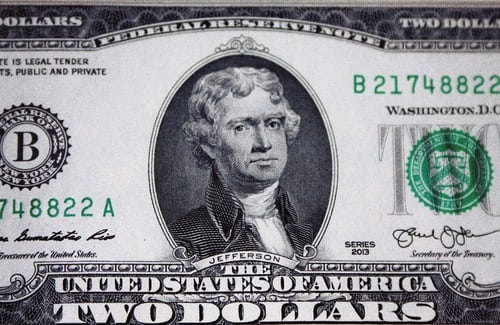
The picture above on the $2 bill is of Thomas Jefferson, a founding father, the 3rd President of the United States, and slaveowner. He famously wrote in the Declaration of Independence.
“We hold these truths to be self-evident, that all men are created equal.”
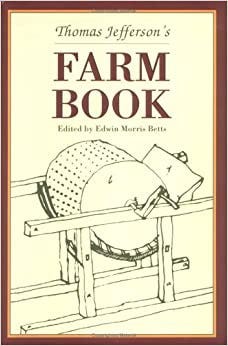
Unfortunately, these were merely words; the man himself didn’t adhere to the lofty standards he set for others. Edwin Betts was the historian who edited. “ “Thomas Jefferson’s Farm Book,” which is considered the bible describing life at Monticello, Jefferson’s plantation. A used hard copy of the book starts at $295, according to Amazon. The book contains copies of letters from Jefferson himself, along with notes and drawings. Jefferson meant to leave behind a legacy of science and agriculture. Betts made that happen by deleting materials that would have shown Jefferson in another light.
The book makes no mention of William Page, the white overseer who ran several of the farms that made up Monticello. Page was known for his brutality, a reputation well earned. Jefferson didn’t, especially like overseers. He called them “the most abject, degraded and unprincipled race, men of pride, insolence, and spirit of domination.” That didn’t prevent him from using Page and others to get the job done as needed.
When Jefferson was serving as Vice-President before becoming President himself, his son-in-law Col. Thomas Mann Randolph reported that “insubordination had greatly clogged operations” at the nailery Jefferson owned current foreman Isaac Granger, a former slave who had risen the ranks and did well. Things fell apart in the winter of 1798 when Granger abruptly refused to whip the small boys who did the work. Randolph and Page took over and, by liberal use of the lash on small boys, returned the nailery to its previous profitability level.
The letters describing the brutality level didn’t mesh with the image Edwin Betts had of Jefferson, a benevolent slave owner who treated his slaves like family. Jefferson freed only two of the over six-hundred slaves he’d owned during his lifetime, at least one of whom paid for his freedom. Upon his death, many of his slaves were sold to pay off his massive debt. Jefferson had built monuments to himself at Monticello and in Charlottesville at the University of Virginia, and when Jefferson died, the bill came due.
Edwin Morris Betts was a professor at the University of Virginia for thirty-one years. He had unparalleled access to Jefferson’s records and notes. “Thomas Jefferson’s Farm Book” contained details of the slaves he owned. The slaves he purchased were noted in Jefferson’s handwriting with the notation, “purch.” The slaves that were sold were “transferred.”
The omission of young boys' beatings is what we know of that historian Edwin Betts left out of his book about Jefferson. It helped perpetuate Jefferson's myth as kind to his slaves and helped people reconcile the man that helped promote domestic slave breeding, including forced rape as a means to increase wealth. He wrote a letter to George Washington detailing that each slave born represented a 4–10 percent increase, even after considering those that died during childbirth. He told another man to take any money he had and spend it on “land and negroes,” and he shall surely be wealthy.
Edwin Betts also wrote “Thomas Jefferson’s Flower Garden.” He’s hailed for his “scholarly research” regarding Jefferson’s ornamental gardening efforts. For a historian, deleting facts to change the narrative ought to be one of the worst things one could do. There’s such a thing as a “Historians Code of Ethics.” One of the articles reads as follows:
“Article 10: Integrity; Historical Truth Integrity is the moral foundation of the historians’ work. It shall be the intent of historians to honestly search for the historical truth, even if they are aware that their knowledge is provisional and fallible, and even if there are limits to that search as stipulated in Article 9 (“Respect”). Historians shall always oppose the abuse of history (its use with intent to deceive) and the irresponsible use of history (either its deceptive or negligent use).”
Betts chose to abuse the code and deceive his readers to protect the integrity of the man. He changed history because he didn’t want to make Jefferson look bad. He’s had plenty of help in that regard, those that denied his relationship with the slave girl Sally Hemings that he began when she was 14. His family was finally forced to concede the relationship in the face of DNA evidence; their efforts moved on to describe the relationship as consensual. What could a 14-year-old slave girl deny her master?
The cover-up by Edwin Betts wasn’t discovered until 2005. There is a steady stream of articles by alleged historians that appear in publications like the National Review and Wall Street Journal describing how benign slavery was and the innate goodness of the founders. I’d say we shouldn’t put the founders, most of whom owned slaves, on a pedestal. But it’s too late. Most of them are already there, made heroes, much like if not exactly like the statues of Confederate Generals found throughout the South. There is much to credit Thomas Jefferson for in terms of his contributions to his country. Other truths should be known as well. Edwin Betts kept that from happening for over fifty years. For shame!