
Eco-poetry amidst shifting leaves
There are different ways of looking at the environment. One is data-driven, rooted in charts of weather analysis and numerical predictions: projections of rising sea levels and sunken cities, forest fires, storms and droughts. Another is watching sunlight catching a dew-flecked bough, feeling our own interconnection with nature and indivisibility from its processes, resting in this awareness and allowing it to soothe an ailing heart. When we appreciate non-human life in the present, from the flower rising between paving stones to countryside flashing past from a train window, ecosystems — and our civilisation’s impact on them — are removed from the sphere of abstraction. Nurturing nature, which we have managed to convince ourselves we are independent from, is less a data-driven duty and more a radical act of love, imbued with fear and vulnerability.
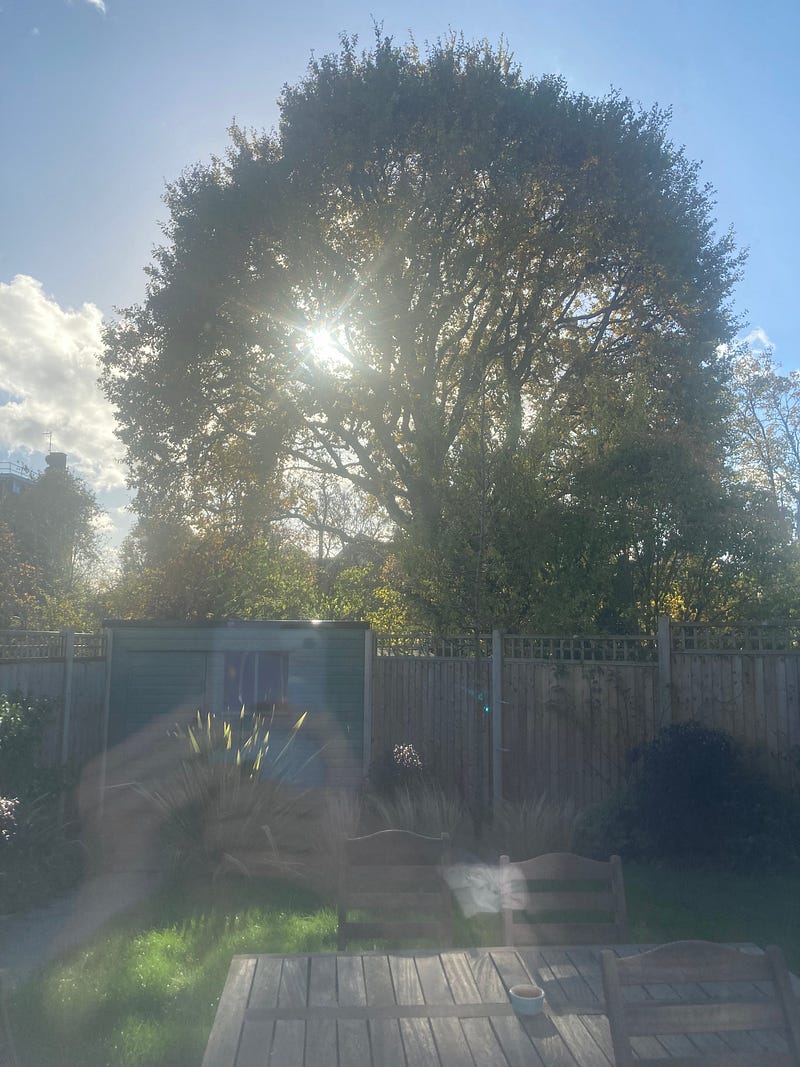
Environmental movements often point towards the catastrophic effects that planetary warming will have on humankind, if we do not change course rapidly from a way of life and economic system rooted in excessive consumption of disposable goods, destruction of natural habitats and the burning of fossil fuels. Organisations like Extinction Rebellion have captured the popular imagination over the past message with this decade. But when I look at my patch of urban garden while starting to type, and feel the comfort and nurturance that views of grass and leaf — even while surrounded by concrete — bring to the soul, the focus shifts from saving me and mine. I want to save this, because it is beautiful, carries wisdom deeper and richer than the mess of human intellectualisation, and certainly does not deserve annihilation at the hand of its most ego-driven species.
I will caveat here that obviously the human costs of climate change, with the planet’s poorest and most vulnerable being hit hardest and most imminently, are a matter of grave concern. Yet centring our own species in the dialogue around humans’ wounding of nature risks feeding the same ideological mindset that has led us here at all: namely, a belief in our superiority to other life forms, and to the earth itself. Despite the increasingly urgent and alarming reports coming from climate scientists about our need to change course, there still reigns a pervasive sense that the threat is just around the corner, that my gratification in the present trumps any needs of mine and others’ hypothetical grandchildren. When I recently mentioned in conversation that “Decade Zero” (2010–2020, our supposed last window of opportunity to enact the worldwide transitions required to lessen catastrophic planetary warming) had passed, I received the response: “well, we’re still here, aren’t we?” But what of those who no longer are, of the 69% decrease in wildlife populations since 1970? Our response cannot simply be that all is well until the very last moment, until our own neighbourhood is being flooded and relatives wiped out from heatwaves.
This crisis requires us to think beyond the screaming needs of the small self, the ego which perceives its existence as totally independent and clamours for a monopoly on our attention. When one walks in a wild forest, bonds with a non-human animal, or watches leaves changing their colours outside the window, that identification cedes to an experience of unity with life beyond the “I”. This roots us, a pathway to individual health which also holds potential to spark a sense of genuine value in the health of other species too, and of the carefully-balanced blue and green orb that we share with so many.
I fell a little more deeply in love with poetry when I was a depressed teenager studying for my English AS level. The anthology for our course was called ‘Landscapes’; true to its title, the poems therein all spoke to and about natural surroundings. This was not the sexy, self-important Beat generation poetry that I would promptly become obsessed with (writing about drugs, anal intercourse and emotional chaos had a particular fascination for a hormone-addled teenage brain), but something more reflective and peaceful. Robert Frost, T.S. Eliot (who, to be fair, also did the madness thing quite well), Thomas Hardy.
I was captivated by these poems, which interwove grappling with internal challenges of the human experience with a reverence for, and close relationship with, mountains, forests, canyons, and snow-covered fields. A quote surfaces in my mind from Tara Brach that “attention is the most basic form of love”. When we zero in on a tree, stroke its bark and notice each line as a testament of strength, resilience and survival not dissimilar from the calligraphy of human wrinkles, love is an indistinguishable part of the process. Paying attention to nature automatically inspires reverence — it no longer becomes necessary to describe Autumn leaves as wonderful or glorious. It is enough, maybe even more, to describe them as ochre.
Love and heartbreak can be felt at the same time, contradictory though they may seem. Such has been my mood this morning; macabre prophesies about the planet’s future reverberating around my brain from recent reading of Naomi Klein’s This Changes Everything (along with all of her other books). But I am healed, a little, by the garden outside, and it reminds me of all that there is still left to love in aspects of nature not yet decimated. When a fluttering branch, or a burrowing squirrel, or a silvery edge to clouds commands your attention, let it. Watching closely enough may be an anchor to the love that must guide our collective action.
Darkening Days Freestyle
Autumn evenings, mind steeped in Naomi Klein
seeking freedom in flat whites and bottles of wine;
savour scraps of sunshine
for the early-drawn nights
consciousness frazzled
by a blur of blue light.
The earth turns and smoulders,
leaves blaze as aflame.
We’ve knots in our shoulders
from weights of self-blame.
Another year older —
hold me — sky and blades of grass —
as the golds wither colder, and days flare and pass.
There is red on the trees
and a crunch underfoot;
tar traps our throats like we’re coughing up soot —
incrementing degrees,
we seem destined to fail,
flowers bloom bright and fiercely
yet their bodies are frail
So colours, can you pierce me
through a brain-fog veil?
Planting love in our cheeks,
once hopeful, now pale.
The truth that breeze speaks
thrums and resonates within
a lifeline ‘midst the bleak
— not to late to begin…


