
Eclectic Thoughts: When a nanosecond is way too long & a 100 million years is way too short & 10,000 miles per/sec is way too slow
I am not a scientist, philosopher, or psychologist, but I am a keen student of the confluence of all these disciplines. I believe everything in life is connected and a full appreciation of our world, its history and evolution requires some curiosity and an attempt to understand the basics of physics, math, evolution, and psychology. The more you understand the breath-taking creation of the universe, its vastness, and the stupendous improbability of life on earth, the more you develop an appreciation for the grandeur of our cosmos, our place in it, and how insignificant we are in the grand scheme of things. I think this appreciation is ground zero for our understanding of modern life, it’s challenges & continuity into the future.
Evolution is a wonderful phenomena, and of course we owe our own existence to it. However, it’s sole purpose is to pass on our genes down the hierarchy of descendants. In other words, Procreate or Perish! — Human evolution does not have a goal or target state, save for the preservation of human genes. As such, it singularly focuses on survival value which can be resource intensive and hence subject to a cost/benefit trade off test. What does not have survival value, does not pass the test.
Therefore, unless we train our minds specifically, we do not develop an intuitive understanding of certain skills and knowledge essential to understanding the creation and evolution of our magnificent universe and our place in it. Furthermore, modern survival requires intuition and skills way beyond momentary survival value for which we were honed in the savannas of Africa, not to mention our ability to understand our place in this vast universe.
Humans live for a hundred years at the high end of the continuum . We evolved to have an intuition and understanding of only time horizons, size, speed and spatial dimensions that we experienced in our decidedly short history of several hundred thousand years of our species as Homo Sapiens.
Let us consider the time horizon and size of the universe in relationship to our very tiny and extremely coarse view of time, distance and space. To appreciate the universe and its building blocks in all its grandeur requires an understanding of the very large (governed by Einstein’s General Theory of Relativity ) and the very small (governed by Quantum Mechanics).
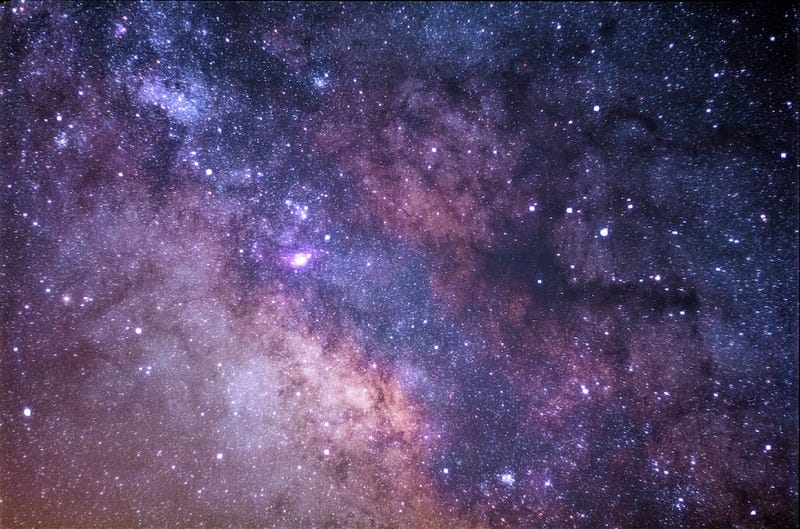
The world we live in is part of a vast universe that is approximately 14.8 billion years old. The universe has continued to expand ever since its birth and the visible universe now spans a radius of over 40 billion light years ( light speed is 300,000 km/sec).
This is a mind bogglingly large distance of — are you ready? — 380 sextillion kilometres ( 3.8 x10^23 km). Even though the universal speed limit is governed by the speed of light, since it’s birth at the Big Bang 14.8 billion years ago, there have been times that space itself has expanded at greater than light speed (this does not violate the universal speed limit as it is space itself that is expanding).
You thought the very large was incomprehensibly big. Well then, what are we to make of the infinitesimally small?. How do we even begin to understand the smallest lengths in space, or the smallest units in time — Plank length & Plank time? Both these have tremendous significance in the early universe and are the domain of quantum mechanics. Plank length is 1.6x10^-35 meters.
Humans evolved to understand the height of the average male of its species at 5’9”. So far so good. Then a plank length would be a 100 millionth of a billionth of a billionth of a billionth of that height. Plank time is equally perplexing on the time dimension — it’s the time light takes to travel the plank length or 5.39x10^-44 seconds (that’s 44 zeros after the decimal before the 1). Perhaps, we have heard of nanoseconds in colloquial speech — that is a billionth of a second.
Plank time is roughly 5 orders of magnitude shorter still. In order to understand and nail down what happened in the early universe and the nature of the Big Bang, physicists need to understand what happened between a billionth of a billionth of a billionth of a billionth of a second and a millionth of a billionth of a billionth of a billionth of a second after the Big Bang.
Didn’t I tell you we were not evolutionarily wired to begin to comprehend such large and such small time & spatial slices?
I will touch on other significant limitations and challenges we face in later writings — our vision is very coarse and spans a very limited range of the electro-magnetic spectrum, namely visible light only. Randomness and Probabilistic outcomes pervade our universe of the very small and the reality of our lives. Yet, we are Ill prepared to understand either. We humans are partial to a deterministic idealization of our lives, yet a lot of what happens to us and around us is not deterministic but probabilistic and random.


