
Echoes of the Soul
The transformative power of music in our lives
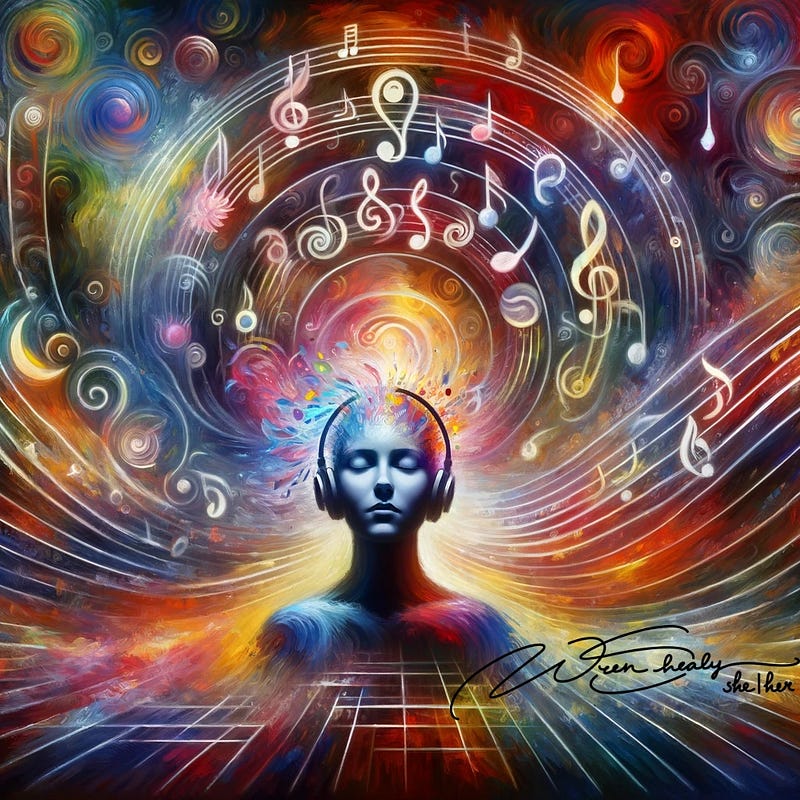
In the vast expanse of human experiences, music holds a special place.
Music is not just background noise or a mere form of entertainment — it’s a profound psychological journey.
This exploration is about more than just notes and melodies. It’s about how these elements resonate within the depths of our minds, evoking a spectrum of emotions and memories.
Each note, each rhythm speaks to us in a language beyond words, tapping into the unspoken depths of our being.
The Emotional Landscape of Music
Music is an emotional alchemist, transforming simple notes into profound feelings. Juslin & Västfjäll (2008) showed that music can trigger everything from joy to sorrow, calmness to exhilaration.
It’s a deep-rooted psychological response, a testament to the emotional power of music.
Like a skilled painter, music colors our emotions in vibrant hues, creating a canvas that portrays the complexity of our feelings.
It’s a journey through the heart’s many corridors, each note unlocking a different door.
Memories in Melodies
There’s a unique magic in how a certain melody can instantly transport us back in time.
For me, “The Night They Drove Old Dixie Down” by Joan Baez is more than just a song; it’s a portal to cherished childhood memories.
(I know… The Band… don’t @ me)
Most children clamor for bedtime stories of fairy tales and fantasy worlds. My story was different.
I yearned for the haunting strains of this song, a first-person narrative steeped in the economic and social turmoil of the American Civil War’s final year.
As my dad’s voice carried the melody, it wasn’t just a song about historical strife; it became a lullaby, a nightly ritual. Each note, each word, resonated deeply, painting vivid scenes of a past era.
This wasn’t just a lullaby; it was a lesson in history, emotion, and the power of storytelling through music.
Just as the protagonist in the song longed for a bygone era, I find myself longing for those simple nights, filled with the soft baritone of my father’s voice.
Janata, Tomic, and Rakowski (2007) found that music activates parts of the brain linked with autobiographical memories and emotions.
It’s as if melodies are keys to locked doors in our minds, opening chambers filled with forgotten tales and cherished moments, weaving our past and present together in harmony.
The Healing Harmony
Beyond its emotional impact, music serves as a therapeutic tool.
Music therapy, as researched by Bradt & Dileo (2010), has shown effectiveness in easing anxiety and enhancing mood in various settings.
This demonstrates that music is more than just a melody. It’s a key to emotional well-being and mental health.
In the rhythm of music lies a soothing balm, a gentle hand that guides us through turbulent emotions and offers solace in times of distress.
It’s a healing force, echoing through the chambers of our hearts and minds.
The Social Rhythm of Music
Music also acts as a social glue. Group singing, as studied by Tarr, Launay, and Dunbar (2014), fosters a sense of community and social bonding.
This aspect emphasizes music’s role in collective experiences and cultural rituals.
It’s a unifying force, a shared heartbeat that pulses through crowds, connecting us in moments of joy, reflection, and solidarity.
Music builds bridges between souls, creating a sense of belonging and togetherness that transcends words.
Insights and Reflections
Exploring the psychological dimensions of music has been an enlightening journey.
The most important thing I have learned is music is much more than an arrangement of sounds. It’s a reflection of emotions, a builder of memories, and a unifier of people.
In its melodies and harmonies, we find echoes of our own experiences, resonating with the universal human story.
Music is a companion in our journey, a guide through the complex maze of our emotions, offering insight and understanding.
In the pursuit of understanding the complexities of the mind, the role of music stands out as both significant and transformative.
It’s a testament to the shared human experience, a reminder of the power of art to heal, connect, and inspire.
As we embrace the emotional symphony music offers, we enrich our understanding of ourselves and each other, finding common ground in the universal language of music.


