
Echoes of Grandeur: Unraveling the Lure and Peril of Collective Narcissism
A Critical Examination of How Exaggerated Group Superiority Shapes Political Landscapes and Challenges Scientific Discourse

Since time immemorial, people have found comfort, security, and meaning in the groups to which they belong. This innate pull we feel to belong, hardwired into our minds, prompts us to forge various groupings like tribes, nations, and communities.
People seek to belong to groups they evaluate positively and deeply connect with.
These group identifications are often seen as constructive, offering a sense of solidarity and common purpose; however, when these identifications are motivated by unmet psychological needs, the picture changes, giving rise to collective narcissism.
Collective narcissism goes beyond simple group pride. It is a deeply held belief that one’s group is inherently superior to others and, therefore, deserves unique or preferential treatment.
When a group’s identity leans heavily on unfulfilled emotional needs like craving approval, feeling seen, or wanting to feel safe, it can warp their viewpoint.
Rather than being an identity built on shared values and collective achievements, it is a defensive identity obsessed with protecting and improving the group’s image at all costs.
However, this group-superiority complex fosters prejudice and discrimination. At the national level, collective narcissism can manifest in xenophobic policies, excessive protectionism, or rejecting beneficial international agreements.
It is essential to differentiate collective narcissism from mere intragroup identification. While intragroup identification is based on a genuine feeling of belonging, solidarity, and love for the group, collective narcissism is more selfish and focused on superiority and entitlement.
When national decisions prioritize self-interest over public welfare, the consequences can be dire.
In the political sphere, collective narcissism can make a population more susceptible to populist narratives that exalt national greatness, often at the expense of facts and a balanced vision.
It can result in the election of leaders who promote divisive agendas or resistance to international collaborations. People with narcissistic tendencies may resist accepting scientific evidence that challenges the positive image of their nation, which can lead to denial of scientific realities and decisions that are detrimental to society.
Additionally, collective narcissism can make a group extremely sensitive to perceived disrespect or criticism of their identity. That can stir up needless global disputes, push away constructive feedback, or even lead to a mentality of self-seclusion.
Collective narcissism is the exaggerated belief of an individual about the supposed superiority of the group to which he belongs, whether it be a group, religion, or nation. However, it is a feeling of insecurity about the prestige of his organization and, therefore, requires the support of others.
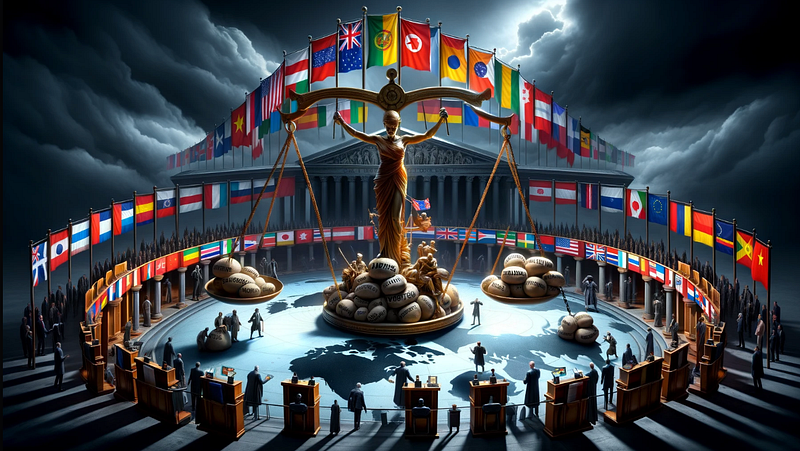
The Rise and Impact of Collective Narcissism in Global Events
Collective narcissism can be observed in multiple contexts and events globally, and its presence has been noted in political, cultural, and social events. Here are some notable examples from the last ten years:
The conflicts between Hamas and Israel, the same as Russia and Ukraine, are the most recent events that shake the world. In the middle of everything is collective narcissism, which seems to lead us to a state close to destruction.
Populist Politics: In several countries, populist leaders have risen to power by appealing to nationalist pride and the perception that their nation is superior and deserves special status. This has been seen in the rhetoric of political campaigns in countries such as the United States, Brazil, the Philippines, and Turkey.
Brexit: The United Kingdom’s resolution to leave the European Union was partly argued by the idea of regaining British “greatness” and complete autonomy over national decisions, which some analysts have interpreted as a manifestation of collective narcissism.
Territorial Conflicts: Tensions in the South China Sea, where China and several neighboring countries have proclaimed rights over disputed territories, may reflect a sense of superiority and an inherent right over geographic regions despite international claims and historical evidence.
Climate Change Denial: Specific groups have denied the science of climate change due to a deep-seated belief in the infallibility of their group or nation and their industrial or economic practices, despite overwhelming scientific evidence and global consensus.
Anti-immigrant Movements: The rise of anti-immigrant movements in Europe and North America, which are often based on the belief that migrants are a threat to group identity and values, reflects characteristics of collective narcissism.
Trade Wars: Trade Wars, can be seen as manifestations of collective narcissism when they are based on the belief that one’s country is inherently fair and deserving of preferential treatment, leading to the adoption of protectionist policies and punitive tariffs. Here are some additional examples that could be interpreted through this lens:
The United States and European Union: Trade tensions have occasionally arisen between the US and the EU over various products, from steel to agricultural products, with each side arguing that their industries need protection from unfair trade practices.
China and Australia: Trade relations between China and Australia were significantly strained after Australia supported an international investigation into the origins of COVID-19, resulting in China imposing tariffs and restrictions on several Australian products, which some analysts considered a sample of economic punishment.
Response to the COVID-19 Pandemic: Some countries initially responded to the pandemic with a perspective of self-sufficiency and superiority, rejecting international cooperation or downplaying the severity of the crisis compared to other countries, which could be interpreted as narcissism.
Collective narcissism, being a psychosocial concept, lends itself to multiple readings and is not consistently recognized or accepted as such by all parties involved.
Response to the COVID-19 Pandemic: Some countries initially responded to the pandemic with a perspective of self-sufficiency and superiority, rejecting international cooperation or downplaying the severity of the crisis compared to other countries, which could be interpreted as narcissism.
Collective narcissism, being a psychosocial concept, lends itself to multiple readings and is not consistently recognized or accepted as such by all parties involved.
Group identity can boost us, but we must stay sharp to the darker side of it all — like collective narcissism.
References
Cichocka, A., Bocian, K., Winiewski, M. & Azevedo, F. ‘Not racist, but…’: beliefs about immigration restrictions, collective narcissism, and justification of ethnic extremism. Polit. Psychol. 43, 1217–1234 (2022).
Cai, H. & Gries, P. National narcissism: internal dimensions and international correlates. PsyCh. J. 2, 122–132 (2013).
Psychological Reports. Martinez, R. (2020). Science through the lens of collective narcissism. Science Communication Quarterly. Navarro, L. (2018).
National narratives and perception of reality. Journal of Political Analysis. Vasquez, E. (2017).