
eBooks Are Terrible Lead Magnets - Here’s What to Create Instead

I’ve downloaded 100+ lead magnets from websites in the past few years. They’re the most common lead magnet for service-based businesses.
Unfortunately, 95% of them are awful.
I can’t remember reading a free eBook from start to finish. I’ve also never made a purchase after downloading a freebie.
Maybe you’re in a different boat, but it’s obvious that eBooks are overused — mainly because people are unaware of the other options. They see their competitors using it and blindly follow suit.
First, we need to talk about why eBooks suck.
Reason #1 - They’re difficult to consume
When I first download an eBook, I’m excited to learn about the topic.
The title and information sounds interesting, and I click to my inbox to open it up. After a few minutes, I move on to the next thing. I might get through a few pages, but I never have time to read the entire thing — regardless of how interesting and relevant the book is.
Everyone is busy.
Do any of us have time to put everything on pause and spend an hour reading? No way! We need to move on to the next thing quickly.
Once we click away from the eBook PDF, it’s highly unlikely that we’ll go back to visit it. We don’t feel bad about abandoning it because we didn’t pay for it. And we know we can find an abundance of similar free information out there.
Reason #2 - They usually target the wrong audience
Most of the eBooks and lead magnets I see miss the mark. They’re trying to teach the reader how to solve the problem, while also trying to sell them a done-for-you solution.
A social media manager will sell an eBook “How To Grow On LinkedIn”.
The only content in that book should say “Hire me to manage your LinkedIn account!”
If the reader wants to learn how to do it themself, they’re not interested in hiring you.
This happens because marketers create lead magnets that they find valuable and interesting, instead of creating things that their buyers find valuable and interesting.
Reason #3 - They’re not exciting
In the early 2000s, people were excited to receive emails. I’ve heard some cases where they’d pay to get more emails sent to them.
Email was new and exciting.
Hearing “You’ve got mail!” sparked joy.
Today? Not so much. Email is a daily to-do that no one wants to do. I’ve got 13,008 unread emails in one of my inboxes. It’s not exciting anymore because it’s common.
The same thing has happened to eBooks. The free information is no longer exciting, and it’s not something people want.
If you really want to write an eBook, you should! Just don’t use it as a free lead magnet. Spend more time on it and sell it for a few dollars.
Now let’s get into a few of the alternative options.
Email courses
Email courses are very similar to eBooks, but with a few significant advantages.
The biggest difference is the format the information is delivered.
Delivering the information over a longer period of time keeps the readers engaged. People aren’t going to stop everything for an hour to read an eBook from cover to cover. But, they will read a 3–5 minute email once a day.
This also means people are seeing your name and content for multiple days. You usually don’t remember someone you meet once. But you will remember someone you see every day for a week.
Emails are also better because it’s a native platform. People have their inbox open and check it multiple times a day. Once they close the eBook PDF tab, they’ll probably forget all about it.
I discovered this 7-day email course from Matthew Brown on Twitter a few weeks ago and it’s better than any eBook I’ve downloaded.
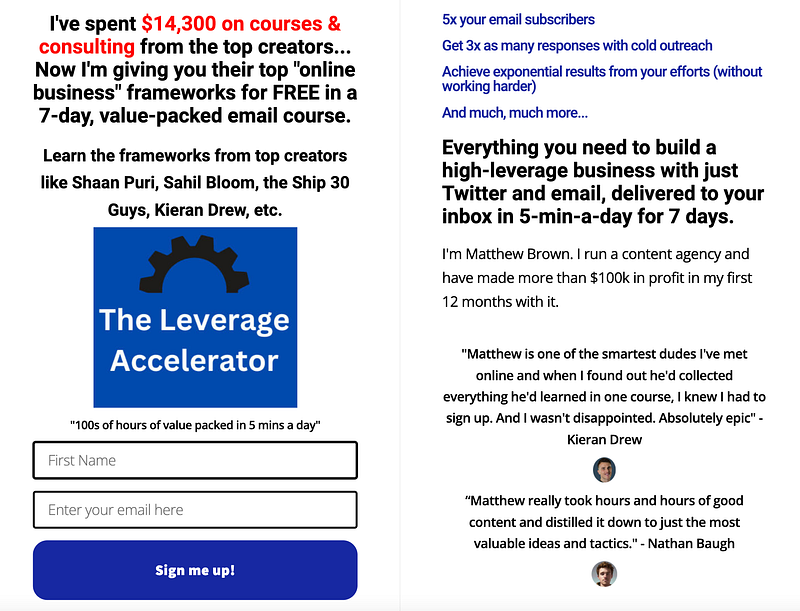
I opened and read 5/7 of the emails (before losing interest) but, I’ll probably go back and read the other two because the ones I read were valuable and interesting.
Free trials
Free trials are popular for software, and I think they should be used in other types of businesses.
If you’re providing an ongoing service, think about how you could give people a free sample of your services, without being taken advantage of.
This requires more effort from you, but I see it as an upfront investment that very few other people are offering. You’ll stand out from the crowd, and people will stick around if you’re providing value.
Offering a free trial also ensures that your ideal audience is getting your freebie. You know the people who want your paid products or services and have the highest chances of converting.
Case studies
I find case studies 10x more interesting than blogs and eBooks.
A lot of information shared is theories. Case studies are solid proof that something works. No one is questioning the validity, because the proof is right there.
I’ve downloaded two interesting case studies in the past few months. They were both Excel/Google Sheets that compiled a list of successes.
The first one is a list of 121 viral LinkedIn posts related to SEO, which was compiled and shared by Nick Zviadadze.
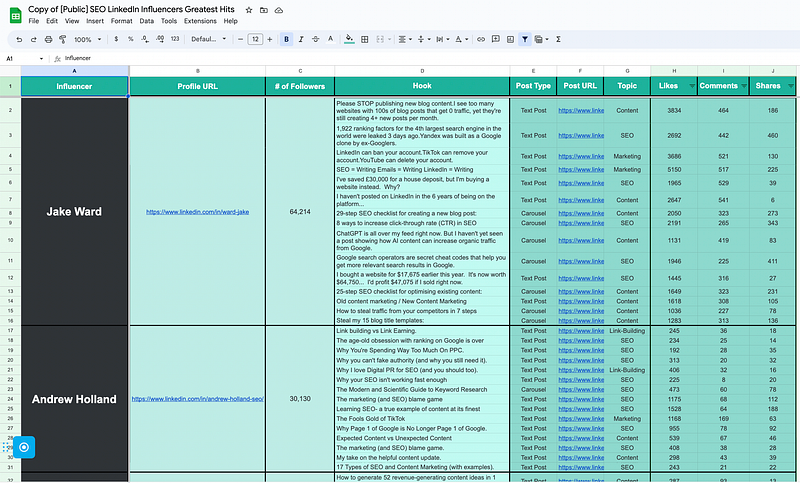
The spreadsheet shows who made the post, the topic, hook, and engagement numbers. This is far more interesting than a “How to Grow Your SEO Business on LinkedIn” eBook.
I know these posts were highly successful, and I can look at this spreadsheet and come up with my own conclusions about why each post was a hit.
Another great example of this is from Pat Wells. He shared a spreadsheet with 99 successful solopreneurs and information about their business.
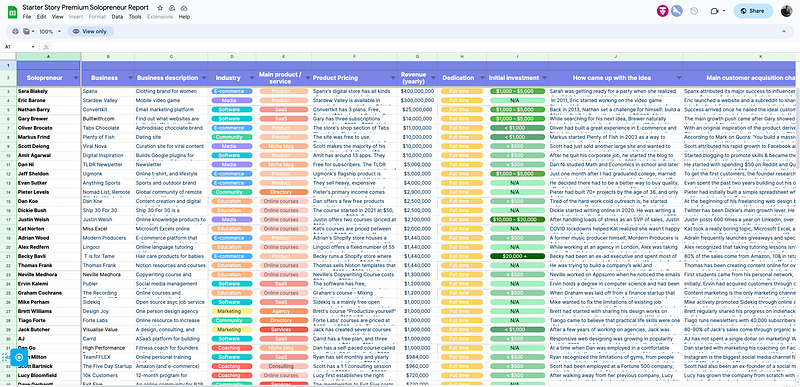
Because this just shares the facts without the fluff, it includes 10x more information than you‘d find in an eBook. Of course, you need to do more thinking about how you can apply these principles, but that’s part of the fun.
Have you downloaded any interesting lead magnets lately? Let me know about them in the comments!

For additional tools and resource ➡️ Visit StartupStash Zendesk is giving $75,000 in credits and perks for startups! ➡️ Apply Now!