avatarClive Thompson

Free AI web copilot to create summaries, insights and extended knowledge, download it at here

4112

Abstract

der</a>.)</p><p id="8ed4">If you plug in a fairly simple search phrase — best to stick to one- or two-word searches, using words that were reasonably common before the 20th century — you can quickly find some fascinating and kooky old books.</p><p id="7cfa">When I plugged in “horse”, I got <a href="https://www.loc.gov/resource/gdcmassbookdig.modernhorseshoei00flem/?st=gallery"><i>Modern Horseshoeing: A Practical Work on the Shoeing of Horses</i></a>, as well as <a href="https://www.loc.gov/resource/gdcmassbookdig.examinationofuri01fish/?sp=16&amp;st=pdf&amp;r=-0.369%2C-0.087%2C1.737%2C1.737%2C0&amp;pdfPage=10"><i>An Examination of the Urine of the Horse and Man</i></a><i> </i>(!), G. K. Chesterson’s poem <a href="https://www.loc.gov/resource/gdcmassbookdig.balladofwhitehor00ches/?st=gallery"><i>The Ballad of the White Horse</i></a>, and <a href="https://www.loc.gov/resource/gdcmassbookdig.atsignofhobbyhor00bisl/?st=gallery"><i>At the Sign of the Hobby Horse</i></a>, a rollicking collection of cultural essays by Elizabeth Bisland, including a witty savaging of 1900-era mediums and seances.</p><p id="502c">And, the illustrations! One of my favorite parts of looking through books published in the early 20th century and before are the illustrations, which are often ornate and spectacular. One of the horse books I hit upon was <a href="https://www.loc.gov/resource/gdcmassbookdig.infallibleguidet00bran/?st=gallery"><i>An infallible guide to discover the age of horses</i></a> — which was a pretty important task, given that horses back then were a massive capital expenditure and liable to die on you soon if you unwittingly bought an old one.</p><p id="9066">The illustrations of horse’s teeth are pretty amazing, like these …</p><figure id="107c"><img src="https://cdn-images-1.readmedium.com/v2/resize:fit:800/1*8GhUiNFfJknzLDn9gLnW4Q.jpeg"><figcaption></figcaption></figure><h2 id="1551">2) Old vinyl music</h2><figure id="4655"><img src="https://cdn-images-1.readmedium.com/v2/resize:fit:800/0*yu9IKIUGT0pj6Xgn.jpg"><figcaption></figcaption></figure><p id="aad0">Another wonderful part of LOC Serendipity is <a href="https://www.locserendipity.com/PushPlay.html">the <b>music</b> page — which plays random songs from the Internet Archive’s digitization of 78-RPM records.</a></p><p id="4cc4">It’s dead simple: You hit the “play” button, and it starts playing a random song. If you don’t like it, hit “skip” and it’ll pick a new one.</p><p id="293b">It shows you the direct Archive link for the song currently being played, so if you like it, you can save the link or download the file.</p><p id="0877">I had a blast streaming this in the background while I worked the other day. It careened from genre to genre — sometimes playing old-school bluegrass banjo-shredding (like <a href="https://archive.org/details/78_whoop-em-up-cindy_uncle-dave-macon-sam-mcgee_gbia0087145a/Whoop+'Em+Up,+Cindy+-+Uncle+Dave+Macon+-+Sam+McGee.flac">this 1926 recording of “Whoop ’Em Up, Cindy”</a>), other times big band (a <a href="https://archive.org/details/78_heat-wave_dorsey-brothers-orchestra-berlin_gbia0100254a/Heat+Wave+-+Dorsey+Brothers'+Orchestra+-+Berlin.flac">1934 Tommy Dorsey recording of “Heat Wave”</a>), then material from outside the western canon (like <a href="https://archive.org/details/78_heat-wave_dorsey-brothers-orchestra-berlin_gbia0100254a/Heat+Wave+-+Dorsey+Brothers'+Orchestra+-+Berlin.flac">“Yarn — Anoosh” by Jimmy Vosbikian</a>), and some of those unsettlingly jaunty oh-hai-there-I’m-off-to-fight-in-the-war songs (like <a href="https://archive.org/details/78_any-old-place-the-gang-goes-ill-be-there_the-jesters-red-latham-wamp-carlson-guy_gbia0049018b/Any%20Old%20Place%20the%20Gang%20Goes%20(I'll%20Be%20There)%20-%20The%20Jesters.mp3">“Any Old Place The Gang Goes (I’ll Be There)”</a>).</p><p id="93e2">I like the fact that you have no control over what song plays; I’m <a href="https://debugger.medium.com/my-single-favorite-line-of-javascript-304b2e9632ea">a big fan of randomness</a> for rewilding one’s attention!</p><h2 id="115f">3) Old radio dramas</h2><figure id=

Options

"9d21"><img src="https://cdn-images-1.readmedium.com/v2/resize:fit:800/0*Sp7Np_HZOKWZlAzP.jpg"><figcaption></figcaption></figure><p id="8bba">My other favorite tool in LOC Serendipity is <a href="https://www.locserendipity.com/Radio.html">this one — which plays a random radio show from the Internet Archive.</a> Much like the music-playing app, you just hit “play” and it picks one; if you like it, there’s a URL to save it, and if you find it boring hit “skip” to go to the next one.</p><p id="e3e4">These can be <i>wildly</i> absorbing. The first time I hit “play” I was given <a href="https://ia802605.us.archive.org/1/items/OTRR_American_History_Singles/AHTER_xx-xx-xx_1947_Destination_Freedom_-_Peace_Mediator.mp3">“Peace Mediator”, a radio drama re-enacting the story of Ralph Bunche</a>, a Black political scientist and UN diplomat who won the 1950 Nobel Prize for his role in Arab-Israeli peace negotiations. Then I got <a href="https://ia800307.us.archive.org/10/items/OTRR_Whistler_Singles/Whistler_43-06-19_ep057_House_of_Fear.mp3">“The House of Fear”, an episode of the radio mystery-drama series “The Whistler”.</a> (I just cannot get enough of the <i>oooooh-scary</i> horn-and-strings stabs and ululating organ in those old radio mysteries.) Then it was on to <a href="https://ia802707.us.archive.org/32/items/OTRR_Certified_Romance_Singles/Romance_51-07-02_ep248_To_Live_Again.mp3">“To Live Again”, a romance drama:</a> “Tonight we invite you to the wild mountains of Portugal, where two lovers invite <i>terror</i> and <i>death</i> in order to achieve their freedom.”)</p><p id="0253">(Now I’m thinking of doing a hardware-hacking project, where I take an old 1940s-era radio and replace the guts with a raspberry pi that connects to this feed; when you turn the radio on, it begins playing a random old radio drama.)</p><p id="42d3">Anyway, there’s another tool for rewilding your attention, and bringing you into the weird corners of the Internet.</p><p id="0c32">If you have any other tools to recommend, let me know in the comments, or email me at [email protected]!</p><p id="2697">(Enjoyed this post? Then behold the “clap” button and its eldritch secret: It was designed to handle up to 50 claps … per reader!)</p><div id="a68c" class="link-block"> <a href="https://clivethompson.medium.com/membership"> <div> <div> <h2>Join Medium with my referral link - Clive Thompson</h2> <div><h3>Join Medium with my referral link Not a Medium member? Join here and a piece of your membership will directly support…</h3></div> <div><p>clivethompson.medium.com</p></div> </div> <div> <div style="background-image: url(https://miro.readmedium.com/v2/resize:fit:320/0*XJ2bBOJWHUTpeHEY)"></div> </div> </div> </a> </div><p id="bc3a"><i>Clive Thompson publishes on Medium three times a week; <a href="https://clivethompson.medium.com/subscribe">follow him here to get each post in your email </a>— and if you’re not a Medium member, <a href="https://clivethompson.medium.com/membership">you can join here!</a></i></p><p id="5250"><i>Clive is a contributing writer for the </i>New York Times Magazine<i>, a columnist for </i>Wired<i> and </i>Smithsonian<i> magazines, and a regular contributor to </i>Mother Jones<i>. He’s the author of <a href="https://www.penguinrandomhouse.com/books/539883/coders-by-clive-thompson/"></a></i><a href="https://www.penguinrandomhouse.com/books/539883/coders-by-clive-thompson/">Coders: The Making of a New Tribe and the Remaking of the World<i></i></a><i>, and <a href="https://www.amazon.com/Smarter-Than-You-Think-Technology/dp/0143125826/"></a></i><a href="https://www.amazon.com/Smarter-Than-You-Think-Technology/dp/0143125826/">Smarter Than You Think: How Technology is Changing our Minds for the Better<i></i></a><i>. He’s <a href="https://twitter.com/pomeranian99">@pomeranian99 on Twitter</a> and <a href="https://www.instagram.com/pomeranian99/">Instagram</a>.</i></p></article></body>

A Search Tool For Serendipity

The fun of stumbling upon random old media with “LOC Serendipity”

“Question mark sign” by Colin Kinner (CC 2.0 license, unmodified)

Recently I’ve written about “rewilding your attention” — or, why it’s good to spend less time looking at the algorithmically-sorted feeds of social media …

… and go hunting for the weirder, woolier stuff in the curious corners of the Internet (and the offline world, too).

As I noted in my first piece on this subject, the algorithms in social-media feeds do have some good qualities. They generally promote posts that are rapidly rising in popularity, so they’re an excellent way to keep tabs on subjects that millions of people are talking about. They connect us to the big, intense conversations of the moment.

But this means they’re unlikely to surprise us.

A main thrust of social-media algorithms is to get us to pay attention to the viral stuff — i.e. the same things that millions of other people are looking at. This is like monocropping your attention, and thus your thinking. You’re less likely to have an interesting new idea if you’re reading and pondering the exact same stuff as everyone else.

So, rewilding your attention means injecting more variety into your reading/watching — by hunting down stuff that’s off the beaten track. This offbeat stuff is far more likely to get your brain ticking, and to diversify the stuff you think about.

As I wrote …

Instead of crowding your attention with what’s already going viral on the intertubes, focus on the weird stuff. Hunt down the idiosyncratic posts and videos that people are publishing, oftentimes to tiny and niche audiences. It’s decidedly unviral culture — but it’s more likely to plant in your mind the seed of a rare, new idea.

Okay, cool. But — how do you rewild your attention?

GLAD YOU ASKED. One of my new pasttimes is collecting tools and techniques for rewilding. I wrote a post about “9 Ways To ‘Rewild Your Attention’”, and one about search engines that were designed to surprise you. So I’m always on the hunt for gewgaws that are designed to bring me the strange stuff.

I recently found another: The LOC Serendipity search engine.

The creator, knowing my zeal for Weird Search, emailed me to bring it to my attention. (He likes to stay anonymous and asked me to leave his name out of this post.) Basically what he did was create a set of tools for searching through the files of various open-access, public sites — like the Library of Congress, the Internet Archive, and Wikipedia — and displaying them with varying degrees of randomness.

A few of my favorite tools inside the LOC Serendipity engine …

1) Strange old books
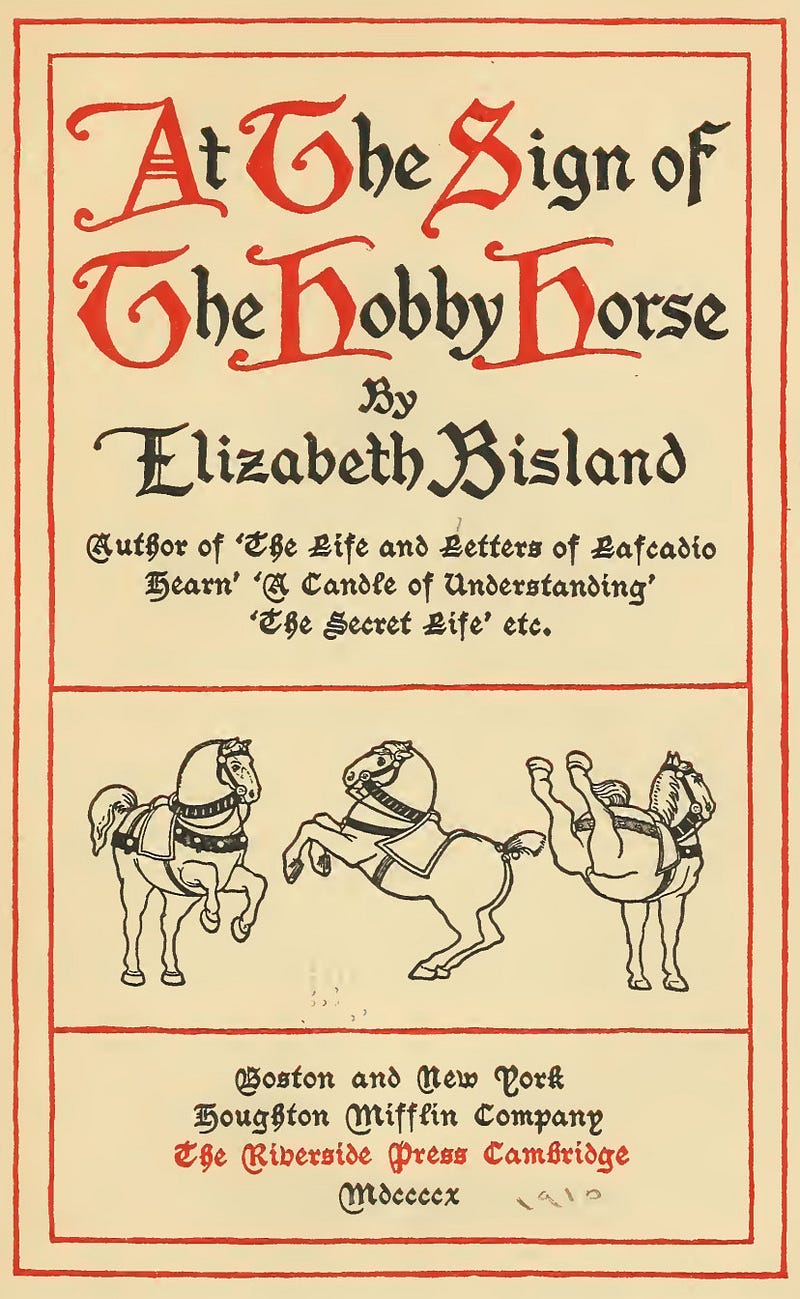
One of the search tools is for books: It’ll comb through the LOC’s scanned books, and display a list of them. (It’s a bit like my Weird Old Book Finder.)

If you plug in a fairly simple search phrase — best to stick to one- or two-word searches, using words that were reasonably common before the 20th century — you can quickly find some fascinating and kooky old books.

When I plugged in “horse”, I got Modern Horseshoeing: A Practical Work on the Shoeing of Horses, as well as An Examination of the Urine of the Horse and Man (!), G. K. Chesterson’s poem The Ballad of the White Horse, and At the Sign of the Hobby Horse, a rollicking collection of cultural essays by Elizabeth Bisland, including a witty savaging of 1900-era mediums and seances.

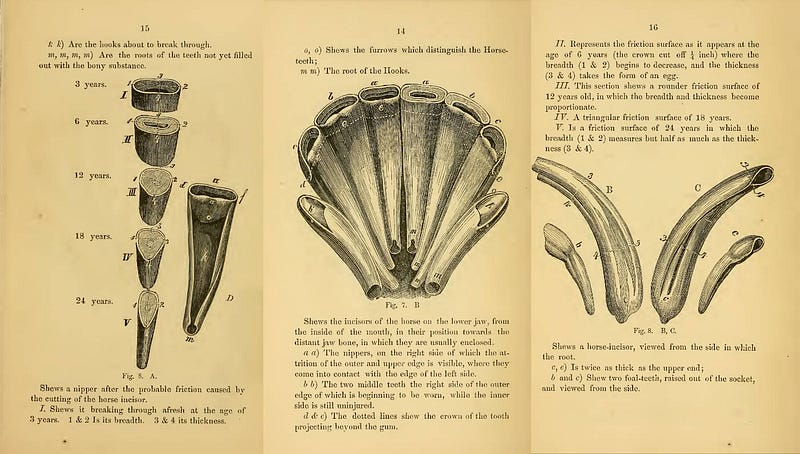
And, the illustrations! One of my favorite parts of looking through books published in the early 20th century and before are the illustrations, which are often ornate and spectacular. One of the horse books I hit upon was An infallible guide to discover the age of horses — which was a pretty important task, given that horses back then were a massive capital expenditure and liable to die on you soon if you unwittingly bought an old one.

The illustrations of horse’s teeth are pretty amazing, like these …
2) Old vinyl music
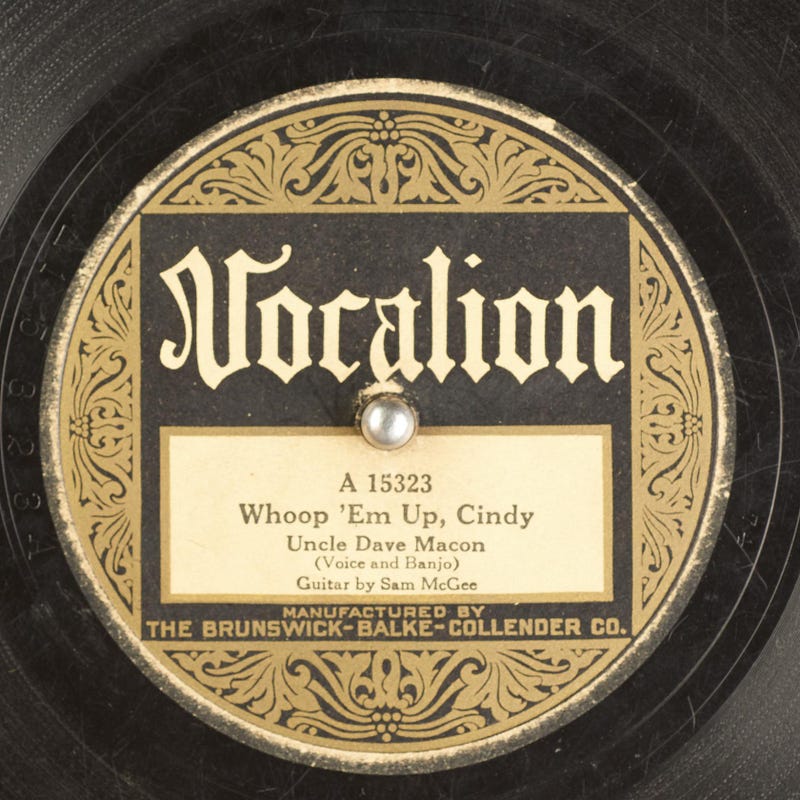
Another wonderful part of LOC Serendipity is the music page — which plays random songs from the Internet Archive’s digitization of 78-RPM records.

It’s dead simple: You hit the “play” button, and it starts playing a random song. If you don’t like it, hit “skip” and it’ll pick a new one.

It shows you the direct Archive link for the song currently being played, so if you like it, you can save the link or download the file.

I had a blast streaming this in the background while I worked the other day. It careened from genre to genre — sometimes playing old-school bluegrass banjo-shredding (like this 1926 recording of “Whoop ’Em Up, Cindy”), other times big band (a 1934 Tommy Dorsey recording of “Heat Wave”), then material from outside the western canon (like “Yarn — Anoosh” by Jimmy Vosbikian), and some of those unsettlingly jaunty oh-hai-there-I’m-off-to-fight-in-the-war songs (like “Any Old Place The Gang Goes (I’ll Be There)”).

I like the fact that you have no control over what song plays; I’m a big fan of randomness for rewilding one’s attention!

3) Old radio dramas

My other favorite tool in LOC Serendipity is this one — which plays a random radio show from the Internet Archive. Much like the music-playing app, you just hit “play” and it picks one; if you like it, there’s a URL to save it, and if you find it boring hit “skip” to go to the next one.

These can be wildly absorbing. The first time I hit “play” I was given “Peace Mediator”, a radio drama re-enacting the story of Ralph Bunche, a Black political scientist and UN diplomat who won the 1950 Nobel Prize for his role in Arab-Israeli peace negotiations. Then I got “The House of Fear”, an episode of the radio mystery-drama series “The Whistler”. (I just cannot get enough of the oooooh-scary horn-and-strings stabs and ululating organ in those old radio mysteries.) Then it was on to “To Live Again”, a romance drama: “Tonight we invite you to the wild mountains of Portugal, where two lovers invite terror and death in order to achieve their freedom.”)

(Now I’m thinking of doing a hardware-hacking project, where I take an old 1940s-era radio and replace the guts with a raspberry pi that connects to this feed; when you turn the radio on, it begins playing a random old radio drama.)

Anyway, there’s another tool for rewilding your attention, and bringing you into the weird corners of the Internet.

If you have any other tools to recommend, let me know in the comments, or email me at [email protected]!

(Enjoyed this post? Then behold the “clap” button and its eldritch secret: It was designed to handle up to 50 claps … per reader!)

Clive Thompson publishes on Medium three times a week; follow him here to get each post in your email — and if you’re not a Medium member, you can join here!

Clive is a contributing writer for the New York Times Magazine, a columnist for Wired and Smithsonian magazines, and a regular contributor to Mother Jones. He’s the author of Coders: The Making of a New Tribe and the Remaking of the World, and Smarter Than You Think: How Technology is Changing our Minds for the Better. He’s @pomeranian99 on Twitter and Instagram.

Search
Culture
Media
Content
Psychology
Recommended from ReadMedium