
Eating with your hand — Can or Cannot?
Mindfulness at its best
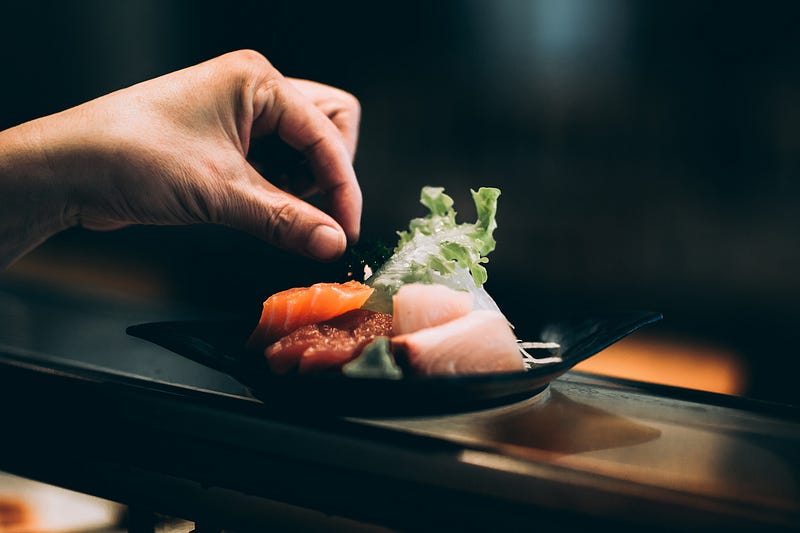
“Wow, that’s so interesting that you eat with your hands. I’d like to try it sometime.”
“What? You eat with your hands? That’s just gross.”
I often get mixed reactions about the daily and customary practice of eating food using your fingers from many people in the Western Hemisphere. In India, Africa, and several other Asian countries, breaking bread and eating with your bare hand is a norm.
I’m not referring to finger foods like French fries or chicken nuggets. I am talking about a multi-course meal that includes rice or bread with vegetables and protein (meat, chicken, fish).
As a South Indian, rice is an integral part of our diet. Eating with your hand takes skill and it is something that one picks up as a child. As they get older, they get more sophisticated with their fine motor skills to be able to scoop up every morsel of rice from the plate. Of course, along the way adults provide informal instruction to shape the expected etiquette when eating with hands.
The Vedic Connection
Practices that continue for hundreds and thousands of years do so because they serve a purpose. If they didn’t, they would become extinct. The right hand is used to eat food. If a child is left-hand dominant, most families will insist on training the child to eat with their right hand.
According to the scriptures, the five fingers represent the five elements: earth, water, fire, air, and space/ether.
Eating with hands allows for a more mindful experience, where the person is able to feel the texture of the food, determine portion size, and taste the food. One of the benefits of eating the food with the hand is to determine the temperature. If the food is too hot for the fingers, then it is too hot for the tongue and mouth. It prevents the burning of the tongue that can happen when eating with a spoon or fork.
Using fingers to eat the food provides for a deeper connection with the food that we eat. The nerve-endings present at the ends of our fingertips activates a connection between the hand, food, and the mouth. A connection that is lost when using an implement such as a spoon or fork.
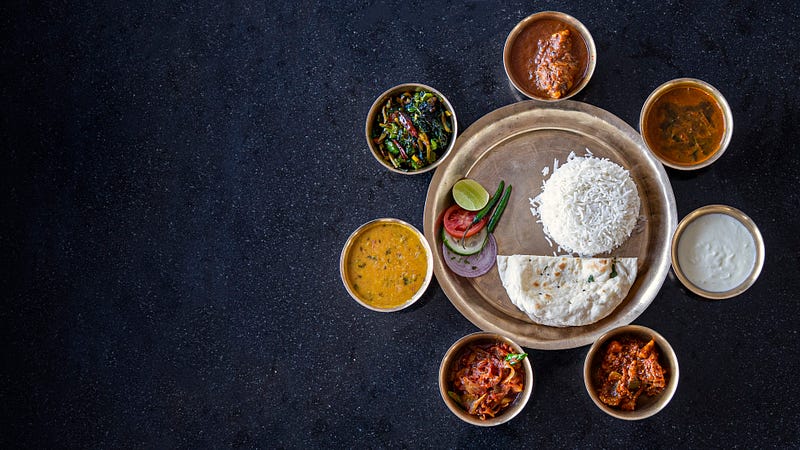
The Health Connection
From a scientific viewpoint, our hands and palms contain normal flora, a bacteria that protects the skin and body from harmful microbes and improves digestion. Of course, the pre-meal ritual is to wash hands with a gentle antibacterial soap.
In the olden days when people ate their food sitting cross-legged on the floor, the norm was to wash their feet too prior to a meal.
The Emotional Connection
Food is an emotion for me. After a long trip away, nothing is more satisfying than returning home to a simple meal of rice and dhal (lentil curry) eaten with my hand. In an article in the Wall Street Journal, Choudhury writes about the pleasures of eating with fingers.
The phrase “finger-licking” probably had its roots in the practice of eating with hands. The food is said to be so good that a person ends the meal by licking every bit of sauce from their fingers.
The experiences also often result in muscle memory in eating certain types of food. For example, it is not easy to eat fish with bones using a fork and knife. So much of the meat and goodness is wasted. Eating fish with hands prevents accidents like choking on small scales or bones.
Try it — at your own risk!
I am not sure how open you are to new experiences. But if you’ve gotten to read this far, you are either intrigued by the idea or are totally disgusted by it. In the spirit of engaging in new experiences, if you want to give it a go here are a few things to consider.
Where do I start?
Different foods lend themselves to a certain way of eating. Food that is eaten with hands mostly includes vegetables, meat, chicken, or fish pieces that are cut to bite-size portions. Please don’t think you can get a piece of steak and be successful with eating that with your hands. Actually, that would be a sight to watch…..more like the cavemen!
On the other hand, if you had a drumstick piece of a tandoori chicken, it’s best eaten by holding the bone and biting into the chicken. Yum! Here are some pointers to get you started.
Wash your hands. Always be sure to wash your hands before and (of course) after the meal. Ladies, if you have long, manicured, fingernails I would recommend passing on this experience. Or at least come back to it when you don’t have to worry about the nail polish being stained or chipping off.
Select the food. Next time you are at an Indian restaurant or order take-out, be sure to order the naan or roti (Indian bread) and a curry dish of your choice. If you want to challenge yourself, order some rice too.
Use your hands. As a novice, you may not be able to tear the bread with one hand. You may need the assistance of your left hand to tear off a piece. Serve yourself a portion of the curry on your plate. Using your right hand, dip the bread in the curry and scoop up the vegetable/ chicken/ meat pieces along with some sauce using your fingers and transport it into your mouth. Chew and swallow your food as you would normally do before you take the next bite. I haven’t checked, but I bet there is a YouTube video on this!
Be patient with yourself. Do you remember the time you first used chopsticks? I doubt you were able to pick up a peanut and move it from Point A to Point B with ease. Same with eating with hands. It is an acquired skill that is refined over time. You will get the hang of it with more practice, just like any other skill.
Give it time. You won’t reap the benefits of the different connections discussed above with just one meal. Try this over a period of time to experience the true benefit of eating and savoring your food.
I can’t do this!
If this is not for you, that’s okay too. At least now you know such a practice exists. Next time you go into an Ethiopian or Indian restaurant, you may be more aware of people eating with their hands and you will be more knowledgeable about why they do so.
So where do you stand — CAN or CANNOT?
I’d love to read your thoughts in the comments section. If you liked this article and would like to read more of my work, you can follow me or subscribe to an email.
If you’d like to join medium to read my work and that of other writers, you can do so using the referral link.


