
Eating My Way through Transylvania
I will never turn down a Romanian mother’s cabbage rolls
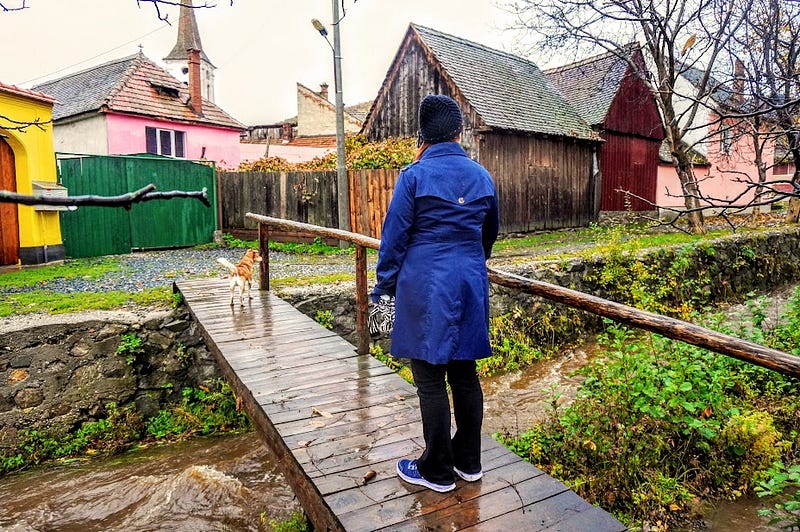
While in Romania, my husband Joe and I hired a private guide. This was strange for us. We are usually dedicated do-it-yourselfers, sometimes to the point of our own misery. But we were tracing Joe’s father’s life across Europe and we could not, for the life of us, figure out how to get to the small mountain town where he was born any other way.
There were no buses into town. No trains nearby. No tours going through. Nowhere to even rent a car if we wanted to. We weren’t flying into a major city but instead taking a series of tiny trains from the Tokai region of Hungary.
Plus, the Romanians drive like Italians, but with worse roads and less English.
Enter Kinga
We contacted a well-reviewed Romanian tour company and they sent us Kinga. She was tall, with brown hair that she teased into a small bouffant, and a Natasha-and-Boris type accent. She had a Polish father and a Hungarian mother. She spoke Romanian, Hungarian, Polish, English (which she claimed to have learned exclusively from television), as well as a bit of Czech. We heaved our suitcases into the back of her brown station wagon and were off.
After she accompanied us on our pilgrimage to my father-in-law’s birthplace (a story for another day), we still had 2 1/2 tour days of our 3-day minimum. And Kinga made sure we got our money’s worth.
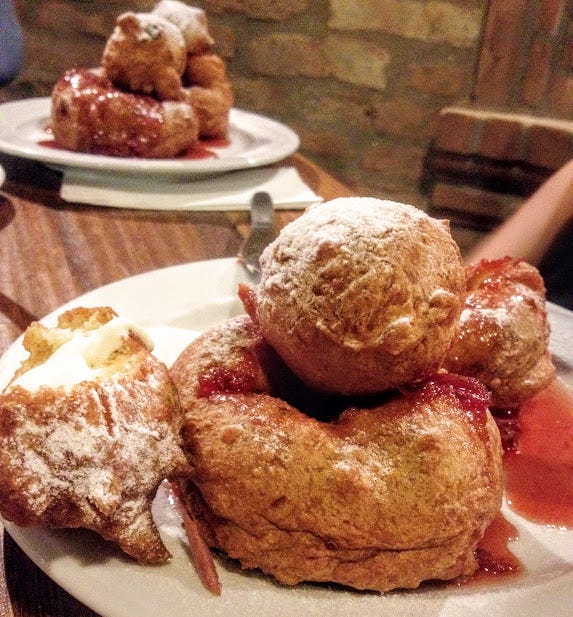
For our late lunch that day, she brought us to Dracula Danes, a lodge-like restaurant with a petting zoo out back. We gorged on meat pies and giant fried donuts — a house specialty.
An hour later, we arrived at our B&B in the town of Seibel, straight out of a storybook. The bridge we drove across to get to the pensione was so narrow I would have assumed it was pedestrians only until Kinga eased her car across it. We waited for a cow and several dogs to move out of our way before pulling into Pensione Ramona.
Adriana was a round woman with short hair and sparkling eyes. She spoke Romanian and French. Her husband Ionel (who knew exactly five words of English: “You can call me John!”) was small and wiry. Their genuine delight in having us stay with them was obvious the minute we walked in the door (tourists in the Romanian countryside are rare in October). Adriana announced, through Kinga, that dinner would be ready within the hour.
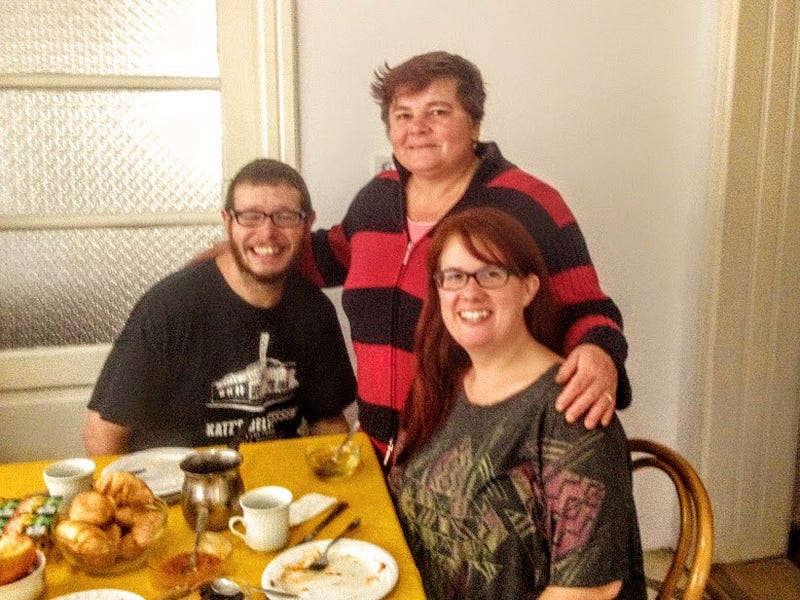
Joe and I looked at each other in despair. We were full. Not just not hungry. FULL. And I have to tell you, we are champion big eaters. We begged her to push dinner back, which she acquiesced to with a smile.
Our room was simple and clean, with four twin beds. Thankfully, Kinga had her own room next door. We heard the TV blaring the minute her door shut. We didn’t see her again until dinner.
We were experiencing a reality of travel — not everyone is fun to travel with. Many people learn this on vacation with friends. A person might be perfectly enjoyable in normal life, but days and days together accentuate your differences.
Kinga was cold and closed-off. She was polite and basically kind, but not interested in becoming friends. As an introvert, you’d think I would appreciate the quiet, but instead, I found it wearing on my nerves.
Shut up, Stomach
Dinner, on the other hand, was well worth leaving the sanctity of our room for. At the appointed time, we waddled out to the dining room, still not hungry.
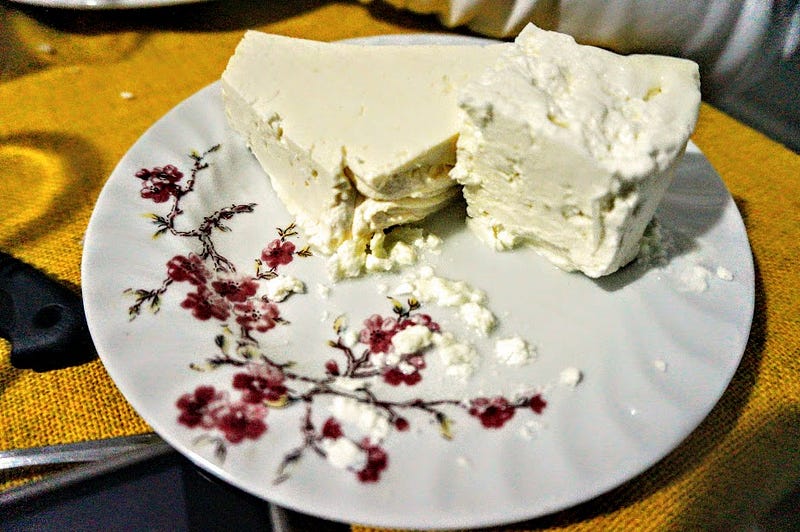
It was hands-down the most perfect homemade meal I have ever had: sarmale (beef-stuffed cabbage rolls), homemade sheep feta, soft cow’s milk cheese, and vegetables from their garden. It ended with a slab of hand-formed apple strudel.
The food just kept coming and I just kept telling my groaning stomach to deal with it. Each meal we would eat at Adriana’s table was served alongside three tiny decanters: wine, palinka, and tuica (a type of sherry), all made by Ionel.
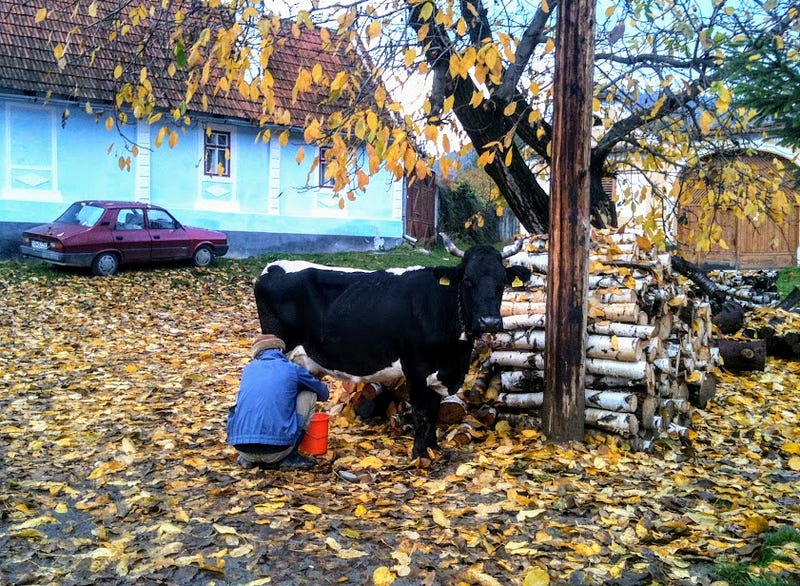
“You make picture. I smoke.”
The next two days were a series of long drives and semi-forgettable castles — Hunedoara with its impressive views, Sighisoara Citadel (the birthplace of Vlad the Impaler), Bierten fortified church and the famously complicated lock inside, Sambata de Sus Monastery, with newly restored buildings and cold, empty grounds.
At each spot, Kinga would tell us a few things about the place, both new and old.
Then: “You make picture. I smoke.”
She would find a place on a bench with a view and wait for us to explore and buy snacks and take pictures. And each time we finished, she said, “Okay. We go now.”
On one winding mountain road, there was a cheese stand on every corner. Each was staffed by a single woman who likely made the cheese herself. I finally pointed and said, “Can we get some?”
“You like cheese?”
“Yes!”
By then we were past the last stand. Kinga hit the brakes. She craned her neck around and reversed for about a hundred feet, half on the road, half on the shoulder, until we were back at the stand.
I bought two fist-sized lumps of cheese — one with a hardened outside that tasted like smoked mozzarella, and another wrapped in bark that tasted like bark.
A Final Meal Worthy of Death Row
Our last night at Pensione Ramona, Adriana served turkey and vegetable soup with thick dollops of cream, giant hunks of veal, silky new potatoes, and an eggy sour cherry coffee cake. This time, Ionel helped serve the meal instead of coming in late from working on the farm.
Joe asked him, through Kinga, how he brewed the palinka. He laughed and pointed at the giant soup pots, then mimed pipes that would attach and were now stashed away somewhere. The grapes for the wine came from the vines in their driveway. The plums for the palinka came from their fields. Then, perhaps happy for such an appreciative audience, he topped off our decanters of palinka and tuica. Once, twice, three times.
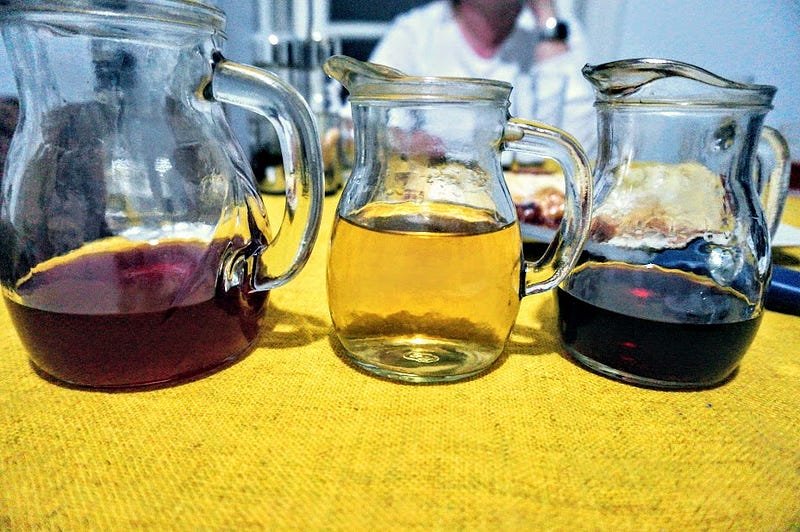
We could only communicate through Kinga’s very literal translations, which, after a few glasses of palinka, started to sound hilarious.
Finally, Ionel pulled up a chair and sat with us.
“You need a website!” Joe told Ionel.
I agreed. “Everyone should know about your house!”
“Mmm, ok.” Kinga translated, her face and tone still neutral, and Ionel said, “yes yes yes!” and slapped Joe on the back.
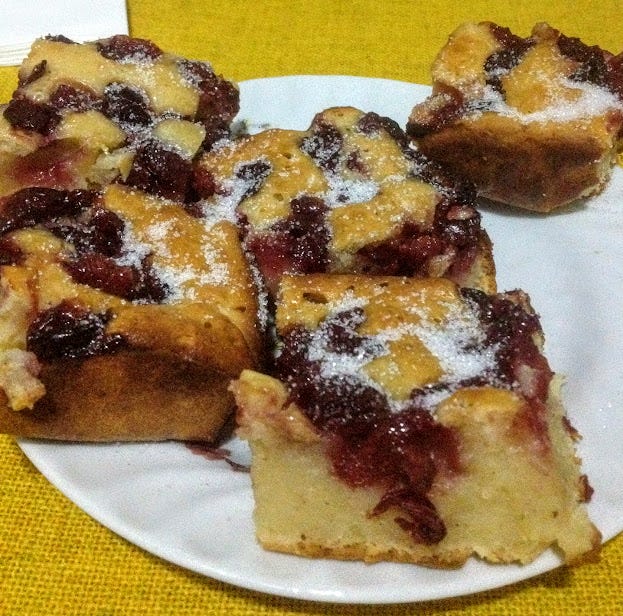
After she served the coffee cake, and after much begging from us, even Adriana pulled up a chair and sipped delicately at the super sweet tuica. Her round cheeks turned red and she started laughing too, as we grew impatient with translating through Kinga and instead tried to act out everything we wanted to talk about.
Finally, Kinga, allowed to stop working for the first time in three days, pushed back from the table and visibly relaxed. Not much of a drinker, she tried the palinka we were all shouting about and nodded.
“Yes, it’s good.”
We laughed and cheered at this wildly understated pronouncement.
The next morning, Adriana and Ionel hugged us goodbye. We did our best to express what an unbelievably good time we had. I hope our big smiles and bleary eyes told them since Kinga’s translations were unlikely to convey our enthusiasm.
We were off to Brasov. Kinga stopped at our hotel to drop off our luggage, and then took us to the main square at Brasov. Our goodbye was not teary.
“Ok, market is here. I go.”
And just like that, she was gone. The next day we would take the public bus to Bran to see Dracula’s castle, back to being do-it-yourselfers. We had never wanted a tour guide, and we certainly would never have picked Kinga. But for the rest of the trip, whenever either of us needed a break or a moment alone, we would raise our finger.
“You go make picture. I smoke.”