
Eating Frosted Flakes with Chopsticks
A camping trip in Northern Japan
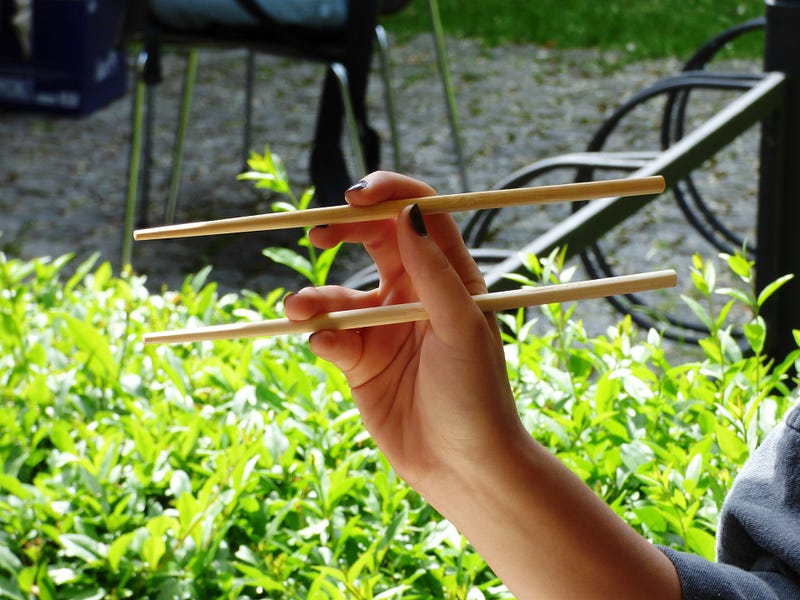
Half the fun of camping is making do, right? At least that’s what I tell my family when I realize which crucial item I have forgotten to bring this time.
Have you ever opened a can of baked beans with a screwdriver and hammer? Can’t say I recommend it as either a safe or enjoyable procedure. Or there was the time we carefully cleared the perfect tent spot of all stones and twigs, which might poke through the floor and prevent our beauty sleep only to realize I had forgotten to pack the tent.
So it was with a sinking, yet familiar feeling I realized we had set off on a 10-day camping journey around Hokkaido, the northernmost main island of Japan without any utensils.
The easy way for a non-Japanese speaker to travel in Japan is to work with an English-speaking travel agent or go with an organized tour group. This was the method of choice among all our ex-pat friends. But working with an agent is expensive and travel within the tight time confines of a group itinerary didn’t suit our family.
With research and a willingness to risk ending up in a tight spot, we were able to take numerous trips instead of just one and see parts of Japan many westerners don’t experience.
This method is not for the faint of heart. Once you get off the beaten tourist path in Japan, things will be complicated. How do you book a ferry when you don’t speak Japanese? If websites exist they won’t have English. We set off with a loaded minivan, three kids ages 12 to 8, and a wing and prayer.
Stop number one was the Konbu Kan, the seaweed museum.
I had planned out roughly the places we hoped to find camping each night but little beyond that. We were trusting to Lonely Planet Japan and serendipity for the rest.
Japanese car ferries are awesome. Rather than seats, you will find large carpeted rooms. Leave your shoes at the door, sit anywhere on the floor or take a nice little nap. If it is an overnight ferry, it might even have a hot bath on board.
I spent the 4-hour ferry crossing paging through the guidebook and coming up with a plan for our trip.
“It looks like there is a seaweed museum not too far from the ferry dock,” I informed my family with a level of excitement none of them shared. “How can we pass up a seaweed museum?”
We could not.
Our family fell into rigidly defined roles while traveling. My spouse did the driving. I did the navigating and deciding how we would spend the day. The kids did the complaining. Everyone enjoyed themselves except for those parts where we yelled at each other about things going wrong.
If you ever find yourself near Hakodate in Hokkaido, Japan, stop by the Konbukan. The Seaweed Museum is really better thought of as a small museum attached to a very large gift shop, but both parts are awesome.
First, you have the museum telling the story of the importance of kelp to both Japan and world culture throughout history. It’s all entirely in Japanese which adds a fun element of mystery and speculation.
Even without documentation we could read, the message was clear. Seaweed is used in an incredible array of edible and non-edible products. Did you know Samsung uses kelp to make speakers? Now you know.
Fascinating as the museum part is, the gift shop is even better. Here you can sample and buy all things seaweed. There are candies, cookies, chips, dips, bread, ice cream, drinks, and pretty much everything else imaginable.
It was only as we set up camp the first night I realized we had no silverware along. No problem, I thought. We have a package of disposable chopsticks from the 100 yen store. Cheap chopsticks are the perfect utensil for camping. Use them to cook, then eat, and later as kindling for the campfire.
What they are not well suited to is flipping burgers on the grill. With great effort and a willingness to let one side get overdone before flipping, we managed the task with only one burger sacrificed to the cookout gods.
The morning brought new challenges. Frosted mini-wheats eaten with chopsticks? — easy peasy. Frosted flakes? — not so much. The trick is to eat fast. Once they go soggy you are sunk.
Hokkaido is famous for the Sapporo Winter Festival and world-class skiing. Not many westerners visit in the summer which is a pity as it is a remote camper and wildlife enthusiast’s dream.
During our two-week camping trip, we could count on our fingers the number of Caucasians we saw and most of those were speaking Russian. Our rudimentary Japanese skills were regularly stretched to the limit.
In Tokyo or Kyoto, all a befuddled Western tourist needs to do is look confused and some helpful English-speaking soul is likely to hurry over with advice. The people in Hokkaido were just as eager to help but without English skills.
Being forced into reliance on self-invented sign language and using every bit of the Japanese we had learned thus far was good for us. The pervasiveness of English worldwide makes living as an ex-pat isolated from the local culture much too easy and comfortable.
Markham Heid, in How Too Much Comfort Is Making You Miserable, wrote about the power of intentional discomfort in life to help us be happier, live longer, and appreciate our life more. Moving to a foreign country is a great way to stretch yourself out of your comfort zone. Venturing far outside of the ex-pat bubble is even better.
Turns out we need a shared spoken language much less than we think. Roll up at the office of a campground in your loaded minivan and it is obvious what you are looking for. Line your three kids up next to two parents at the chair lift ticket counter and the smiling man will tell you exactly what you need to pay.
Make sure you have plenty of cash because you might as well leave your credit cards at home in rural Japan.
“Whoever you are, I have always depended on the kindness of strangers” — line from Blanche Dubois in A Streetcar Named Desire
One of the highlights of our trip is interaction with the few other campers out and about during this off-season trek. There was the night we struggled to get the campfire lit until a young man came over with a few hot coals from his fire to help us out.
There was a little old woman at the open-air onsen who noticed my daughter struggling with the heat and showed her how to use a hose to pour cold water on herself and also add some to the bath to lower the temperature.
There was a man who plucked a stag beetle off of a tree and presented it to my youngest child in a little beetle cage. Beetles are very popular pets in Japan and every child should have one the man seemed to indicate as he made it clear this was a gift.
This was the first, but not the last time, we realized we forgot to bring more than just utensils. We should have carried a supply of small gifts.
Never travel anywhere in Japan without a stash of items to give to strangers who give you a gift or perform a kindness. Much like a westerner speaking any level of Japanese, they won’t expect it but will be delighted if you can manage it.
We made up a s’more for the man who gave us hot coals using our dwindling supply of graham crackers, chocolate, and marshmallows we brought along on the trip. He is puzzled but bows politely and smiles widely after his first bite.
As we rapidly consumed the food supplies carried along from home we transitioned to items purchased locally. The best find was the shokupan available at every convenience store. Shokupan is a delicious milk bread that makes the most incredible toast you have ever eaten.
Traditionally sliced very thickly it fits perfectly on a marshmallow stick for roasting over our campfire. Add a squeeze of butter and jam from the ingenious Japanese condiments package and you have a delicious breakfast or after-dinner treat. No knives are needed.
We woke up one morning to find our middle child missing. A quick peek outside the tent didn’t help. Ten minutes later we found her sitting in front of a stranger’s tent having a chat with her new best friend, a 60-something Japanese man who spoke English.
We have the obligatory stranger danger, “please don’t leave the tent without waking us up to tell us, etc. talk” with our child, but out of earshot of the children, my spouse and I discussed how grateful we were to live in a country with such incredibly friendly and welcoming people.
Plus chopsticks. Turns out you can survive just fine without metal utensils, as long as you have enough chopsticks.
Read all of my travel stories here. Join Medium to read not just my stories but all the other fantastic content lurking around every corner. Use this link and I’ll get a small commission when you sign up.


