
POETRY | GAIA PROJECT
Earthworm
Castings of Gold
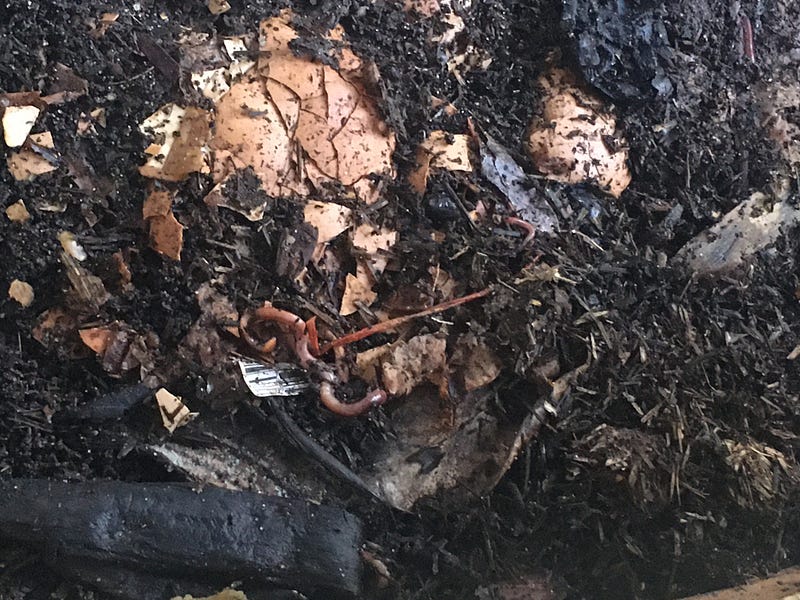
Fruit and vegetable skins Go in the compost bin Or to feed the wiggly worms Abundance of castings confirms They adore munching on food scraps Turning waste into golden craps
A natural soil booster Much like poo from ya rooster Making dirt come alive Helping plants to thrive Keeping bugs at bay What else is there to say?
Minimise the gas at the tip Recirculated to equip Next-generation of food Grown completely nude No need for sprays or fuss A great big healthy plus
Not only for our personal worth But all the living things on earth
Remember fruit and vegetable skins Go in the compost bins To feed the wriggly worms Keeping Earth making turns Around our sun For eons to come
Desiree Driesenaar and Dr John Rose this one is for you!
We currently have two compost tumblers – scavenged cheap from a local trading post, and an old bathtub for our worms– gifted from a house that got knocked down.
We alternate putting our food scraps between the tumblers. When one is full, we leave it to marinate, so to speak, and start filling the second one.
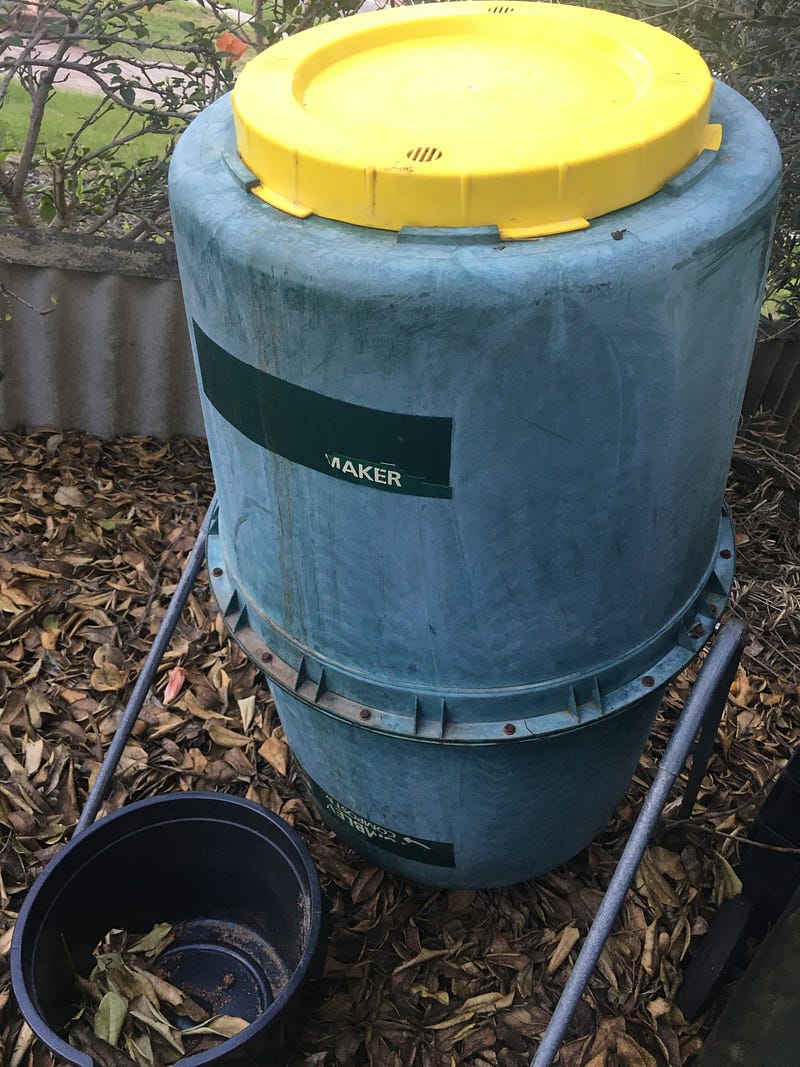
I thought they would smell, especially in the Australian summer, but they haven’t. Adding dry leaves to the mix helps absorb the juices… which are liquid gold fertiliser.
We tried composting first without the tumblers but found ourselves attracting the neighbourhood fence walking rats. So far… with the more secure lids, there have been no more rats!
The worms don’t miss out on scraps either. They get plenty. I make a veggie/greens/apple juice almost every other day to maintain my iron levels and the worms indulge in the dry leftovers. Plus any veg I have used to make stocks with. Eggshells…anything really except citrus and meat for the worms, and meat for the compost. The meat, we found bought meat maggots.
We rarely eat meat, but when we do, if there are bones left, we gift it to a mate’s dog or bury it under the soil. I have heard some people after making a bone broth, blitz the bones in a Vitamix and sprinkle it over their garden. There is always a way!
Our rubbish bin rarely has any waste these days. Without the food waste plus everything that can head to recycling, it now takes over a month to fill our bin.
I understand that not everyone has the space for composting, but even small amounts help. Your window sill herb gardens or indoor plants (depending on what type) will love it.
Many community gardens seek food scraps for composting and some councils are now providing special bins to collect the waste separately. Step by step the changes are rippling. Our kid’s school has a BFG — Big Friendly Garden. It also collects food scraps from the community to use in the garden.
It makes a massive difference over time. Every little bit helps.
Every choice makes a difference.
Small things ripple into big things.
Generations that came before us knew this. We just seem to have forgotten a little of late in the race to bigger better more.
Massive thanks to Dr John Rose and Desiree Driesenaar for prompting this piece. I know I have been throwing the word “gold” around…a lot of late..but seriously, you are both pure gold.
Thank you for all that you are and do. Shining lights leading us to take action.
Thanks for reading
Thanks for being you


