
Earthbound for the SNES Is an Atypical Gaming Classic

The inherent escapism which exists within RPG’s is often succinctly conveyed through setting itself, generally involving fantastical elements and a protagonist which loosely falls into the hero archetype of a ‘chosen one’. For various reasons, this trope follows that the player, as channeled through the lens of some hero, is immediately subject to some great catastrophe forced upon them by some vaguely defined villain — often simply an antagonistic element that goes little farther than being a power hungry pillar which the story rests against. For plot reason, due to this antagonistic element, the contrived hero is then expected to take up this burden to save his or her realm, people or recovering some talisman.
We pause here to note that, for marketing reasons, the aforementioned hero is often depicted as some young boy, possibly with spiked hair and blank features, used as a catch-all to replace greater semblances of personality. While this may seem tricky and/or manipulative, we must point out that this actually aids the player fundamentally. It does so because, in creating a generic avatar, game designers have create a blank template upon which players can project their own ideas, dreams and desires. Often to add in more flavor, protagonists are given some vehicle of emblematic and general motivation such as saving their family, finding a princess or discovering their past.
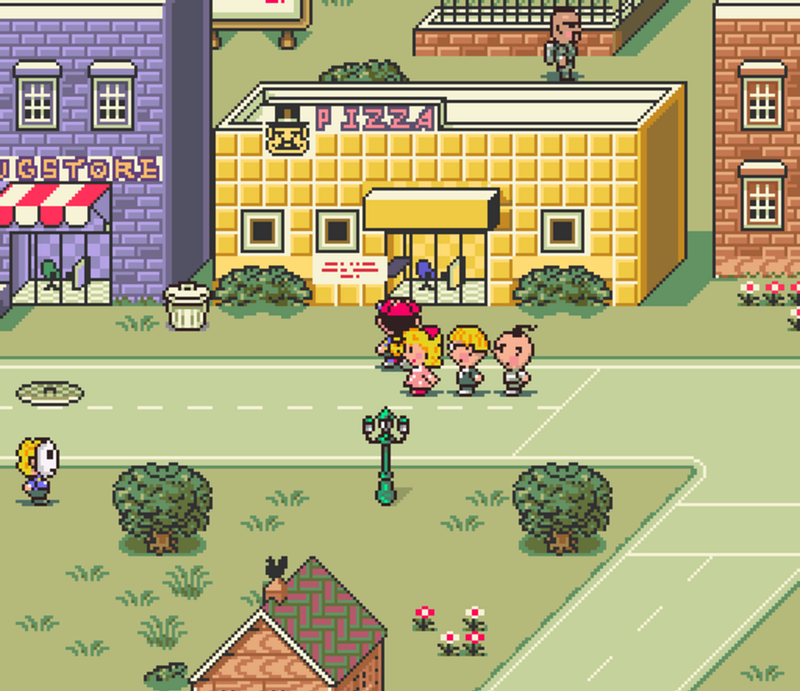
This well-established blueprint of RPG design is, however, broken by Earthbound, which instead uses standard RPG plot elements to further the story while also offering whimsical twists to their rote existence. For example, the first notable thing a player will find in Earthbound is that they are not projected into some fantastical world but, instead, find themselves plunked down in a world that mostly resembled a fictional version of our own. The designers call this land ‘Eagleland’, perhaps in reference to the American bald eagle — hat-tipping in a pithy way to the general Americanized narrative which this JRPG carries.
Beyond this, the hometown itself which you start in is reminiscent of a generic American suburb, complete with its own drugstore, fast food, and even arcade. The first obstacles the protagonist of Earthbound faces are simple animals — birds, dogs, etc. The protagonist is himself no more than an ordinary boy, adorned in a striped shirt and baseball hat and, beyond powers which are never ultimately explained, he is as nondescript as any character that has ever been created — he is so nondescript that nothing to justify his place as the savior of the world exists.
Yet, none the less, as seen through the game — he is a savior.
While the relatively familiar environment the player finds themselves thrust into initially is rather commonplace and likely causes difficulty with engagement, there is familiar dialogue within the narrative of Earthbound which does manage to keep things humorous and light-hearted, plus engaging. We will add that, soon enough, the narrative grows far more abstract and tangental, often veering into weirder lines of storytelling which affect both the story, environments and characters.
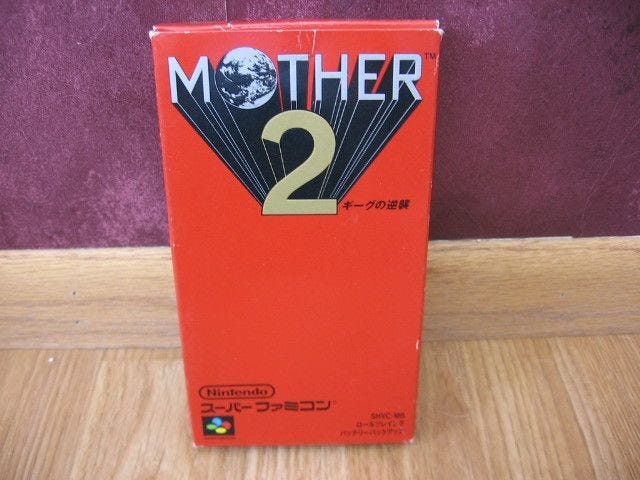
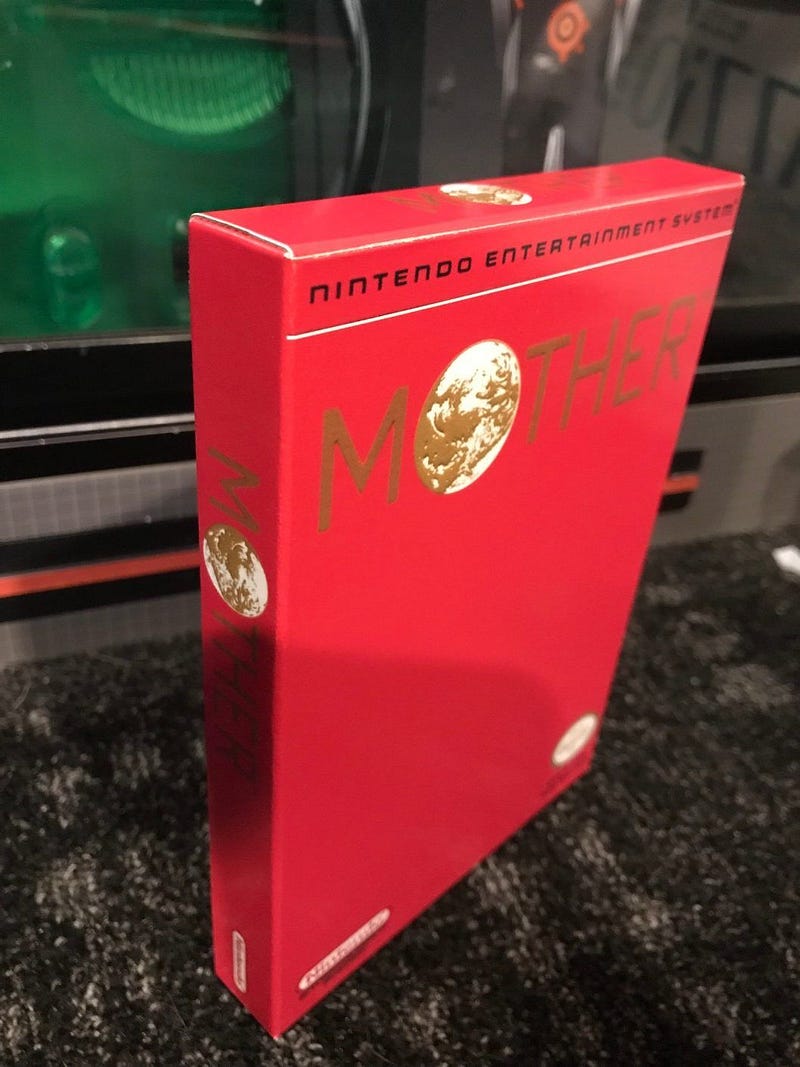
To tread somewhere, with the above caveats in mind, Earthbound (or Mother 2, as it was originally called) starts with a meteor falling smack into a small town where Ness, our personal hero and protagonist, happens to reside. His adventure starts as he, his pet dog, and a loyal friend named Pokey, manage to find the meteor resting at the top of a local hill. This discovery itself represents the beginning of the in-game narrative and is the start of our protagonists journey.
As Ness, his dog, and Porky attempt to explore the meteor, of all things a bee emerges and claims to be from 10 years in the future where everything has been destroyed, laid waste waste completely by an invading species. It only grows more bizarre as this bee, claiming to be in search of some ‘chosen one’, proclaims that it is tasked with finding the one who will save the world from the invaders, or the ‘Gygas’, as the hero and his or her three friends fulfill their prophecy, as accorded its legends.
Now, it doesn’t get much more stereotypical than this but, because the way this information is relayed to the audience is so cartoonish in nature, there is no real sense of urgency drawn from this story beat. Even the bee himself (his name is Buzz Buzz) is promptly killed off, not by the alien Gygas, but instead by a middle aged lady with a fly flap.
This is exactly where Earthbound/Mother 2 shines best because it manages to give you a coherent story that provides all the motivation to do the things the game wants you to do but simultaneously stays extremely self aware. The line between seriousness and goofiness is a fine line to tread but Earthbound treads it with expert adeptness using the illusion of a standard JRPG plot that breaks its own suspension of disbelief through quirky post modern elements.
Going back to the events of the game, the character is informed that Gygas, the alien, exists as some form of ‘universal cosmic destroyer’ yet does little more to answer the questions behind what that might entail. While Mother 1, or Earthbound: Zero, as it was titled for the American release, DO go over this — it is not central or pertinent to the story as it exists within Earthbound itself. In fact, the entity of Gygas is treated less like a character within this story and more like some simple cosmic force of nature itself. This is due to the fact that, while significant to what it represents, Gygas is less significant as WHO it represents.
What Gygas represents, as the narrative unfolds throughout the game, is distilled into the essential idea of corruption. An important tool that acts as an emblem for this idea is the Mani Mani statue which historically (game-wise) corrupts its owner through promises of greater power — as seen reflected in the variety and type of enemies our protagonist faces during his trials and tribulations themself. You see, many of the animals, people and objects our protagonist fights through the game are not inherently evil in any real sense, rather they are influenced and distorted by the evil powers which Gygas uses to control those that he manipulates.
Right away after you leave your hometown and pick up your first companion, the following city you have to cross through is infested with zombies — something one might only relate to a game trying too hard to present the player with a series of overly American gimmicks but, in fact, the reality is used to both make you understand that Gygas is indeed a threat that needs to be dealt with and adds to the over all theme of corruption.
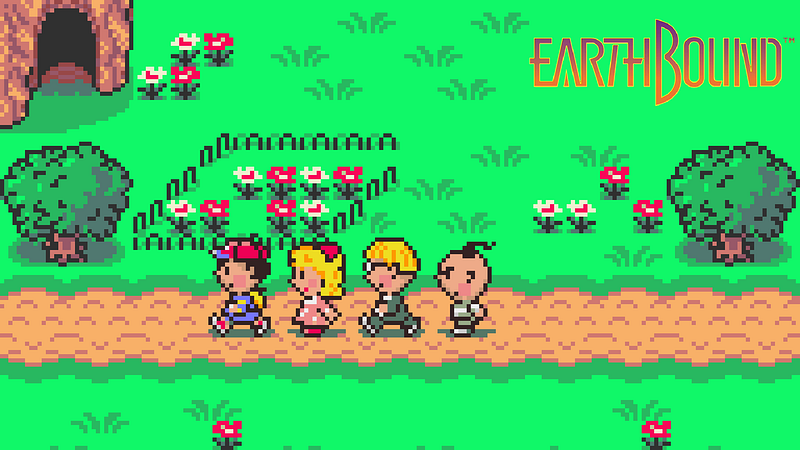
Interestingly enough, however, is the fact the first corrupted group of people you fight are not the zombies but instead are a group of cultists whose leader has been affected the Mani Mani statue — preparing you for your journey where not just monsters but also humans will stand in your way.
After you’ve finished with the zombies, gained your second companion and are ready to move on to the next area you’ll find another strange village called the ‘Saturn Valley’. It is hidden from unwanted eyes and populated only by ‘Mister Saturns’ which are a tiny creatures with no arms and a bow. They seem to be quite intelligent, prefer a quiet life, and will heal your party or provide a place to rest — all for free.
This idyllic valley is directly contrasted by a place called ‘Belch’s factory’ where Mister Saturns are enslaved to work for Master Belch. He is a slimy glob type of monster, and the sudden change to an industrialized environment is pretty jarring, an example of what makes this game so effective and engaging.
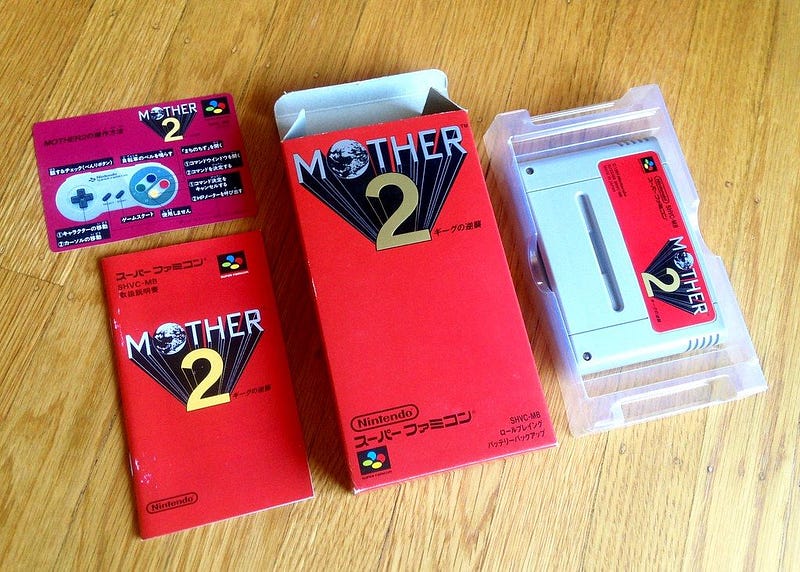
Of note, if players do play Mother 1, 2 and 3, they can witness unique thematic structure evident in Mother 3 — a more subtle take on the social changes and consequences that technological advancement has on humanity (or Belch monsters in this case).
Of course, most people will remember Earthbound because of its weird take on what a JRPG could look like; often referencing locations like Moonland where reality is turned into a Kafka-esque parallel world possibly resembling some strange drug trip.
But really, this game is much stranger because of how normal everything truly is. The story of Earthbound is not presented like a traditional adventure: it doesn’t have a strong narrative it clings onto and things that happen in Earthbound just sorta happen.
This sense of events unfolding by themselves is mirrored by how unfazed all the characters are and how accepting they respond to momentous events. Nobody ever really questions the wackiness of all that is happening which leaves the player with a lot of unanswered questions, both about the lore and reasoning of the characters themselves. One might make the case that this is a flaw in how the plot is executed, but one could also argue this actually works surprisingly well for the flow of the game.
Since the game itself doesn’t draw attention to the “weirder” design choices — the player is not thrown out of the experience but is instead invited to see the world through the eyes of our young protagonist.
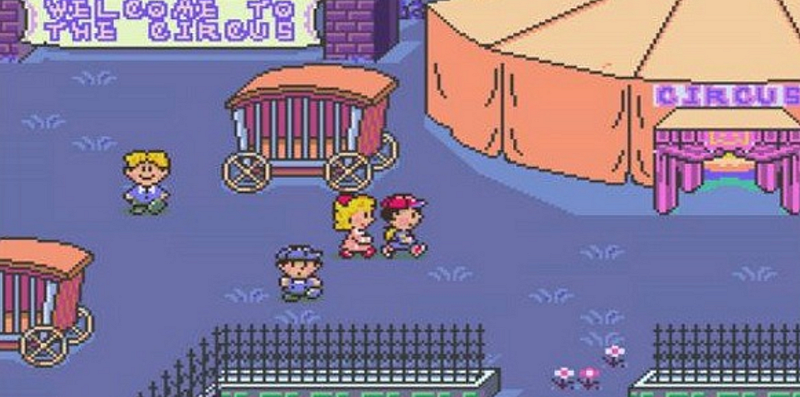
Speaking of our protagonist, though he is the silent protagonist, from his design one can tell he is supposed to be a friendly energetic kid. One time you can read his thoughts but that’s about as much “dialogue” as you will get. Even if mute, it is of note that he can be affected by a certain status alignment exclusive to him: ‘Homesickness’.
Throughout the journey Ness will become homesick which causes him to not be able to fight as well so, instead of swinging his baseball bat or using his psychic attacks, he reminisces about home. The player must then find a telephone and call up his mother to cure him. Character-wise this makes perfect sense, of course he’d miss his home, he’s a child after all, but it is also very acutely implemented into the game mechanics. The player has a real incentive to cure Ness’ homesickness since it will make him stop missing vital turns as the game unfolds. And it’s exactly this ‘normal’ in the ‘strange’ that makes Earthbound so charming.
But, of course, all good things have to come to an end and this one does, too.
After everything you’ve done through the game and after all the teammates you’ve recruited, you are ready to face Gygas head on!
Although the last final boss battle is supposed to be the crescendo of the climax that you’ve worked so hard towards, the way that it’s presented to the player does not hype them up for an epic conclusion to the story at all but rather leaves them with a somber note before finally going in to beat your last enemy.
To explain, in order to even reach Gygas in the first place, the party needs to give up their bodies to convert their consciousnesses into robot avatars. Given this responsibility, and despite them being literal children, they carry out their plan without hesitation. This leaves all the emotional implications of the scene completely up to the player to mourn over. There is no guarantee they make it out alive but they are the only ones who even have a chance at succeeding.
Simply put, the characters don’t treat these scenario as a choice that they can make because: to them — there is no choice. And, as players discover, there is not one for us either as these choices are the only way to progress the game further.
Suffice it to say, when you enter that last area, things feel different. This is heavily contributed to using the music itself — earlier upbeat and funky yet now simply cold and mechanical. The music and tone tell players one thing clearly: there is no going back to how things were.
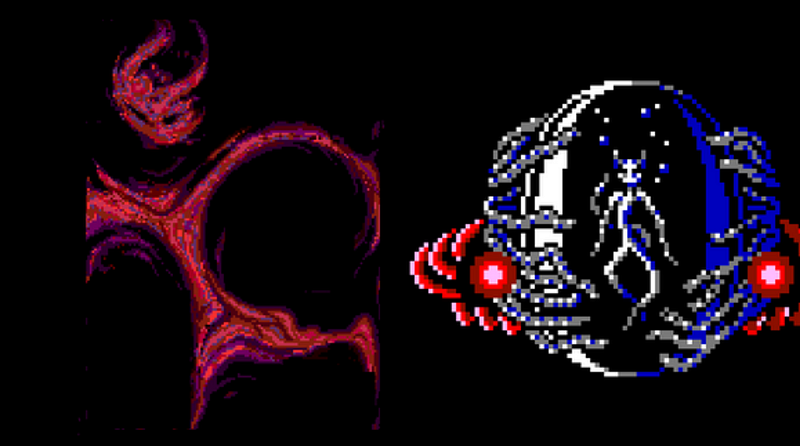
Of note, before you actually battle Gygas, you first talk to your old childhood friend, Pokey. Through the game, Pokey has become a sort of henchman of Gygas, as his own story has progressed. He has betrayed Ness, laughed at him, and the relationship between Ness and Pokey ultimately has turned rather . . . complicated.
Even though Pokey has become rather horrible to Ness, our protagonist doesn’t really appear to have held a grudge. Perhaps Ness cannot accept Pokey’s evilness due to their past, or perhaps he is unwilling to give up a close friend. The why is never clear. However, what is evident is that Pokey couldn’t seemingly care less.
Pokey quickly informs you that the ‘Apple of Enlightenment’ has made a prediction — but that he will make sure it does not occur. In Pokey’s overzealous eagerness to be part of the ‘winning side’, we discover that he has thrown away any visage of camaraderie he ever have had for our protagonist, perhaps even for humanity itself. In his somber turning, we learn that our old friend has become ultimately corrupted, bending to the desire to be like Gygas — engulfed by the very darkness our protagonist has pushed against throughout the story.
Something not been mentioned previously is a unique game mechanic your second companion, Paula (the wizard type of the group), can utilize which is simply titled ‘pray’. Making Paula pray during her turn in combat can have several effects that range from completely useless to life saving. It’s a last resort effort when you’re out of Psychic Points and items. In your last fight, though, it turns out to be the most important “attack”. The longer you fight against Gygas the clearer becomes how dim your chances of winning truly are. Eventually he becomes so powerful his mind gets destroyed as his corruption is ultimately completed.
That’s where the praying mechanic comes in.
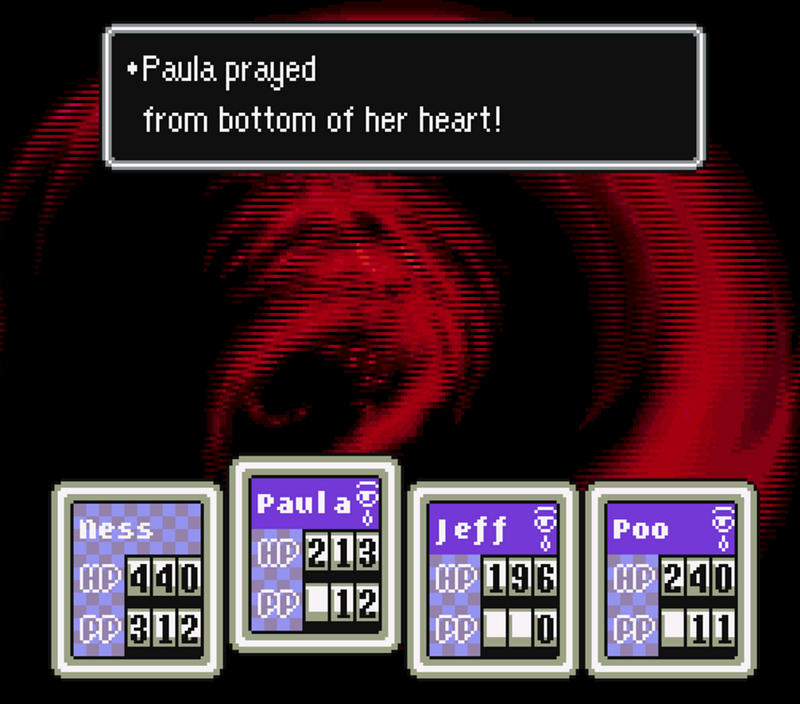
Facing their inevitable demise, Paula has no option left but simply pray — and surprisingly enough someone actually answers. It’s not God but, instead, as you continue to pray each of Paula’s turns she reaches out to all the people you’ve encountered during your journey, even some that you had to fight against.
Miraculously, they all come together to help as you struggle to defeat Gygas once and for all. It’s a touching moment where humans symbolically overcome their differences to counteract a power that is far greater than any of them singularly.
But, as it turns out, evil itself cannot even be beaten by this sympathetic teamwork of humans working for a greater goal and after a while Paula’s prayers simply get absorbed into darkness. If that’s where the game ended the player might leave with a pessimistic feel, a somber kind of awakening that makes you simultaneously too restless to sleep and too melancholic to continue with your day.
At one point in this, you might think evil has won when you suddenly get the message that “Player’s Name, prayed for the kids”.
Earthbound is known to make cheeky four wall jokes but this fourth wall break directly influences the story like it hasn’t before. You the player are the reason the heroes kept going because you believed in them and without you they couldn’t have defeated Gygas which is also a literal statement because if you hadn’t picked up the game and played it they actually couldn’t have defeated Gygas.
Praying in this sense doesn’t really relate to the original religious meaning of the term but further tries to encompass a spirituality that substitutes God for a shared connectivity of humanity.
In Feuerbach’s words: Theology becomes Anthropology. The player isn’t treated as a godlike figure either but more so as a watching Super-Ego that guides the actions of the characters and is therefore a part of them.
And now that the embodiment of Evil is defeated the spirits of the children return to their original bodies and all is well.
Earthbound does what it does very well, while always staying true to itself and the childlike spirit it approaches even the heaver plot elements with. It is so easy, when trying to capture a childhood like feeling, to glorify these experiences and filter out negative interpretations. Mother 2 on the other hand uses this lens of childlike wonder to its advantage as it does not try to shy away from darker themes and, instead, lets things happen in a very raw way even though the actual events themselves appear cartoonish. In the end, these facets are what what make the game (and its brethren) so timeless as the themes they explore speak very basic things to the human condition.
This was a column for retrocides at: https://retrocides.com/earthbound-for-the-snes-is-an-atypical-gaming-classic/