Early trade, Civilizations Disrupted
a brief overview of some pre-existing civilizations of Africa before colonial rule
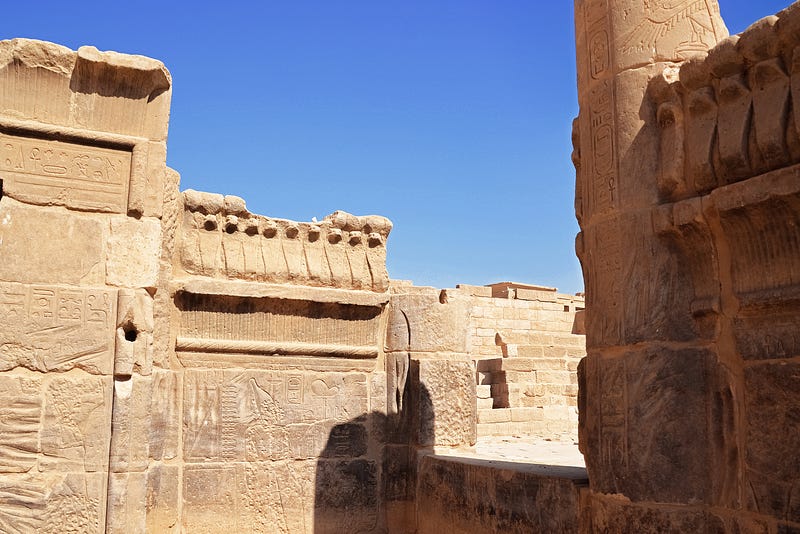
“When we say that the ancestors of the Blacks, who today live mainly in Black Africa, were the first to invent mathematics, astronomy, the calendar, sciences in general, arts, religion, agriculture, social organization, medicine, writing, technique, architecture; that they were the first to erect buildings out of 6 million tons of stone (the Great Pyramid) as architects and engineers — not simply as unskilled laborers; that they built the immense Temple of Karnak, that forest of columns with its famed hypostyle hall large enough to hold Notre Dame and its towers; that they sculpted the first colossal statues (Colossi of Memnon, etc.) — when we say all that, we are merely expressing the plain unvarnished truth that no one can refute by arguments worthy of the name.” — CHEIK ANTA DIOP
Ripples of the internal pressures in medieval Europe found their way to Africa.
For hundreds of years before the colonial era, Africa was ruled by distinct empires.
Each empire or kingdom had its own government, culture, and religion.
Prior to European colonialism, it is estimated that Africa had up to 10,000 different states and autonomous groups with distinct languages and customs.
Trade was the principal feature of the early mission of Europe to Africa.
It is worth remembering, howsoever, that trade in human lives also formed a plank of the trade interface, with Africans on the supply side of the human cargo.
The enslavement of Africans began in the mid-7th Century, with the Arabs. The Portuguese, in partnership with other Europeans, had, by the 15th Century joined, forged the triangular trade with the Portuguese initially acquiring slaves through trade, and later by force as part of the Atlantic slave trade.
Enslaved Africans were transported overseas. By mid-1860, Europeans had moved beyond acquiring and shipping Africans to work the farms and plantations in Europe, to establishing governing structures to exploit minerals and other natural resources of Africa.
Wikipedia records that European colonization of Africa developed rapidly from around 10% (1870) to over 90% (1914) in the Scramble for Africa (1881–1914).
A brief overview of some pre-existing civilizations of Africa before colonial rule. The review is antithetical to the narrative of a “dark continent,” which the colonial actors continue to broadcast before their audiences.
Civilizations DISRUPTED
The Benin Empire stood as the mount of power in what is today known as West Africa. Formed in the 11th Century, the Empire had by the 15th Century grown into a prosperous city-state under Oba Ewuare the Great.
The flourishing of Benin was reinforced by a strong political state, with territorial defense comprising of a series of earthworks and ditches, popularly called moats and said to have been constructed by the 12th Century.
At its zenith, the Benin Empire exercised a monopoly over trade along the entire coastline from the Western Niger Delta, through Lagos to the kingdom of Great Accra, Ghana today.
The Benin imprimatur over coastal trade led to the naming of that coastline as the Bight of Benin, and the renaming of Dahomey into the Republic of Benin.
The rise of Benin had attracted the attention of the Europeans, beginning with the Portuguese in 1485; the British were to follow in 1553.
Trade between the Benin Empire and England was predicated on the export of palm oil, pepper, and ivory.
The trading of slaves came later. The British wanted more; they desired greater control of trade, and access to the hinterland, beyond the coastline. England needed to reach the rubber trees out there.
Diplomacy, leading to trade treaties, including the Galway Treaty of 1892, had been adopted, with a view to ensuring this.
Convinced, however, that unhindered access to trade could not be guaranteed, for as long as the Benin Empire remained dominant in the region, England ordered an invasion in 1897, which led to the fall and folding up of the Benin Empire into the British Empire.
The Benin Empire is, today, enclosed within the State of Edo in the south of Nigeria.
The Empire of Mali held a status of prestige, the wealth of its ruler, Mansa Musa, made it more so. Functioning between 1235 and 1670, Mali was one of the largest pre-colonial states in today’s West Africa.
It became the beacon of civilization, influencing learning and culture. Conquering Sossi in 1235, Mali began to gain control of the trans-Saharan trade routes.
Virtually all the land and communities between the Sahara Desert and the coastal forests were under the Empire of Mali.
This included today’s northern Ghana, Guinea, Ivory Coast, the Gambia, Burkina Faso, western Niger, Senegal, and southern Mauritania.
By 1350, the empire had measured about 1,240,140 square kilometers. Most of the components of the Empire were administered as provinces.
Under Mansa Musa, beginning from 1312, the Empire of Mali reached its Godden age.
Mali had, without violence, annexed Timbuktu in 1324 — a city regarded as a center for learning — establishing an Islamic university there.
The famous pilgrimage of Mansa Musa to Mecca, from 1324 to 1326, provides a picture of the gold resources and prosperity available to the Empire of Mali.
Ibn Khaldun describes Mansa Musa’s pilgrim caravan consisting of 12,000 slaves, in the following words:
“He made a pilgrimage in 724/1324 […]. At each halt, he would regale us [his entourage] with rare foods and confectionery. His equipment furnishings were carried by 12.000 private slave women (Wasaif) wearing gowns and brocade (dibaj) and Yemeni silk […]. Mansa Musa came from his country with 80 loads of gold dust (tibr), each load weighing three qintars. In their own country, they use only slave women and men for transport, but for long journeys such as pilgrimages they have mounted.”
Further research studies reveal that the mounts included 100 elephants and several hundred camels.
Mali had three large gold mines within its borders. Unlike Ghana, which was a transit point for gold, Mali was the source of about half of the world’s gold exported from its mines.
Mali remained a prosperous empire and a thriving civilization even by 1375 when the Songhai settlement broke off from its control. From the ashes of Mali, rose the Songhai Empire.
At its peak, the Songhai Empire was one of the largest pre-colonial states that Africa had created, dominating trade in the western Sahel between the 15th and 16th centuries. Medieval Africa had few nations such as the Songhai Empire.
With the dominance of Gao as a trading center, Songhai had grown in territory, wealth, and power.
Replacing Mali as the vortex of the West African civilization, the Empire had spread to cover territories in today’s Ivory Coast, Burkina Faso, Algeria, Gambia, Guinea, Nigeria, Senegal, Mauritania, Mali, and the Republic of Niger.
An Arabian invasion, from Morocco, had taken advantage of the political conflicts and civil disobedience within the empire, to conquer the Empire and take control of the trans-Saharan trade in gold and salt.
Situated along Lake Volta and the Gulf of Guinea, the Asante Empire, was founded about 1680.
The Asante Empire encompassed today’s Ghana and some parts of the Ivory Coast and Togo.
With an economy that blossomed by the trade in gold and slaves, the empire had through conquests gained access to the Gulf of Guinea and the Atlantic Ocean.
This enabled the Asante Empire to trade with Europeans, particularly the Dutch.
Under the Golden Stool of Ashanti, the empire maintained legislative organs — the Asante Kotoko (Council of Kumasi) and the Asantemanhyiamu (National Assembly).
In a matrilineal society, the Ashanti traced their line descent through the female. The Ashanti follow the Akan religion and the Ashanti religion.
Holding off colonial rule for decades, the Ashanti Empire’s deal which sought to appease, and not fights back, the British in 1895, led to its annexation by the British Empire in 1901.
Between Tripoli and the southern end of Lake Chad, rose the Kanem Bornu Empire around 700 AD.
With its control of the trans-Saharan trade route and the associated trade in slaves, Kanem Bornu became one of the great empires of the time.
Under Mai Idris Alooma, the empire had in 1554, gained control of a vast territory, including Hausaland and Tuaregs.
Allied with Morocco against the Ottoman imperialism in the Sahara, the Empire struggled to retain state control.
While successfully fighting off the Jihad, led by the Fulani, the Kanem Bornu Empire was weakened, having lost its Hausa territories.
The empire was later folded into the British Empire, under the Northern Nigeria Protectorate.
Other empires of Africa were to suffer a similar fate. This included the Ajuran Empire in Somalia — ethnic Somalis who were growing a culture rich in architecture, astronomy, festivals, and art.
In the Oyo Empire, the outstanding organizational and administrative skills of the Yoruba people triumphed.
Beginning as early as 1500 BC, and for 2000 years, the Nok culture showed Africa’s mastery of the Iron Age, through smelting and forging of tools and equipment, and hugely evidenced by the sought-after Nok terracotta sculptures.
Nri civilization, of today’s southeastern Nigeria, showed a medieval state in Africa providing a haven or sanctuary for oppressed people of other communities and granting slaves freedom from bondage.
Slave ownership was not permitted in the Nri kingdom.
The Salmonid dynasty of the Kingdom of Abyssinia, which began in the 13th century CE and transformed itself into the Ethiopian Empire, was a Christian kingdom that spread the faith via military conquest and the establishment of churches and monasteries. The kingdom survived until 1935 when the fascist Italian army invaded it.
South Africa’s Kingdom of Mapungubwe also hosted an Iron Age archaeological site in the Limpopo Province, on the border between South Africa, Zimbabwe, and Botswana.
The Carthaginian Empire, hewn out of ancient Phoenicia, was a major commercial and maritime power that dominated the western Mediterranean until the mid-third century BC.
The Empire had grown to become one of the largest and richest cities in antiquity, amassing colonies, vassals, and satellite states. It had one of the largest navies in the ancient Mediterranean.
Its system of government combined elements of democracy, oligarchy, and republicanism, including modern examples of checks and balances.
Carthage’s standing as one of the most influential civilizations in the ancient world was to attract the envy of Europe.
After a century-long series of conflicts with the Sicilian Greeks, and with Carthage’s growing competition with Rome, Carthage was to meet with defeat in the Punic Wars (264–146 BC).
Rome had earlier met with defeat at the first and second Punic Wars.
Copywrite 2022 Ibrahim John All Rights Reserved
Disclosure: This story has been edited by Grammarly.com
Sign up for the Medium membership to receive unlimited access to my stories and the stories of many other great writers. (By signing up here you can directly support me, but my small commission does not impact your low cost of membership.)
Anyone interested in History books, and Racism I highly recommend this book: “Lamprace” by Emeka Ike