
Early Oscar Front-Runner “Belfast” Defies Expectations: Film Review
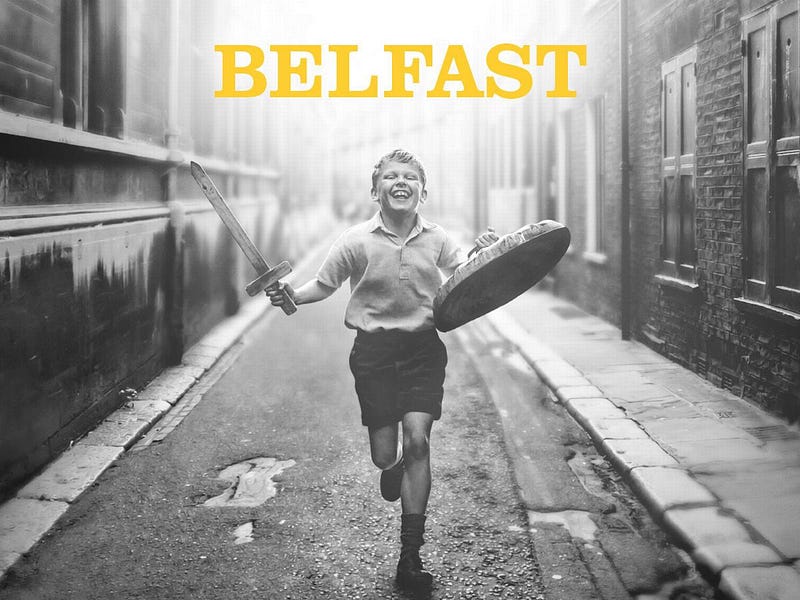
The early Oscar frontrunner is a semi-autobiographical tale of writer-director Sir Kenneth Branagh’s childhood in Belfast at the height of the tragic civil unrest. But don’t let that description discourage you — it is a surprisingly bold, funny, and crisply paced film that defies expectations.
A Brief Note on the Race for the 94th Academy Awards
The 93rd Academy Awards ceremony was an outlier for many reasons, mostly due to the unprecedented circumstances posed by the COVID-19 pandemic. The eligibility window extended beyond the calendar year for the first time, movies that premiered on streaming services became eligible for the time, and multiple socially distanced ceremonies were held simultaneously for the first time. The result was a remarkably drawn-out season that highlighted relatively small films and culminated in the lowest-rated Oscar telecast in history.
It is a true shame that the negative buzz generated by the telecast and all of the award season’s anomalies made the 93rd Academy Awards a footnote in the history of the Oscars in the minds of many, because there were multiple truly exceptional films released last year. In fact, I thought that all 5 of the films that won in the top 8 categories — Nomadland, The Father, Promising Young Woman, Judas and the Black Messiah, and Minari — were utterly extraordinary.
When the ceremony was held in April, many were certain that everything would be back to “business as usual” by the time the 94th Academy Awards rolled around. That is far from the way things have panned out. Although movie theaters are largely back in operation, a large number of high-profile, Oscar-contending movies are still largely bypassing theaters and premiering on streaming. And although the COVID-19 pandemic appears to be stabilizing in many areas of the country, it seems unlikely that March’s Oscar ceremony will still involve social distancing.
Then there’s the fact that there remains a great deal of uncertainty regarding the frontrunners. Buzz is strong for several films impressing critics and audiences alike — Jane Campion’s film festival favorite The Power of the Dog, Denis Villeneuve’s sci-fi epic Dune, Pablo Lorrain’s Princess Diana drama Spencer, and Will Smith’s Venus and Serena Williams drama King Richard. But, none has emerged as a clear frontrunner and several high-profile films have yet to be seen by critics (e.g., Guillermo Del Toro’s all-star period film Nightmare Alley, Steven Spielberg’s remake of West Side Story) or have only been seen by critics but not general audiences (e.g., Ridley Scott’s Lady Gaga-starring House of Gucci, Adam McKay’s all-star satire Don’t Look Up).
If this year’s Oscar race has anything akin to a frontrunner at present, it is Belfast. Sir Kenneth Brannagh’s semi-autobiographical film chronicling his childhood in Northern Ireland during the 1969 civil unrest has been a big hit on the festival circuit, even picking up the prestigious People’s Choice Award at the Toronto Film Festival (2 of the last 3 winners of that award went on to win the Best Picture Oscar). Brannagh himself has 5 Oscar nominations to date (fun fact: they are all in different categories) and he assembled a starry cast cast that have been regulars at myriad industry events. In fact, many of them even showed up to my general audience screening of the film in Los Angeles last weekend.
With all this buzz and the talent involved, I expected Belfast to be a good film. But based on the premise, I expected something “Oscar-baity” — perhaps a bit stuffy, emotionally manipulative, epic in length, and drenched in tragedy.
And I couldn’t have been more wrong.
A Review of the Wholly Unexpected Belfast
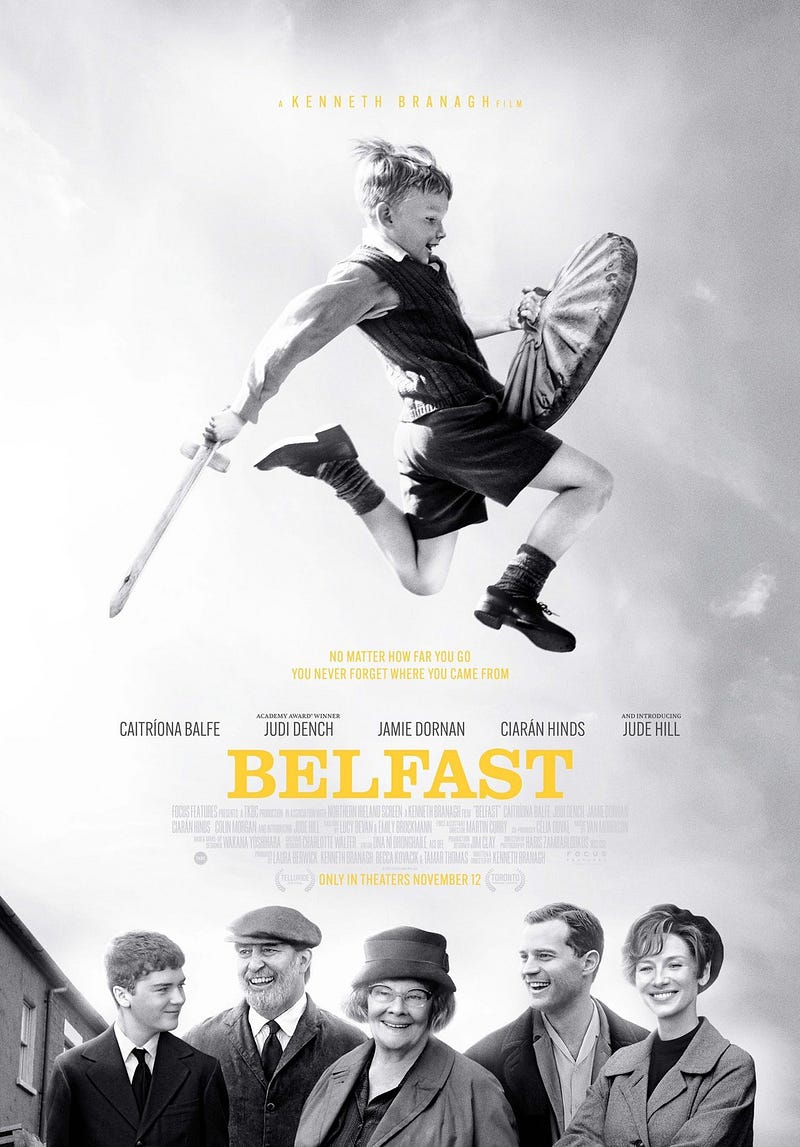
The story that unfolds in Belfast is a relatively simple and straightforward one. Buddy (newcomer Jude Hill) is a wide-eyed, fun-loving 9-year-old boy living in 1969 Northern Ireland who is preoccupied with his crush on a girl in his class. At the film’s start he is largely oblivious to how his family and neighborhood are crumbling around him.
Buddy’s devoted mother (Caitríona Balfe of Outlander fame) has reached her breaking point regarding the debts incurred by her husband (Jamie Dornan of Fifty Shades of Grey fame), as well as his prolonged absences as he works on a construction project in London. Buddy and his brother Will (Lewis McAskie) receive much of their warmth and stability primarily from their “Granny” and “Pop” (beloved veterans Judi Dench and Ciaran Hinds, respectively).
Meanwhile, the family’s very street was becoming a hotspot of “The Troubles,” the decades long ethno-national conflict between the so-called “Catholics” and “Protestants” sects that wrought havoc on Northern Ireland from the late 1960s until 1998. Riots, looting, discrimination, curtailed civil liberties, intimidation, and segregation quickly engulf the once-idyllic urban neighborhood.
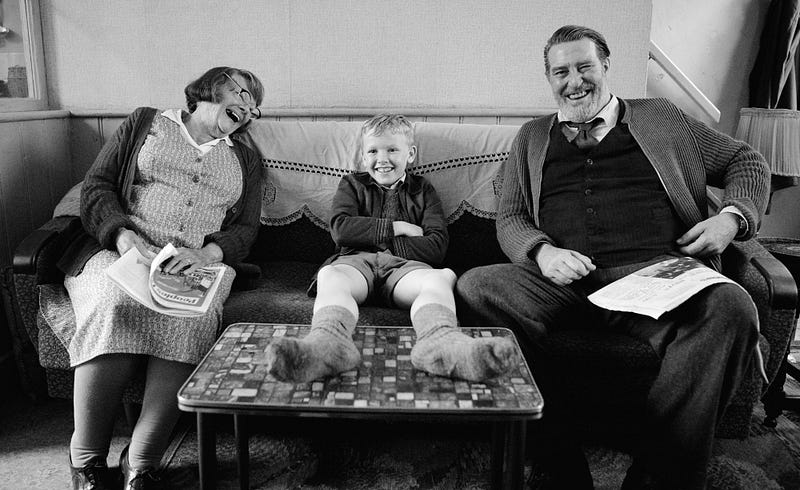
The film ultimately focuses on the tension regarding whether the family should remain in a place that is becoming dangerous and virtually unrecognizable because it is a place they love and the only home they have ever known. Buddy’s father thinks it is time for them to pack up and move abroad, while Buddy’s mother and Buddy himself adamantly refuse. It is a stirring and poignant evocation of the heartbreaking dilemma faced by countless refugees throughout history and one that might be a bit more accessible to contemporary Western audiences than most.
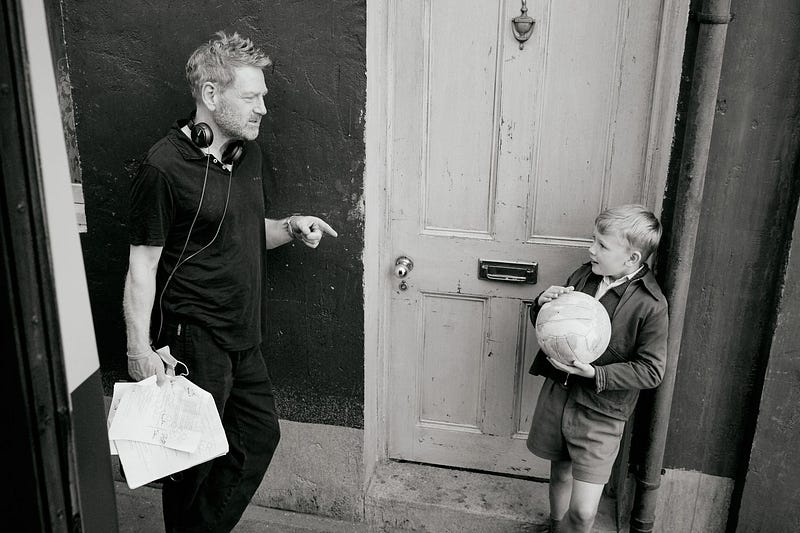
All of that may sound terribly bleak, but the decision to focus the film through the eyes of Buddy makes it utterly joyous. Telling historical tragedy through the eyes of a child has been done many times before, but for me the approach Brannagh uses here works particularly well. It sidesteps the pitfalls of being overly maudlin (see Roberto Begnini’s Life is Beautiful) or overly quirky (see Taika Waititi’s Jojo Rabbit). As opposed to those two films, I found it both touching and genuinely hilarious. Our theater roared into laughter well over a dozen times.
The simultaneous elegance and innovation of Branagh’s direction is evident from the film’s opening sequence, which finds colorful footage of present-day Belfast fading into black-and-white footage of a richly recreated 1969 Belfast. He plays with sound, color, and perspective in clever and effective ways at multiple points, particularly when Buddy is engrossed in entertainment (e.g., watching Star Trek on their TV set, seeing Raquel Welch on the big screen, and watching a theatrical production of A Christmas Carol). He also proves very adept at capturing the nonverbal aspects of the film’s many terrific performances. The exceptional work of cinematographer Haris Zambarloukos, production designer Jim Clay, and costume designer Charlotte Walter (and their respective teams) undoubtedly contributes to the rich visual experience.
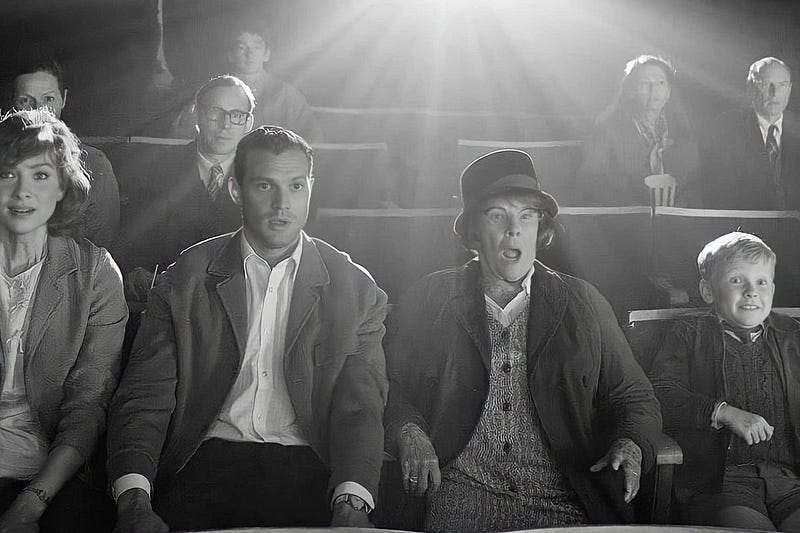
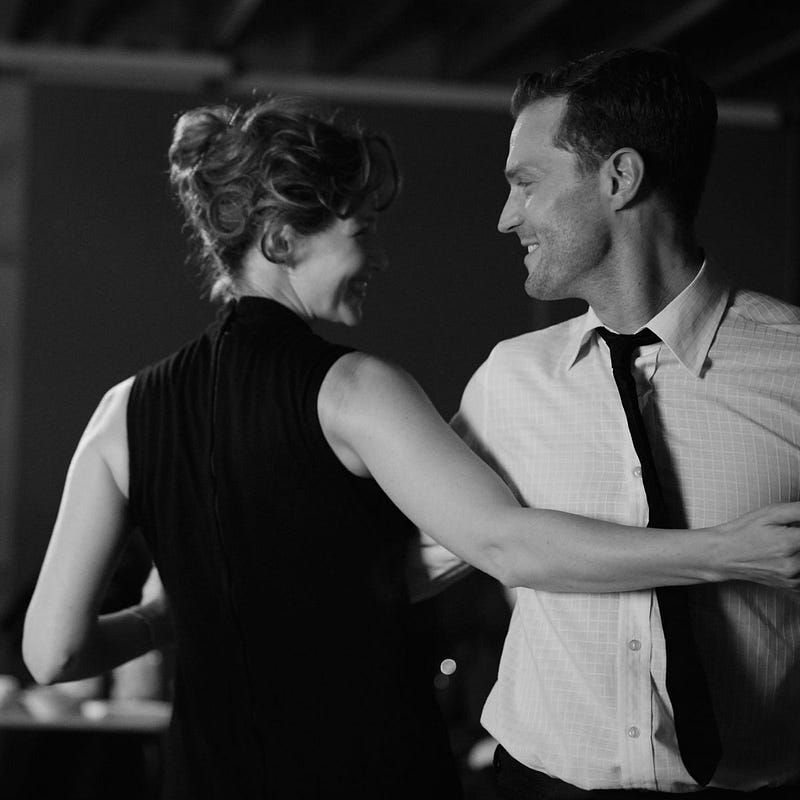
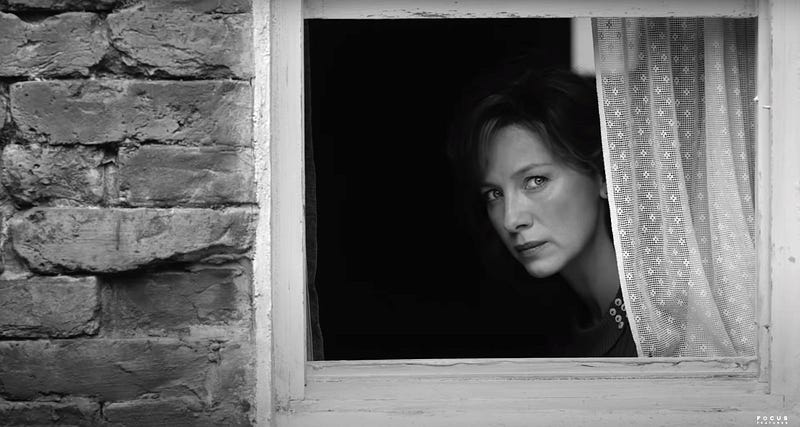
For me, the standout performance of the film’s sterling ensemble is delivered by Caitríona Balfe. I was utterly enraptured by her fully convincing performance, in which I deeply empathized with her but also found myself very frustrated by her stubbornness and coldness. It is a tour de force that will be hard to beat in the Best Supporting Actress category. As her husband, Jamie Dornan is immensely charming and delivers some truly impressive moments, but his role nor his performance are quite as fully realized as Balfe’s. As the grandparents, Ciarán Hinds is particularly compelling in a nuanced performance full of great depth and immense charm. The legendary Judi Dench is mostly underutilized for the first half of the film, but gets a string of knockout scenes in the film’s final act. I think it’s very possible that all four could end up in the supporting acting categories at the Oscars, which would make it one of the few films in history to score four or more acting nominations. And then, of course, there’s Jude Hill. He is perfectly cast and bursting with life. Had his performance not worked so well, the whole film would have fallen apart. Hill’s natural talent and Brannagh’s skilled direction both deserve credit for that.
The film has a couple of notable flaws. Particularly there are scenes in Branagh’s screenplay that don’t feel fully developed. The lack of polish on these scenes is exacerbated by some very abrupt editing toward the end of the film. The result is that a few critical scenes feel somewhat perfunctory and the climax of the film doesn’t reach the dramatic heights I suspect it could have. Examples include when Buddy gets abruptly caught up in the riots and the somewhat out-of-left-field and overly brief scene where Dornan sings “Everlasting Love.”
I expected Belfast to be visually impressive and superbly well-acted, but I didn’t expect it to be so warm and funny. I also didn’t expect it to be so crisply paced (the editing work of Úna Ní Dhonghaíle deserves commendation despite some abruptness in the final act) and so concise. The film comes in at a mere 98 minutes, an anomaly in an era when the majority of films seem unnecessarily long. (Fun fact: If it won Best Picture it would be the shortest film to do so since 1977’s Annie Hall.) The result is a film that often feels unexpectedly fresh, urgent, and even thrilling at times. It certainly helps that the film features terrific music from rock-and-roll legend Van Morrison (himself a Northern Ireland native) as opposed to a more traditional reliance on an orchestral score.
It is far too early to tell how significant of a player Belfast will be in this year’s awards race, but it certainly has the acclaim, quality, and marketing campaign needed to go all the way. Even if it underperforms, however, it is an exceptionally funny, moving, entertaining, and important film that deserves to be seen.
Rating: 4.5/5 stars
Follow the author of this article on Medium and Twitter.
Read recent articles by this author about films:
- Revisiting Jerry Maguire: A Rousing Classic Turns 25
- Dune: The Movie That Brought Me Back to Theaters
- Halloween Kills is Creatively Dead on Arrival: Movie Review
- Luca, Queer Allegories, and the Future of Pixar
- Promising Young Woman and Nomadland Boldly Confront Toxic American Beliefs
- The Silence of the Lambs: A Timeless Masterpiece Turns 30
- The First Wives Club: A Comedy Classic Turns 25


