Early OK “was a country of idle waste filled with roaming Indians and outlaws,” says J.B. Collins
Early Oklahoma businessman
On February 16th, 1938, JB Collins was interviewed and told his life story to Robert H Boatman in Lexington, OK.
This was part of the Works Progress Administration’s Indian-Pioneer History Project for the state of Oklahoma.
John Bell (J.B.) Collins stated that he was born in Tennessee on October 24, 1860, and married 15 year old Leta Ellen in 1890. Their baby boy died as an infant the following year when Leta was 16.
Did the couple decide to make a fresh start somewhere new? Possibly, because in 1894, they made the journey to the Indian Territory, spending a year in Ardmore before settling in Lexington in 1895.
Lexington was where John Bell and Leta started their business. Situated near the east bank of the South Canadian River, about a mile east of Purcell, Lexington was renowned as a “border town” in the Indian Territory during the 1890s.
At first, Lexington was a small town that had three stores and five saloons, and most people described it as a rugged frontier settlement. John said it was filled with roaming Indians and outlaws.
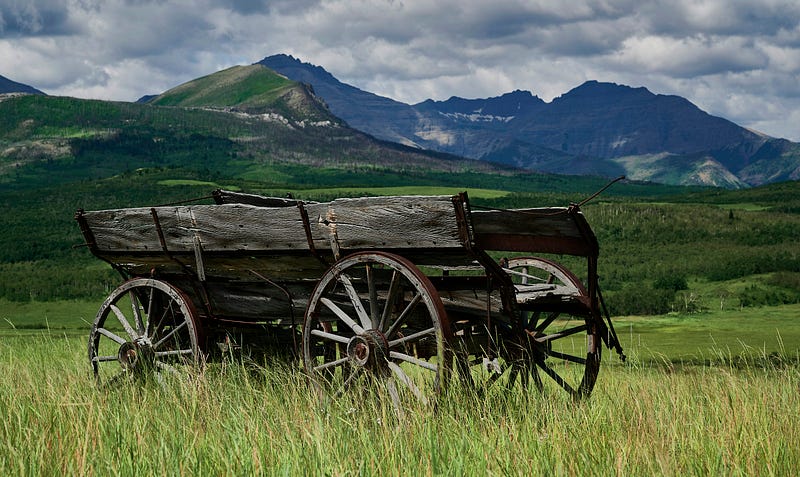
There were no bridges at the time over the Canadian River, so getting across required a horse or hack. This made traveling in the area difficult. John had this to say:
“…the Canadian River had to be forded and oftentimes a wagon would be bogged in the sand and people would work for days to get out of the bog. Sometimes the family would have to walk out, leaving their possessions to be swallowed by the muddy waters of the Canadian River. Thousands of dollars in property and many lives have been lost in the bogs and swollen waters of this river before the erection of bridges in the Territory.
The treacherous river claimed lives and property until the construction of a wooden bridge in 1896 connected Lexington to Purcell and stimulated economic growth.
John was a proactive member of the community, and he established a mercantile business with the aim of enhancing the town’s prospects, despite encountering many disappointments. Life wasn’t easy, either. John talks about outlaws:
“….refugees from justice usually knew about the times that officers were to come through the country and they would generally be out of town, though sometimes a posse of officers would arrive at some point ahead of time and take some of them by surprise. In this way some of the worst criminals have been caught unaware and brought to justice…”
At the time of the interview, John and Leta still lived in Lexington. John said he felt a sense of pride in the town’s evolution from a frontier outpost with a population of 1,000 to a thriving commercial center.
John didn’t mention his family, but at the time of the interview, Leta was 63 years old, and their only child, Aline, was 35. Aline and her husband had a 14 year-old son in Dallas, TX.
John died 16 years after the interview and was buried in Lexington cemetery. Leta lived another 13 years without him until 1967 and was buried beside John.
The 2021 census showed 1,996 citizens living in the town of Lexington, where the name Collins lives on in inhabitants, as well as geography (Collins Court).
********************
Hi, I’m Judy, and I love discovering the area I live in! Follow me if you’d like more stories like this.
➡️You could write for NewsBreak, too!
No fee to sign up…
No monthly fees ever!
For more information, click here.


