
Early 90s Wrestling Made Me A Better Creative Writer
How watching the early WWE/WWF can improve your storytelling skills too. Ooooooh Yeah Mean Gene!
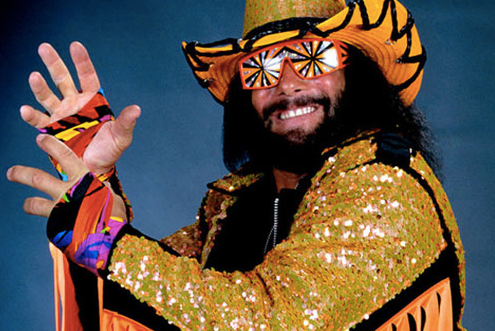
Wrestling is one of those things that you either love or plays no part in your life whatsoever. For me it was the former. I loved wrestling. Love, present tense. I’ve rediscovered it over lockdown and come to appreciate it in a new way.
I’ve been rewatching a lot of classic matches whilst I’ve been locked down. I have been making my way through the OSW Review channel. If you loved wrestling as a kid, you’ll enjoy three sassy Irish guys pulling it apart at the seams. Camp, ridiculous and lashings of baby oil everywhere.
That’s ‘Rasslin’. In all seriousness, those three Irish lads have kept me sane.
As I watched these matches back I realised something interesting about my process as a writer. I took a careful look at how my creativity manifests itself in adulthood and how I go about writing a script.
I’ve realised I owe The Macho King a lot of back pay in consultancy fees.
Where it begins
I was a young penguin in the 1980s, barely out of my egg. The idea that grown-ass men might dress up in costume and pretend to fight each other was absurd. They were really hurting each other. There was sometimes real blood.
It must’ve been real, why wouldn’t it be? That’s clever kid logic right there.
Now I’m an adult I can see the storylines are patently absurd. That doesn’t matter. I remember that my sister and I nearly killed each other over Wrestlemania VI. She was an Ultimate Warrior fan, I was a Hulkamaniac.
We had to share a bedroom and did our own Wrestlemania VI daily — minus all the training and safety precautions of course. I feel sorry for my parents. I feel sorry for all parents whose kids got into wrestling. Mr and Mrs Hardy being top of the sympathy pyramid.
Wrestlemania VI was an outlier in the world of wrestling. Two very popular ‘good guy’ wrestlers fighting each other. The normal story, back then at least, was the hero (Face) vs the villain (Heel).
The hero never cheats, the villain almost always does.
Unknown to young penguin me, the success of a wrestler isn’t determined by how many matches they win. It’s determined by how much they ‘get over’. For Faces that means getting the audience to cheer. For the Heels it means being booed and having things thrown at you.
The physical skill of wrestling is in the moves. The hidden skill is in the storytelling and character work.
Wrestling is fake — sort of
Aside from a few scripted moments, wrestlers often make it up as they go along using moves they know how to do. They work together to tell a story using their bodies. The referee relays information between them and from backstage. They sometimes use rest holds so they can whisper the next few moves.
They’re improvisers. Like me.
When I write I know the start, the climax and the ending… that’s pretty much it and sometimes I’m not even sure of the climax.I improvise all my scripts, with no clear idea of where I’m heading apart from the ‘big spots’.
That’s how wrestling made me a better writer. I realised this is a perfectly valid way to write as long as you understand how stories work.
Look closely and you’ll see there are particular patterns that wrestlers use a lot. These patterns have been fine-tuned. They’re the distilled wisdom of thousands of hours of physical storytelling in the collective consciousness of wrestlers.
Spot the pattern, spot the story.
A non-exhaustive list of wrestling story patterns
In no particular order, here are some of the patterns I picked up as a youngster but have only been able to articulate as an adult.
Pearl Harbouring
The second the Face arrive in the ring the Heel attacks. The audience is outraged. The Face(s) regain control and the Heel(s) get ejected from the ring. The audience loves it. A handy introduction to the character archetypes.
A squash
A Monster Heel (big scary bad guy) will come out and decimate a jobber (someone paid to lose) in about eight seconds. It takes longer to walk to the ring than it does for the Monster Heel to win. Good jobbers lay on the floor, broken, decimated and convulsing. The audience is terrified.
The hot tag
During a tag match. One of the Faces will get beaten up and repeatedly denied a chance to tag out. When all looks lost, they’ll suddenly reverse a move, crawl desperately towards their partner and, at the last second, make a hot tag. It is always at the last second and what follows is a reversal of fortune.
Finisher
Every wrestler has their own power move, usually linked to their gimmick that will finish the match. Kicking out from a finisher generates a huge pop. Pile your finishers up, or reverse them at the last second and the crowd go wild.
Interference
The Faces don’t always win. Sometimes they lose, but if they do it’s normally because the bad guys have help. Heel wrestlers often have managers or valets that help them cheat. Those heel managers (often retired wrestlers) wind up the crowd, interfere with the match and often get their comeuppance via a swift punch in the face.
Ref Bump
The referee is the one pretending to be in charge, though in reality they are building the story too. Sometimes a referee will get in the way and be ‘knocked out’ — the rules can be broken. Pins can be denied. Chaos ensues.
Run ins
Sometimes a bunch of heels would come and kick a face almost to death. Full nasty beat down. His mates would come flying out of the back to rescue him and lead him limping back down to the changing room.
Heel and Face Turns
Suddenly s a face will suddenly attack their tag-partner for no reason. Hey Shawn Michaels. Sometimes they will fall out slowly over the course of many matches getting more and more antagonistic. On occasion, heels don’t perform a dastardly attack when commanded to do so, their conscience kicks in and earns them a moment of redemption. These moments are called ‘turns’.
What the hell has this got to do with writing?
Because this is how stories work. Not only do the individual matches follow a linear storyline (if they’re good) but so does all the received wisdom. You don’t need to know why they work, you need to know that they do.
So how can you use this to improve your writing? Think about how these patterns feature in your own work.
Can you invoke a heel turn? Have one of your good characters slowly betray everyone and everything they knew. Vince Gilligan can. Walter White is a man doing a heel turn through five seasons. It’s masterful. You’re always on his side even when you know you shouldn’t be. This is Stone Cold Steve Austin.
Can you leave clues of a turn smattered through the text? Could you do a massive face turn at the end of seven books and break everyone’s heart — yes I’m looking at you J.K Rowling.
Can you throw everything but the kitchen sink at your character? Drive them into a pit of despair and then, just when everything is lost, offer them a quick tag and a way out. This is the modus operandi of Ozark.
Can you make your villain seem more monstrous by showing them as monster heels? Here’s looking at you Darth Vader’s psychic choke, and you Thanos with your clicky death glove. Can you put two face characters into conflict and split your audience? Marvel can.
Can you set up antagonistic pairs? Build towards high memorable spots in your work? Can you tell when to give your audience a rest and when you need to amp them up for a false finish and numerous compounded climaxes? Can you play the emotions of your audience like an instrument?
If you can my friend, rejoice, that’s what great stories are all about.
Wrestling didn’t get my first play published. It didn’t launch my career in writing. Wrestling helped me intuitively understand how stories work at a fundamental level.
And left me with a lasting life long desire for my own entrance music.
What about now?
That’s the beauty of wrestling. Once you get behind the initial layer of the facade story (Kayfabe), there are the stories of the real people underneath. The machinations of the locker room and the blending of reality with fiction began in the mid-nineties and continues to this day.
It’s the story equivalent of onions.
The biggest babyface of all time, Hulk Hogan, was by all accounts an absolute bellend to work with. Whilst notable monster heel, The Undertaker, is regarded by most people as the epitome of a loyal, safe and good wrestler.
The decline of Jake the Snake Roberts, the sneakiness of the Montreal Screwjob and the sad story of Chris Benoit are all beautiful character-driven stories. These are more complex than the simple narratives I grew up watching, but no less compelling.
After all, I’m not the simple penguin chick I once was. My tastes have matured. Doesn’t mean I won’t ‘mark out’ at the high points of matches.
Want to implement something right now?
If you’re looking for an insight into how great stories are told, you need look no further than the incredible Randy Savage and Miss Elizabeth plot line from Wrestlemania VII.
Watch the whole thing. Consider how the story unfolds. The build up and the pay-off.
The Macho King plotted his matches carefully. He often transcended wrestling and tapped into real human storytelling like no wrestler before or since. He was the greatest wrestler of his generation and I’ll fight anyone that challenges me.
Here’s how this story ends. Crying? No… it’s onions. Listen to that Pop.
Holy crap that was niche! Did you write anything more mainstream?


