
PHOTO-A-DAY CHALLENGE
A Castle a Day — Traveling Through Transylvania
Week 119 of the photographic documentary of my daily life
Isn’t it the first thing you think of when hearing Transylvania? Castles. And then maybe vampires as well. But we won’t see them. We eat too much garlic.
But let me tell you a bit more about the place where my ancestors come from.
Transylvania
The “Land beyond the forest” is its translation from Latin describing the view from Hungary onto the place surrounded by the Carpathian Mountains.
While the Hungarians took over the region between 1000 and 1200, the history of Transylvania began sometime during the early stone age when the first evidence of human presence can be found in this region.
Around this time, when Transylvania became part of the Kingdom of Hungaria, they invited communities from the West to come and settle down in these lands. Most of the people came from a region that is today part of Germany, France, and Luxemburg.
In 1116 our ancestors arrived, if you’d ask my grandfather. He used to teach me our history. Now he is no longer with us and I need to read books and use the internet to fill in the gaps in my memory.
Back to the story, those settlers were treated with respect and were granted a lot of freedom. They didn’t have to pay taxes to the Kingdom and could elect their priests themselves.
The nation that arose out of those early settlers are today called Transylvanian Saxons.
Those people built castles, fortified churches, and monasteries to protect themselves but also the Hungarians from any intruders arriving from the east.
And these parts of ancient history, partly renovated, partly restored and rebuilt, and partly left as ruins, are the parts I’m showing my husband. In an effort to teach him something about my history.
So here we are. The second week of our road trip has just begun and we entered my mom’s birth village. While it wasn’t easy for David since he was dehydrated and exhausted after getting food poisoning the day before, he dragged along and showed a lot of interest.
We could even visit the house my mom grew up in and the garden she used to work in to bring food to the table.
While my dad is always playing down this place as it’s just a village and not a city, I do think it’s a very quaint Transylvanian village. Saschiz, as the town is called, even has a fortified church and a castle on the hill.
Unfortunately, we couldn’t visit the castle since they are restoring it and the entire site is under construction but we could see it from afar rising from the forest.
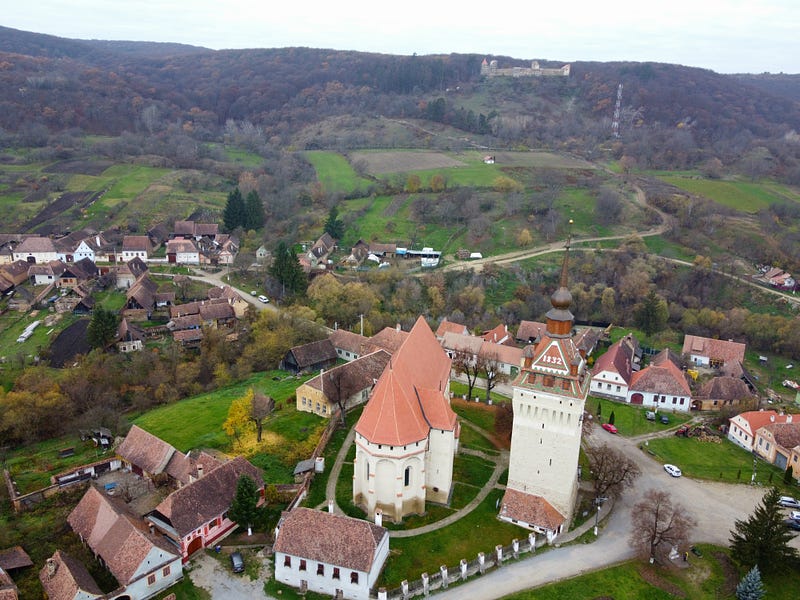
The following day we had a 3 hours drive ahead of us which took us the entire day since we had 3 castles to visit on the agenda. To be exact, the first one was a fortified church, the second one a fort, and only the last one we saw was a castle.
Talking of which. What is the difference between a castle and a fort?
“Castle and Fort are two similar structures. The main difference between Castle and fort is that a Castle is a fortified residence of a nobleman or a king while a fort is a fortified building.”
This presents the difference between what the site is used for, but Pediaa explains further the point where confusion often comes in.
“You may have noticed that both these definitions contain the word ‘fortified’. This is the reason why many people think that these two words can be used interchangeably. But, this is not so. Castle is a place where noblemen or royalty live, but a fort serves a more military purpose.” — Pediaa
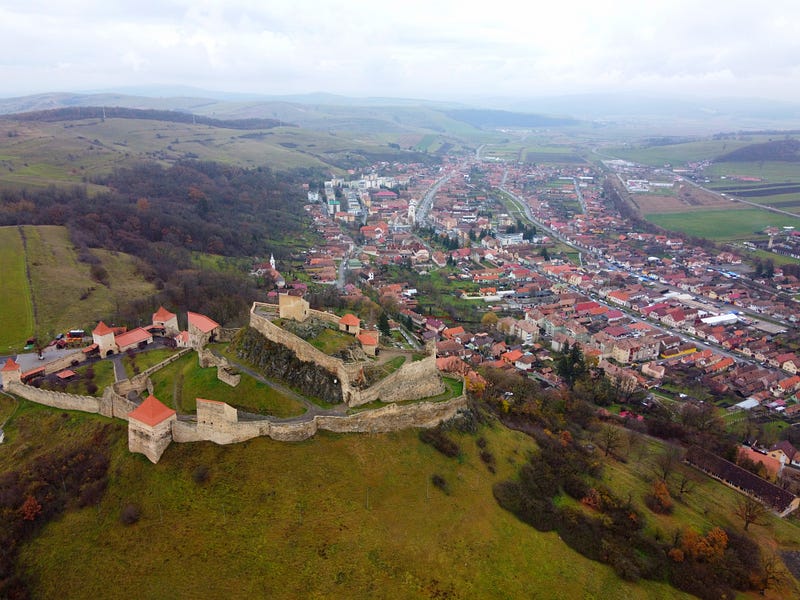
The medieval Fortress located on the hill of Rupea was built by the Transylvanian Saxons and was first mentioned in 1324. Today, the cliffs where it is located count as one of the oldest archeological sites in Romania with signs of human settlements dating back as far as 5500 BC.
And yes, we did fly our drone up in the skies above this magical site to give you a better idea of how it looks.
Even though there weren’t any signs at this one, we do know drones aren’t allowed in many historical buildings and locations mainly for the reason of not crashing into the site or disturbing visitors. We always fly from outside of the property and do not fly right above it but rather around it.
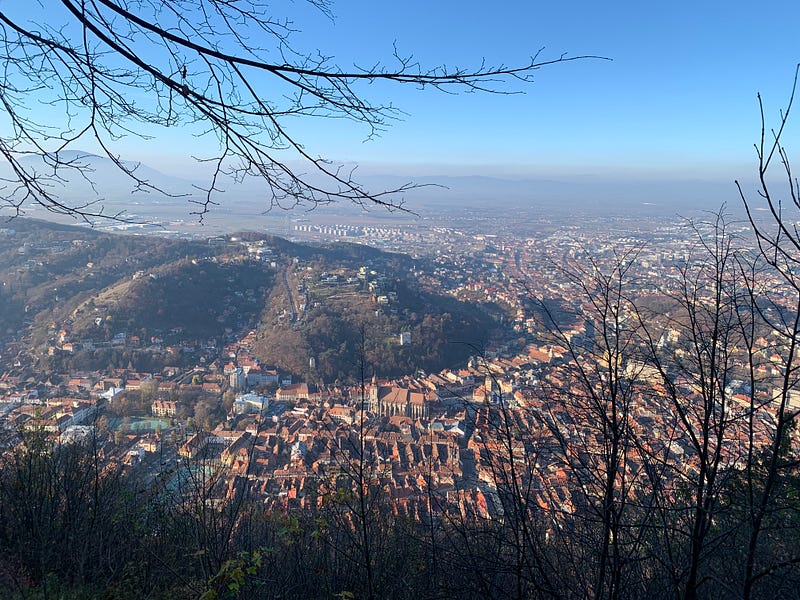
After sleeping one night in the mountains, the mighty Carpathians, we did drive back down to the foothills to visit the city of Braşov and the famous “Black Church”.
“The Black Church, Biserica Neagră in Romanian, [ ] was built by the Saxon (German) community of the city and represents the main Gothic-style monument in the country, as well as being the largest and one of the most important houses of worship in the region which belong to the Lutheran, i.e. Evangelical Church of Augustan Confession in Romania.” — Wikipedia
The name came from a misconception of a fire in the city that turned the church’s walls black, but the latest studies have found no proof of it and explain the black color deriving from environmental pollution after Braşov turned into an industrial city in the 19th century.
It’s not per se a castle for the day, but if you look closely at the aerial view of the city below, you can see in the middle on the right edge of the photo the ruined walls of a fortress. It’s on that small hill in the city.
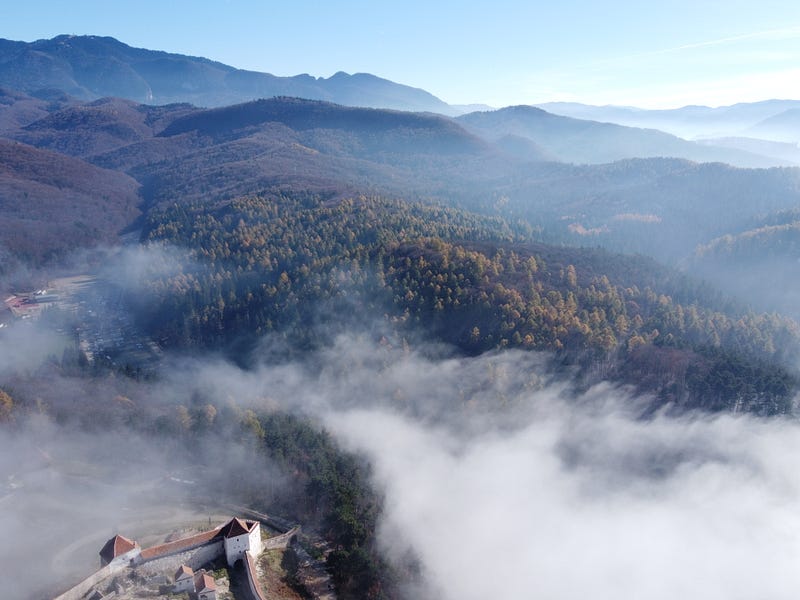
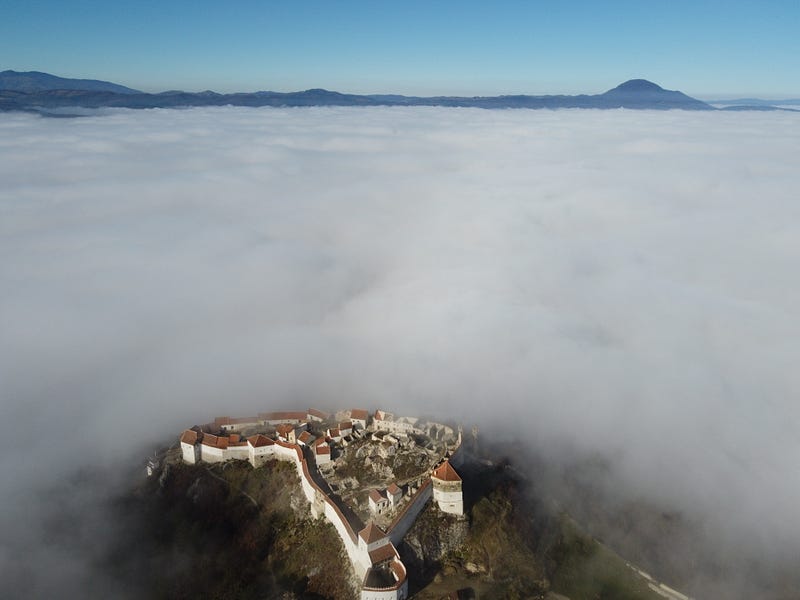
And then there’s Râșnov Fortress, another medieval Fortress built by the Transylvanian Saxons as part of a defenceman system. We almost wanted to skip it because, first of all, it said it was temporarily closed and the fog was hanging low that morning.
My plan was to first go and visit the caves nearby and then head up to the castle in hopes the fog would lift. We knew we couldn’t enter the fort but since it was one of the largest constructions in the country, we still wanted to see how much was visible and accessible from the outside.
When we got to the top of the hill, the fog was so thick we couldn’t see the walls of the outer fortification. Jokingly David complimented the building without seeing a single thing.
We were able to enter the gardens and walk along the walls of the fort and as I looked up, I could see some blue sky shining through the white fog.
I asked David to fly the drone through the fog. I had this feeling it would bring us some amazing footage, but I didn’t think it would be that breathtaking.
No words left to describe it.
Another day, another castle.
Yes, we finally made it to the castle. The one that has been mentioned the most in the media and appeared in countless movies.
Dracula’s castle
It’s what they say even though “Vlad Țepeș” alias Dracula was only one of many rulers living in this castle over its long time of history.
This is without a doubt the most famous one of all castles and forts in Romania, but as David said, “I imagined it to be bigger”. It’s small and compact, which might have made it easier to protect from invaders in the past. Who knows?
“Commonly known outside Transylvania as Dracula’s Castle, it is marketed as the home of the title character in Bram Stoker’s Dracula. There is no evidence that Stoker knew anything about this castle, which has only tangential associations with Vlad the Impaler, voivode of Wallachia, who shares his name with Dracula. Stoker’s description of Dracula’s crumbling fictional castle also bears no resemblance to Bran Castle.” — Wikipedia
This was my second visit to this place and I used today’s excursion as a refreshment of my memories and read a lot on the displayed notes on the walls.
While Wikipedia is stating the connection between Dracula and the castle is tourism-driven and Vlad the Impaler never even set foot inside the castle, the information boards inside Bran Castle state the opposite.
Believe what you like. It’s history and all difficult to trace, I’d say.
However, inside the castle, you can learn a lot about the different times and rulers this castle had, and only a small section of it is dedicated to Vlad.
Except for, of course, the souvenir stalls outside. They are full of Dracula’s myths and vampires.
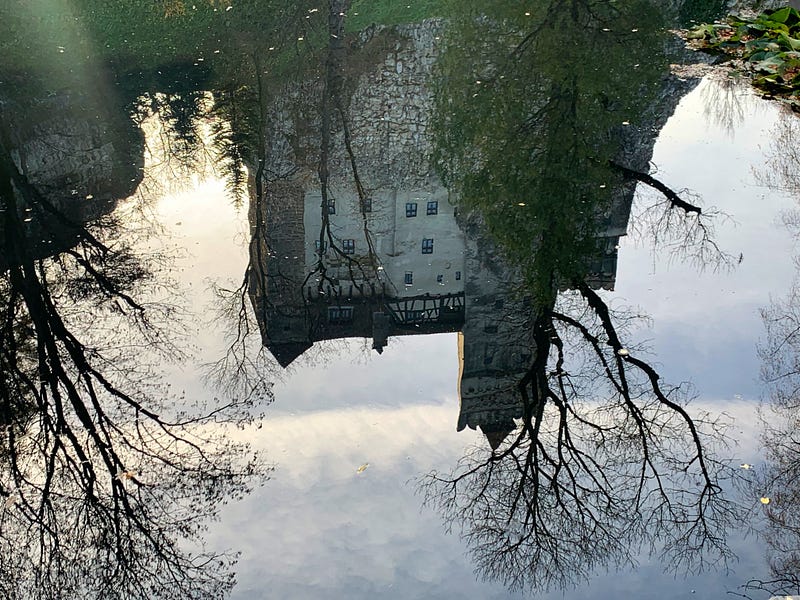
I took a very different kind of picture of the castle and was more than pleased with the outcome. A small pond is located in front of Bran Castle and I captured the reflections of the castle in the water.
The week proceeds and so does our road trip. Following the base of the Carpathian Mountains, we took today a scenic route at the foothills seeing the snow-capped mountain peaks to our left the entire drive.
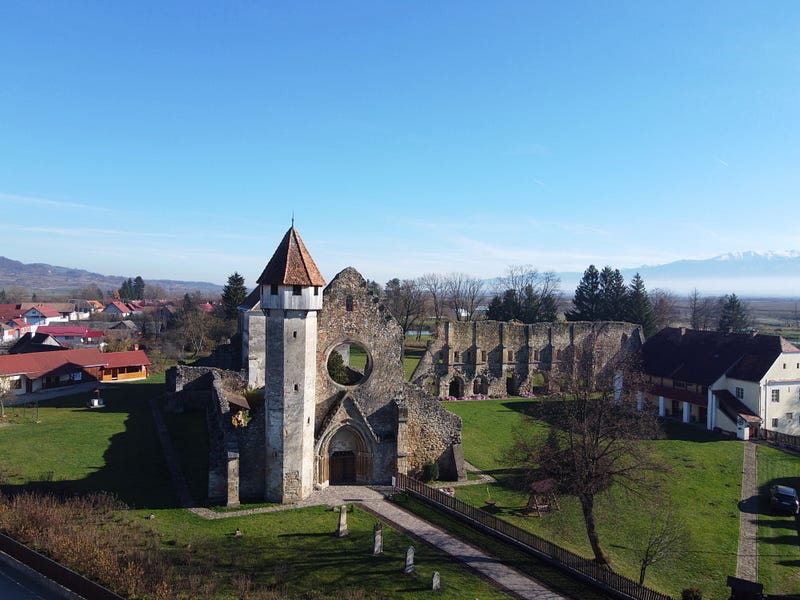
While we had about 3 hours on the road today, I broke up the journey once again with yet another castle. The ruins of Cârța can actually not be called a fortified church since it’s a former monastery and used to be the easternmost appearance of the Cistercians.
“The Cârța Monastery is a former Cistercian (Benedictine) monastery in the Țara Făgărașului region in southern Transylvania in Romania, currently an Evangelical Lutheran church belonging to the local Saxon community. It lies on the left bank of the Olt River, between the cities of Sibiu and Făgăraș.” — Wikipedia
While many castles and forts we’ve visited this week have been renovated and even rebuilt a lot, this place is left in ruins to show what a building that old actually looks like.
Having gotten destroyed a handful of times in history, there was even a time this monastery was completely unprotected without fortified walls.
While there wasn’t much to see, there was a lot to feel. And imagine.
David was talking about the huge circle in the walls next to the tower mentioning what it must have looked like back then. They probably had a huge window in there, painted in the most spectacular ways.
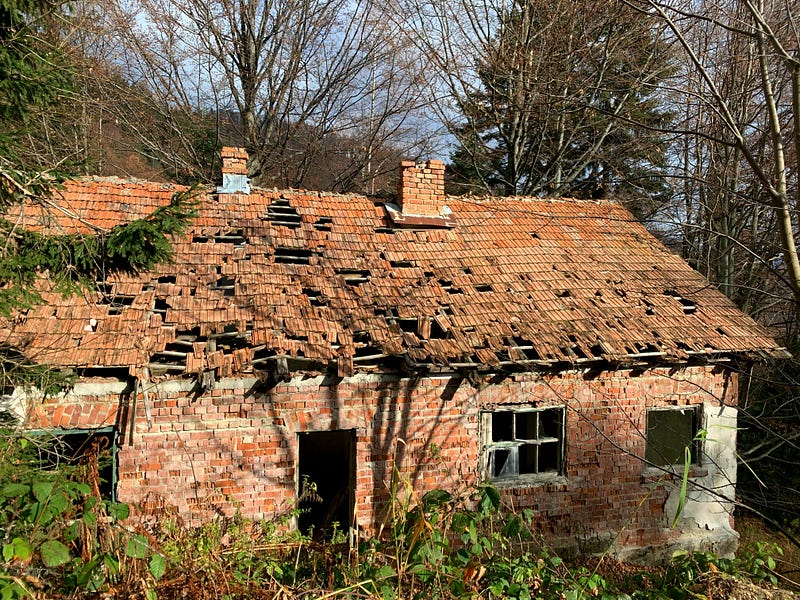
And for the last day of this week’s photo essay, I do not have a castle, fort, or church for you but just a ruined old house.
We were hiking somewhere in the Carpathians Mountains as we are currently staying a few days at my father's friend’s house in a valley in the middle of nowhere.
The foundation of this house we walked past looked still rather solid, but the roof was barely existing anymore. This home stood far up on the mountain hills somewhere in the forest.
This was a bit of a different weekly photo essay with lots research-based information and a more informative storytelling but I hope you still enjoyed it.
This has been my week in photographs. 7 days. 7 photographs. Anyone can join. Once. Or weekly. It doesn’t matter. We welcome everyone! Dennett started this photography challenge in 2020 and many have participated ever since.
Erika / Eileen / K. Barrett / Juan / David / Mia / Susan / LensAfield / Kim / Barbara / Diana / Barb / Sandra / Shruthi / Ellie / Pene / Olive / Gustavo / Jane / Penny / Jillian / Shell / Ivy / Lisa / Lynne
And these are the previous weekly photo essays:
Join my email list here if you would like to read more photo essays or sign up for the Medium membership to receive unlimited access to my and other writers’ stories out here (I will receive a commission fee in return).


