
E-cigarette, a distinct appeal, age-old hoodlum, but a new prohibition
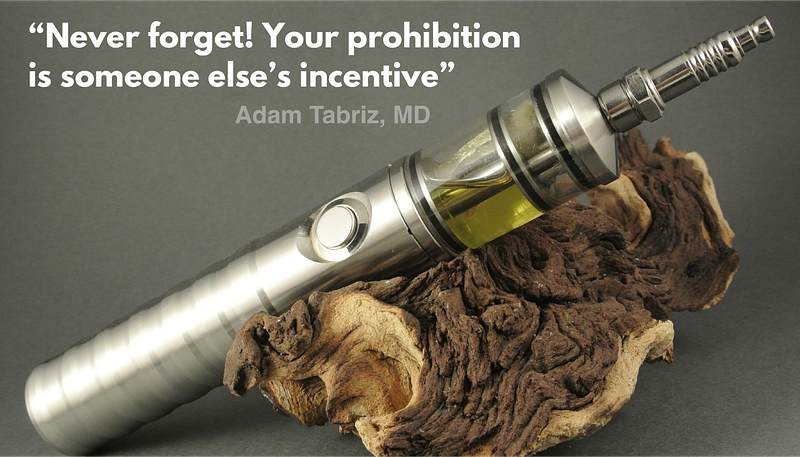
E-cigarettes are the major topics of today’s multifaceted sociopolitical discourse. The modern era nicotine conspiracy is hosted by Altria, the parent company of Philip Morris USA, John Middleton, Inc. — — hypocrisy by the state and publicized by the mass media. I aspire to justify it as the new hoodlum of the block, who must share a piece of the pie with the remaining gang of players. To folks in touch with the history, such turmoil is well discerned, as the country has navigated through tobacco, cannabis and alcohol prohibitions and its bygone backlashes. Today once again, we are at the institute of revisiting the century-old problem with a new theme.
The Most Recent is the scandal around the e-cigarettes and Juul.
According to recent reports Juul has been campaigning with the intention of winning over American’s sympathy by propagating — “the new e-cigarette is not intended to target children.”
It highlights a major response in a try to overturn the allegation by mass media and the states. Nonetheless, Juuls claim is being put down by the state lawmakers. Indeed, the Foregone ordeals show isn’t much about the teenage vaping being put to the show, as is merely about politics and turf war. It seems like a deja vu — Looking back into the history we can echo the similar veers and motives supporting the system. we can lend oneself that in today’s legal mongering trend along with its monopolistic commonality, the nicotine industrial complex has undoubtedly become the master template to its predecessors. A scheme which is practiced through lobbying efforts of large corporations that are undoubtedly the masters of marketing, strategy, acknowledge of the upcoming state ambitions and disguise. Corporate entities are well versed in profiteering from the government’s slow pace by capturing the market fast and vast, before being forced to share the piece of the turf.
So- it is time for looking back into the chronicle
The Nicotine and tobacco
The year 1998 was marked as the Tobacco Master Settlement Agreement (MSA) era, made between the four major U.S. tobacco companies (Philip Morris Inc., R. J. Reynolds, Brown & Williamson and Lorillard, also names as the “Majors”) and the attorney generals of 46 states.
The statutory settlement stumbles on important controversies from political parties at both sides of the aisle. Some called the arrangement a lenient move towards the tobacco industry. Others argued by creating an unconstitutional cartel arrangement, the fiscal undertaking was meant to equalize the state Medicaid budget, merely benefiting government and the giant tobacco companies.
Alcohol and prohibition
The 19th-century alcohol scandal had its own set of economic, social and political challenges. The era of alcoholism, family violence, and saloon-based political corruption was precipitated by the teetotalism. The movement led by devoted Protestants, to end the alcoholic beverage trade by curing the society sickness, thus weakening the political opposition. Inevitably, It led to the repeal of the 18th amendment; passed in 1920, The Enabling legislation ( the Volstead Act), disembarked the rules for enforcing the federal ban and set up prohibition. The commotion led to stir up of monopoly and subversion by the hands of criminal gangs who were able to gain control of the beer and liquor supply in cities and states.
A 2015 report estimated that the annulment of Prohibition had a net social help of $432 million per year between 1934 and 1937, about 0.33% of gross domestic product, of which the Total benefits of $3.25 billion consisted primarily of increased consumer and producer excess, tax revenues, and reduced criminal violence costs. According to Lisa McGirr, the Harvard University historian; Prohibition led to elaboration in the powers of the federal government over the states.
Marijuana battle in the monopoly of prohibition
The legal history of cannabis (legal term marijuana or marijuana) in the United States primarily pertains to its regulation for medical, recreational, and industrial purposes within the country. 1906 marks the era when increasing restrictions and labeling of cannabis as a poison was transpired. Expansion of the Prohibition was fully commenced in the 1920s and lavishly regulated in every state by the 1930s. The first United States federal regulation was the Marihuana Tax Act of 1937 executed on August 2, 1937, was an Act that placed a tax on the sale of cannabis. But today after two centuries of constant struggle and legal battle Cannabis use is working its way onto the shelves of retail market one state at a time — even though is still considered illegal under the federal legislative act. Today, Running a Cannabis dispensary can cost between $200,000 to $300,000 per year in licensing fees plus annual taxes of $50 per ounce of marijuana flower to 15 % tax on gross sales revenue — Not a bad business for the state’s legislators.
Juul is the new hoodlum with a fresh pseudo-charm
While the ban of marijuana is on its way out, parallel the Baton of prohibitive monopoly is being handed down to the Juul Prohibitionists by advancing new outlaws on course to fabricating a new revenue model under a sweet commonwealth rationale. Hence, making kids the ultimate putz for both sides to make billions of dollars by the way of pie slicing negotiations.
Vaping and e-cigarettes
The handheld battery-powered device is used to vaporize the nicotine-infused solution. Comparatively to tobacco, vaping solutions don’t have an odor. Their concentration, strength, and flavor are easy to change, making it attractive to teenagers.
The current state of news media
San Francisco legislators banned the sale or distribution of e-cigarettes as well as the flavored tobacco products in the city expecting that they have Food and Drug Administration (FDA) approval. Once in full effect in 2020, the new San Francisco regulation will forbid tobacco shops in the city from selling e-cigarettes that haven’t been “approved” by the food and drug administration (FDA). Even though, presently there are “no FDA authorized e-cigarette” on the marketplace!
Recently, the state of North Carolina filed a lawsuit against Juul for designing, marketing, and selling its e-cigarettes to attract young people. The Connecticut attorney general too announced an investigation into Juul’s health claims and appeal to young people. In response to nationwide allegations and FDA’s objection, Juul CEO Kevin Burns wrote in a Washington Post in March- “we stopped the sale of flavored Juul pods to traditional retail stores, enhanced our online age-verification process, strengthened our retailer compliance, and exited our Facebook and Instagram accounts.” But still, are the ongoing complaints from parents and teachers about the vaping “epidemics” in middle and high school environments”
The substance of the predicament
For the engrossment of revelation, I neither use e-cigarettes nor smoke tobacco, in spite of the fact that the ongoing news framing Juul sparked my curiosity, contemplating to give the Juul a try. But, the judgmental inhibition has so far overridden my inquisitiveness. Although, the current legislative move to limit the e-cigarette sales by a few may not be perceived as the act of prohibition, the essence without question points in that direction, as it shares the common notion; by virtue of active inhibition — even though different in scope, strategy, and paramount goal.
The e-cigarette is a potent nicotine delivery system, more appealing to the enthusiasts and, young children, thus carry more physical and psychological adverse effects. Today is uncool to reek like tobacco or smoke, to use designated areas to smoke, on that account Vaping is the poised spear of the 21st-century, and is convenient more so fashionable. But Repeating the old mistakes may scarcely be the resolution. The alcohol and cigarettes too were once the cool products of their time, nonetheless, prohibition did not serve its purpose towards the advancement of humanity. Its demise has been persistently bound by curiosity and adventurism, which merely applies to everyone irrespective of culture or race. It tends to manifest differently from one person to another. It may as well phenotypically present else in teenagers and children, and extra contained under the unconscious all-encompassing judgment in adults.
For Teenagers, curiosity resembles a hunger to explore and try the new, while peer pressures serve as an accelerator to spark the act of exploration. For a teen, it would be cool to try on what the popular guy is inhaling in the “vape-room” (restroom of the school). Peculiarity can be a powerful enough tool if acted on to overturn the perceptual experience of its potential consequences.
Inhibition and prohibition
The immediate, virtually coherent, still controversial response by a typical parent to teen experimentation is understandably the prohibition. A motion, most urgent and in short term effects. Prohibition is a personal attitude and collectively referred to an arrangement reckoned to be reflected on local, state and federal policies, even in a democratic structure. Once forbiddance takes a bureaucratic shape in the legislative statute, thus will further enhance its negative impingement through the top-down influence, creating a vicious circle of prohibition, curiosity, experimentation, and legal magnitudes. Since a teenager is yet to mature internal inhibitors against unhealthy practices, any curiosity flare-up will potentially ignite the latter cycle.
Logically, to hold back and prevent teen vaping, like any other curiosity-driven act, one must construct the conscious or unconscious restraint of that particular behavior, impulses or desires, collectively called inhibition. It aids the necessary societal functions, internal inhibition and abates certain impulses from being acted upon.
Eliminating free choice would subject our course of action to backfire with the paradoxical outcome. To be clear, honoring free choice and liberty of e-cigarettes does not prevent proper ordinance, as every community necessitates having a well-defined policy in place that ensures public safety, particularly of the children. But across the board Prohibiting policies like sales of certain products, no matter how efficacious may seem at the start, is destined to fail by the virtue of invasion of personal space.
Juul carries a product that occupies a peculiar market by fulfilling certain consumer demand. Like every other commodity, is subjected to competition, marketing, and sales strategies. The public Prerogative is to review Juul like any other for its potential harm and install the necessary educational programs to fight its abuse by children and adults. Shortcut solutions including the prohibition of the marketing and advertisement, and banning its sales at the retail fuels its deceitful importance and motive to unlawful trade and off label use like consuming it as an edible item. The most dangerous about nicotine products is not their direct adverse effects, but the potential culture or brand that can develop through premature prohibition without a backup educational plan. The planned approach will paradoxically intervene with building inhibition over the attraction to vaping practice.
The problem
The vicious circle of prohibition, shortcut policies, and anti-Prohibitions is a systematic problem in the United States, and beyond; with the exception of countries where the ban is not routinely practiced. The etiology of said systemic disease is the hidden agendum undermining the principles of free choice and individual autonomy. One must learn from experiences, alcohol, cannabis and now Prohibiting the purchase of e-cigarettes in one way or the other will create a black market, thus corruption. To win the battle against the enemy (the poison); one needs to support transparency, sage regulation, accountability, and closeness. Which reminds me of a famous quote from The Godfather movie (masterpiece by Francis Ford Coppola) as Michael Corleone says:
“Keep your friends close and your enemies closer”
The phrase popularly attributed to this scene from The Godfather Part II; Michael Corleone talking to Frankie Pentangeli to arrange a meeting with the Rosato brothers; right after Michael was almost assassinated. The legal drug cartels of the corporate industry are also best to be dealt with through transparency and engagement. However, the major concern is the states that have historically crafted unnecessary controversies by allotment of a blind spot in every dialogue made with corporations reflecting, more of the vaping controversy than what is now being presented.
Source of the problem
One of the biggest undermining factors of individual choice and public safety is Politics. As primarily described; political movements under different slogans have shown historical successes to win the mass secret ballot without being capable of delivering optimum protection. Instead, they have contributed to corruption, illegal drug trafficking, and monopoly. Hypocrisy is an added factor that has temporarily, yet certainly been able to convince every person, the prohibition will stop drug experimentation.
For the sake of curiosity, reasons exist about why teenagers and children vape or try illicit drugs. Some of which include Boredom, depression, low self-esteem, weight loss, etc. but marketing is not recognized to be one listed. In a country and the era where teens are often tried as an adult in the criminal court of law, the double standards are to assume teens lack the ability to apprehend the role of the marketing. Whether Juul’s promoting to teens or they are marketing in a manner attractive to children; are two different disputes. Perceptibly, the Internet is public, accessible to children like advertising prescription medication. But one can hardly recall prescription medicine ads on school billboards. Teen’s still drinking alcohol despite the legal limit to purchase alcohol is 21 years old.
According to a study published in American journal of public health, although the incidence of alcohol-related injuries reduced by raising the legal age to purchase alcohol and drinking age, yet there was no significant decrease in drinking habit among young adults, especially for those between 17 to 20 years of age. Furthermore, binge drinking was increased after age 21 confirming the curiosity factor for teenager anticipating the in the decorum of drinking that comes with the 21st birthday.
For years marijuana was considered a gateway drug. In recent years it has come to be legal for recreational use in a few states with others to follow. Safety has persistently become political self-justification. However, It can be efficiently and alternatively achieved expeditiously without creating prohibition. High-level regulation with customized close community standards along with education is the most efficient means to forestall deleterious consequences of preventing the establishment of black market and subversion.
The abrupt legislative motions are principally economical by nature designed to contribute access to a piece of the pie. In contrast to Regulation, Prohibition is not an objective ordinance. In fact is the catalyst to bureaucratism, subjective discrimination, costly to the public and to the highest all destructive to individual reign.