
Dying Is Easy; Living Is The Hard Part
What Being On A Ventilator Has Taught Me

Today I want to talk about a health issue that doesn’t get a lot of attention.
Being put on a ventilator.
I know it’s not the most glamorous of topics but there are a lot of issues surrounding ventilators that not many people know about…and should.
Up until Covid struck, not many people gave being on a ventilator a second thought. Covid brought ventilators into our daily discussions. There were shortages and many people we knew or heard of were being put on them due to the virus.
Besides having a major surgery or a terrible respiratory illness, a ventilator was just a box you did or didn’t check on your living will. Sadly, many people don’t know what they are signing up for when they check that box. My goal is to give you a better understanding of what it’s like being on a ventilator so you can make an informed decision.
What is Intubation?
Intubation is when a health care professional inserts a hollow tube into your windpipe to keep your airway open. This is mainly done during surgery to keep your airway open because general anesthesia suppresses your breathing and other automatic body functions.
You can also be intubated during an emergency to keep your airway open. Once intubated, you are likely put on a ventilator to assist your breathing.
Intubation most likely is done while you are unconscious. If you remain conscious during an emergency, you will receive a sedative and a muscle relaxant to help calm you.
Most people will go through their lives never having a major surgery or needing an emergency intubation. They will be put to sleep for a straightforward procedure, intubated, and the tube will be out long before they are alert. The only recollection they will have is a faint sore throat. If this is you, I hope you are grateful for your good fortune.
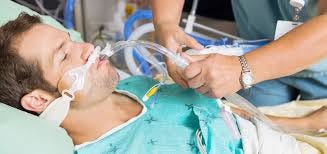
Problems With Intubation/Ventilation
The real horror begins when a person has to stay intubated/ventilated for a significant amount of time. You’re probably thinking, wait, aren’t you kept sedated while you’re intubated?
That’s where things get tricky. It depends on each patient and why they are being intubated. Some are sedated (but there are issues with this that I’ll discuss later). Some are medicated but conscious, and others are fully aware of their surroundings.
The problem with this is that these patients are in life-threatening conditions which is why they are intubated. Because of this, the comfort of the patient is sacrificed for treatment. The focus of the care teams is on improving the patient’s physical condition instead of paying attention to the patient’s suffering and emotions.
Mechanically ventilated patients suffer a great deal despite being medicated or sedated. One of the top complaints of sedated patients was being stuck in loops of painful nightmares. Another top complaint was the feeling of choking or not being able to breathe.
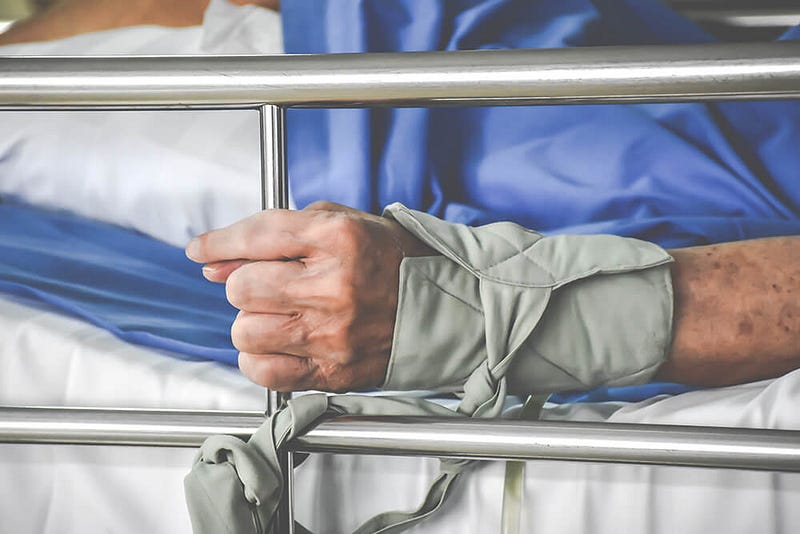
Patients’ hands and feet are tied, keeping them in a confined and painful environment. They are overwhelmed with frustration because they can not communicate their pain or express themselves. Many are hungry, thirsty, cold, fearful, and confused as to what is happening to them. This leads to feelings of restlessness, anxiety, sadness, and despair.
If that wasn’t terrifying enough, intubation also comes with its risks. Inserting the tube can cause permanent damage to the windpipe, voice box, vocal cords, esophagus, and/or thyroid gland. There is also a risk of low blood pressure and low blood oxygen while placing the tube.
My Personal Experience
My biggest fear going into this surgery was waking up with a tube in my throat. I had open heart surgery 10 years ago and that was my worst memory of it….not the pain of them cutting through my chest. Waking up choking and not being able to breathe was much worse. Thankfully, it was taken out quickly so I didn’t suffer too long.
This time around I had an extensive conversation with the anesthesiologist about my fears and what they could do differently this time. He assured me that he would remove it as soon as possible and keep me sedated. I kissed my family and went into surgery nervous but confident.
During surgery, I was unaware that I had some complications. They transferred me to the ICU and kept me sedated for the rest of the day to let my body heal. My poor family was brought in to sit there and wonder why I wasn’t waking up.
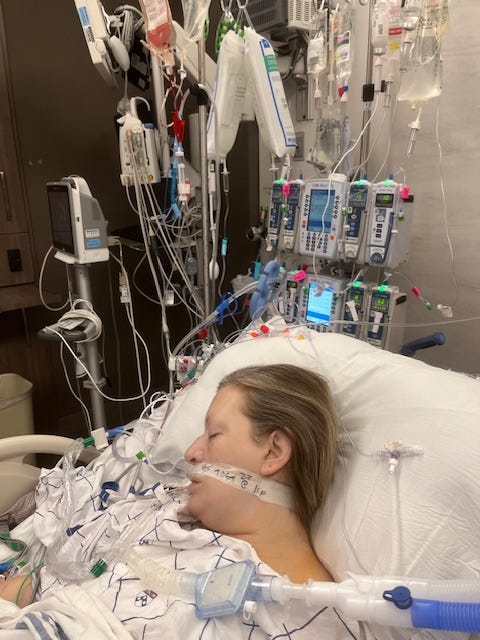
I was supposed to be sedated but this is where things got awful. I was kind of in this weird place where I was stuck between consciousness and sedation.
I wasn’t aware of my surroundings but I knew I was going through something terrible. I could feel pain and I knew that I couldn’t breathe. My family was trying to communicate with me the whole day but I had no recollection that they were there.
At times, I knew that I had just had surgery and that’s why I was feeling so badly. But then I would go through this horrible recurring dream that I was being held underwater.
It was so frustrating because I couldn’t tell who or what was holding me under the water. They would hold me under long enough that I would start to drown. I felt this overwhelming peace and serenity come over me.
Then they would let me come to the surface just long enough to take a breath or two which was horribly painful. This loop of a tortuous nightmare continued for what seemed like days.

Even now that it is all over, I remember that feeling of how painful it was to keep living and how easy it felt to die. It has completely changed my opinion of death. I don’t fear death as I have in the past. Dying was calm and peaceful and a much better alternative than living.
Finally, I started to come out of it. I suffered for close to an hour fully conscious before they removed the breathing tube. The medical staff needed to make sure I could follow commands and had a gag reflex before taking it out. It was miserable not being able to communicate that I was in terrible pain and freezing. Plus they had my arms tied down like a criminal. I understand why but it doesn’t make it feel any better.
Even at one of the top hospitals in the U.S., the medical staff was not concerned with my suffering, my mental health, my pain, or my dignity. Don’t get me wrong, I am forever grateful to them for keeping me alive. However, there has to be a better way.
I don’t know about everyone else but this was MY experience on a ventilator. Maybe other people experience something better or maybe they experience something worse. I found many similar accounts in the research I’ve done but I wanted to share my personal experience.
Conclusion
I wanted to write about my experience on a ventilator to bring awareness. We live in a time that has made such incredible medical advancements. Most medical establishments also pride themselves in putting the patient first, having a patient bill of rights and comfort measures. I can’t help but see a huge breakdown in the system when it comes to patients who are intubated.
Amazingly, our technical advances can keep a person alive like never before but at what cost? Patients suffer on ventilators and are not able to communicate the horror they are living through. Their feelings, pain, dignity, and mental health are all pushed aside in an attempt to keep them breathing.
Healthcare professionals and patients need to come together and communicate where patient care can be improved in intubated patients. Changes need to be made to ease these patients’ suffering and help them feel more like human beings.
In my case, I was grateful to be kept alive long enough for my body to recover. I am a single mom and had three very important reasons to stick around and push through the pain.
The best thing I got out of this experience was that it took away my fear of death. Every time I began to drown in my dream I felt relief. I was at peace and free of pain. Fighting to live on the other hand was a completely different story. Every second was painful, uncomfortable, and stressful.
I am happy and blessed that I made it through this difficult time. I’m excited that I get more time to spend with my children which to me is priceless. However, this experience has changed my perspective on life and death. When my time eventually comes, I know I won’t have anything to fear.
Hi! I’m Lauren. I’m an RN and a freelance medical writer. If you are looking for someone who can connect with your audience and explain complex medical jargon in a relatable way, I’m your gal! Email me at [email protected]
Also, I’d like to thank my Medium community for supporting me through this difficult time in my life! I appreciate and love all of you!!! Jan Sebastian 🖐👩🦰 Sweet Honeylu Janin Lyndovsky Sophia Tell- Stories 🤓📢🤓 Marcus Musick The LARO ✨✨ Ashllyn T. Ruth Sutherland Kaneesha Allen Alexia Walsh BSN, RN Robin Fillner krista tressa /\/\@X HAPPINESS + WEALTH ⭐ Lu Skerdoo Mark Baquiran Wendy King Claire Franky Jay Squires Shanti C K L.A. Walker Vera-Marie Landi Priyanka Sinha LongEarDev