
“Dune”: The Movie That Brought Me Back to Theaters
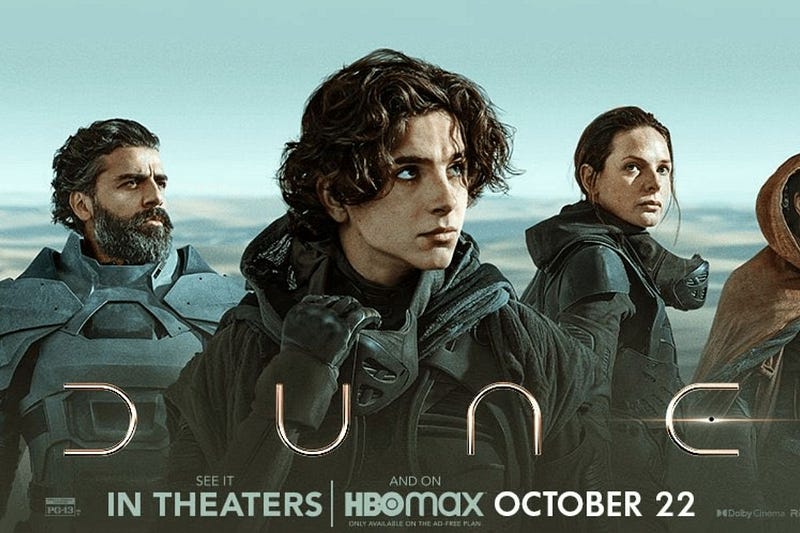
Last Saturday, I stepped foot in a movie theater for the first time in nearly 21 months in order to see Denis Villeneuve’s adaptation of Frank Herbert’s sci-fi classic Dune. It was an extraordinary film that I am glad I had the chance to see in the theater, an experience that I had forgotten how much I enjoyed.
Dune (2021): The Backstory
When visionary author Frank Herbert’s Dune was published in 1965, few had any idea what a cultural phenomenon it would become. The book was set in the far future and chronicled the young nobleman Paul Atreides as he was thrust into the war for the desert planet Arrakis, which is rich in an essential natural resource. It instantly won acclaim and awards and in 2003 was named the world’s best-selling science fiction novel. Herbert wrote five sequels before his death in 1986 and his death his son Brian and author Kevin Anderson subsequently expanded the universe with more than a dozen additional novels.
The initial novel was adapted into a 1984 feature film directed by David Lynch (The Elephant Man, Twin Peaks, Mulholland Drive), which was a critical and commercial failure. Rather than mar the legacy of Dune, however, that film seemed to spawn interest in seeing it re-done right. (And the original does have its fair share of fans, who have turned it into a cult classic.) The book was adapted again into a miniseries on the Sci-Fi Network that aired in 2000. Although the miniseries received more positive reviews than the films, it was hardly considered to be the long-awaited definitive screen version of the novel.
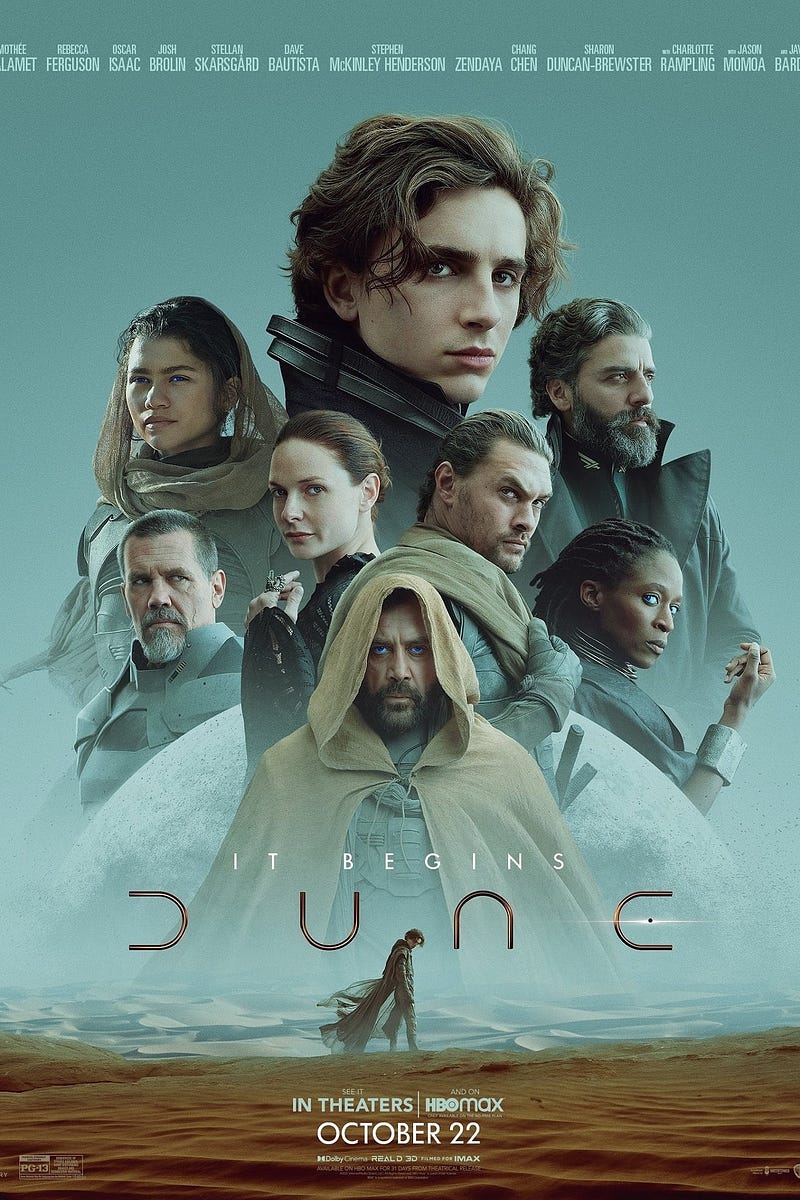
Then came Legendary Entertainment, the production company that wrested the film rights from Paramount Pictures and brought Denis Villeneuve on board. The acclaimed French Canadian filmmaker was a red-hot commodity in Hollywood, having received an Oscar nomination for Best Director for the sci-fi smash Arrival and achieved comparable critical acclaim with the drug cartel thriller Sicario and the ambitious sci-fi sequel Blade Runner 2049. Most were thrilled that a director with such a visually inventive style and a firm grasp of narrative was tackling the complicated and high-profile task of adapting Dune into a big budget film.
Villeneuve and his team managed to secure a fantastic ensemble that mixed hot young superstars (Timothee Chalamet, Zendaya), revered acting legends (Javier Bardem, Charlotte Rampling), popular action stars (Jason Mamoa, David Bautista), and highly acclaimed dramatic actors (Oscar Isaac, Rebecca Ferguson). Filming began in early 2019 and filmed in Jordan, Norway, Hungary, and the United Arab Emirates. It cost an estimated $165 million to produce and was set for a prime release date in November 2020. Buzz was through the roof.
And then COVID hit.
The release of the movie was delayed nearly one year until October 1, 2021, and then pushed back three more weeks to avoid competition with No Time to Die (aka “James Bond 25”). HBOMax announced several months before the film’s release that the movie would be freely available to stream on the day it premiered in theaters, as with every other movie on Warner Bros. 2021 release calendar. (The film was produced by Legendary Pictures but distributed by Warner Bros. Pictures.) This led to a fierce debate among film critics and fans. Some lauded the decision to simultaneously premiere it on streaming, stating that it was a forward-thinking decision that was convenient for fans and (more importantly) provided a viewing option for people who weren’t yet able to safely go back to the movie theater. Others, however, vehemently opposed the decision, stating that a movie of this type could only be appreciated on the big screen and that a simultaneous streaming release was not only a disservice to the vision of the creative team but also a danger to the future of the movie theater industry.
Compounding all of this is the fact that the film only covers the first half of the novel. It was intended to be a two-part film that would be filmed back-to-back (a common practice for expensive, multi-part, big-screen epics). However, the financiers opted for a wait-and-see approach to evaluate the commercial success of the first film before green-lighting the sequel. This produced frustration in some who didn’t want to wait years for the second part and anxiety in many who worried that if the film did not perform well in theaters Villeneueve would not even get the chance to make the second part at all.
To the delight of many, the film was a solid success in its opening weekend in North America. It grossed $41 million and was viewed by approximately 2 million households on HBOMax in its first 72 hours. The film’s global tally now stands at $296 million and counting (it was released in 14 countries outside of the US on September 15). In light of its success, Warner Bros. and Legendary formally green-lit the second film earlier this week and announced a release date of October 20, 2023. It was a moment of relief and rejoicing for millions of fans and many Hollywood executives and creatives.
Returning to the Movie Theater After Nearly 21 Months
The last time I stepped foot in a movie theater was on February 1, 2020. I was an Uber that was swerving through Santa Monica to get to the Arclight in for a matinee screening of a film very different than Dune — Greta Gerwig’s Little Women (which, coincidentally, also starred Timothee Chalamet). I always make it a point to see the movies nominated in the top eight categories at the Academy Awards and somehow I still hadn’t seen the multi-nominated Women a week before the Oscar ceremony. It was a wonderful experience (Gerwig’s reimagining of the classic is a truly impressive and affecting achievement), but it was rather unceremonious. I watched it alone, it was before noon, and I didn’t even stop at the concession stand. I would have done it very differently had I known it would be the last time I would go into a movie theater for nearly 2 years.
In terms of theater going frequency, I rank above average. I have never been someone who is at the movie theater every weekend, but I would go at least a couple of dozen times per year, particularly at the height of summer movie season and in the weeks leading up to the Academy Awards. I have certainly never had as long a gap between trips to the cinema as I did due to COVID-19.
During the pandemic, I started to wonder if I would be a frequent theatergoer when it became safe to again. I had started to truly enjoy the comfort and convenience of streaming movies at home and found myself willing to pay the premium fee to do so when a new one required it.

A few months ago, I had two separate friends tells me that Dune was the only movie that could get them willing to go back to theaters amidst the Delta variant persisting in Los Angeles. We came up with a plan to rent out a theater and invite our (vaccinated and movie-loving) friends to join us, which was surprisingly affordable and uncomplicated — even though I had to hike to Baldwin Hills for a 10:20am screening.
Thirteen of us piled into the Cinemark on Saturday morning and for most of us it was the first time stepping in a theater since the arrival of COVID-19. It was a remarkably nostalgic and joyous experience for all, as we remarked that we never thought we would have missed overpriced, oversized soda cups and popcorn tubs so much. Even the typically annoying pre-show advertisements were captivating and the tacky carpets and rambunctious kids making a mess in the restroom were endearing.
And then Dune started and I almost immediately remembered why sometimes seeing a movie in a theater is a remarkably special and truly singular experience.
Dune (2021): Movie Review
Unlike several of the friends I saw the film with, I am hardly a Dune fanatic. I have seen the 1984 film and am so far halfway through the original book. That’s it. Nevertheless, I was quite excited for the film. Early buzz was very positive, as were the subsequent reviews from the majority of critics. I was intrigued by the film’s fascinating casting. And as it turns out I really craved a big screen science fiction epic. Thankfully, Dune (2021) 100% satisfied that craving.
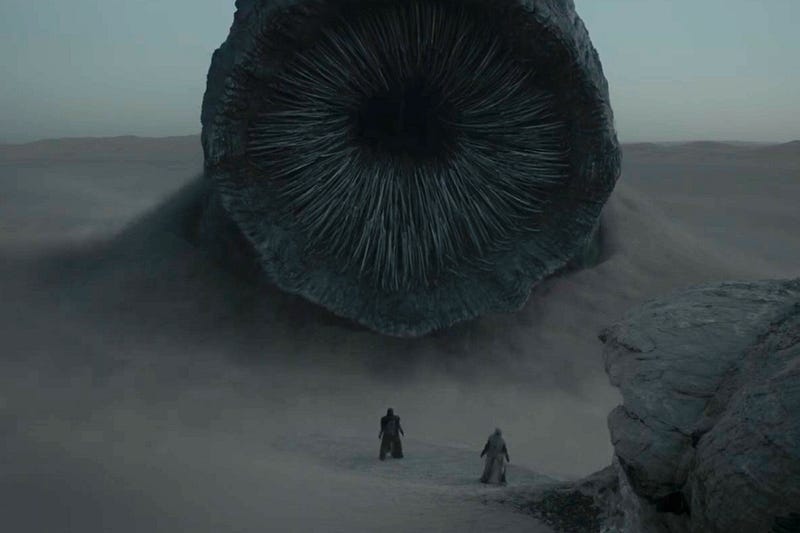
The film opens with a voiceover that effectively and straightforwardly sets up the universe and the central conflict between House Atreides and House Harkonnen. It is immediately evident that screenwriters Jon Spaihts, Eric Roth, and Villeneuve himself have taken great care to make sure that the exceedingly dense and complicated book is comprehensible to audiences who are not Frank Herbert devotees. What is also immediate apparent is that the film will be a visual and sonic spectacle like few others. The stunning opening images and Hans Zimmer’s haunting and otherworldly score are immediately riveting.
The cast is uniformly superb, with five actors giving particularly memorable performances. As the mysterious and underestimated Lady Jessica, Rebecca Ferguson (Mission Impossible: Fallout, The Greatest Showman) is commanding and charismatic. The filmmakers could have gone with a flashier or better-known star, but they undoubtedly made the right choice. As her lover, the esteemed and powerful Duke Leto Atreides, Oscar Isaac (Star Wars: The Force Awakens, Ex Machina) is smolderingly sexy, believable, and endearing. As the Atreides swordmaster Duncan Idaho, Jason Momoa (Game of Thrones, Aquaman) brings a lightness to the role that thrusts the film into higher gear whenever he appears. As the imperial ecologist and judge of the change on Arrakis Dr. Liet-Kynes, Sharon Duncan-Brewster (Rogue One, Sex Education) imbues what could have been a thankless, forgettable role with dignity and nuance. And despite having only a few brief minutes of screen time, the regal Charlotte Rampling (Georgy Girl, Broadchurch) is unforgettably chilling as the Bene Gesserit Reverend Mother.

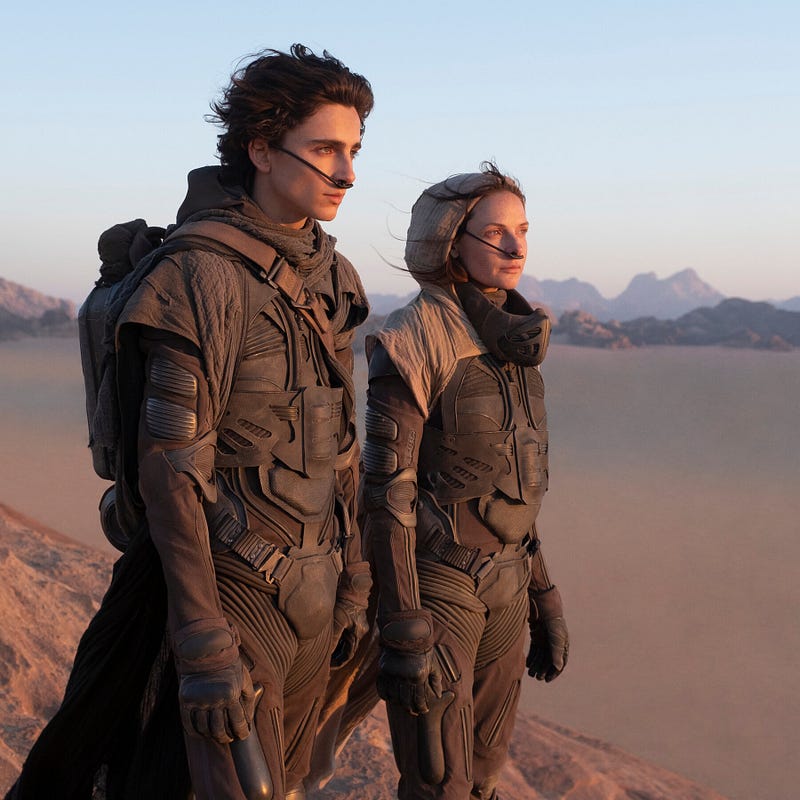
There are several other notable performances, many of which will likely be more prominent and impressive in the second film. Timothee Chalamet (Call Me By Your Name, Little Women) is perfectly cast as the central character of Paul Atreides, but he really only comes into his own near the end of the film. Similarly, Zendaya (Spiderman: Homecoming, Euphoria) and Javier Bardem (No Country For Old Men, Skyfall) are intriguing in their brief performances as Fremen tribe members Chani and Stilgar, respectively, but their roles only become substantial in the film’s final minutes. Other memorable performances come from Josh Brolin (The Goonies, Milk), who delivers commanding work as Paul’s mentor and Atreides weaponsmaster Gurney Halleck; Stellan Skarsgard (Good Will Hunting, Chernobyl), who is appropriately eerie and repulsive as the Baron; and Stephen McKinley Henderson (Lincoln, Lady Bird) as the Duke’s head of security Thufir Hawat.
As brilliant as the on-camera talent and behind-the-scenes crafts people are, special notice should be given to the film’s editor Joe Walker. He keeps the film briskly placed, prevents it from becoming too confusing or jumbled, and helps it come in at a very manageable 156 minutes.
I only had two issues with the film and both were relatively minor. The first is that the portion of the film that takes place after the arrival on Arrakis and prior to the Harkonnen assault is exceedingly brief. The screenplay excises some important context and world-building as well as highly impactful sequences in the book that help establish critical character dynamics (e.g., the remarkably tense formal dinner scene, the complex relationships the Lady Jessica has with Dr. Yueh and Thufir Hawat). The result is that the film goes from arrival and exploration to massacre and exile in what feels like the matter of minutes, which for me undermined some of the dramatic power of the film’s second half. For example, Dr. Yueh’s game-changing betrayal lacks dramatic power when you don’t really have a sense of who he is or what his relationship with the main characters are.
The second and more mild criticism is that it is exceedingly dour. I vehemently disagree with people who say that it is cold and boring, as I found it to be anything but. However, the film is relentlessly heavy and serious and a couple of light moments from Momoa are the only relief provided. This is certainly true to the book and fitting with the subject matter, but a bit more tonal variety would have been welcome. Ultimately, though, these are both minor quibbles.
I think that Dune has the potential to be a major player at this year’s Academy Awards. I predict that it will make the final cut in Best Picture and Best Adapted Screenplay and I am even more confident that it will dominate the craft categories. I have trouble imagining that Villeneuve’s visionary work won’t earn him a spot in the Director lineup and that voters will be able to overlook the film’s costume and production design, original score, visual and sound effects, cinematography, and editing.
And now to one of the main questions about Dune that I have so far avoided discussing in this article: “Does it need to be seen on the big screen?” Well, my answer to that is, “No, of course not.”
Nothing needs to be seen on the big screen. Especially in an age when many people have large, high-quality setups in their homes, virtually any movie can be enjoyed and appreciated outside of the movie theater. With that said, I truly don’t think the experience of seeing Dune for the first time in my living room on HBOMax would have been even 50% as satisfying for me as it was on the big screen. In addition to superior picture and sound quality, I was distraction-free in a way that I have trouble making myself at home. And there is something to be said about seeing a film around other people who are equally immersed.
So, no, you don’t have to see Dune on the big screen. But I recommend you do if you feel safe doing so. And it is certainly the way I will be seeing Dune: Part Two that way on October 20, 2023.
Rating for Dune (2021): 4.5/5 stars
Follow the author of this article on Medium and Twitter.
Read recent articles by this author about films:


