
Dualism vs Materialism
Science Raises Questions Not Just Against Religion But “YOU”

So today I am here to share a concept from which I felt attacked, which attacked my spiritual beliefs. Feeling confused, I shared the same with a very special friend, and she said, “if you strongly believe in your spiritual beliefs, nothing should be able to change them for you.” It inspired me to present my intentions in front of the world. Thank-you!
There are two doctrines we are concerned with(today),
1)Dualism
2)Materialism
Dualism

Dualists in the philosophy that emphasize the radical difference between mind and matter. That the mind is something non-physical, its psychic, a more familiar word for us would be a soul.
This idea is found in every religion and every philosophy. The mind is not the same as the body. It’s not material; it’s immaterial. The source of all the thoughts, emotions, feelings, ideas, plans, everything is not just an organ. It cannot be explained with something simple.
According to Paul Bloom, American-Canadian psychologist. Philosopher Rene Descartes [1596–1650] was the most thoughtful and articulate defender of Dualism.
Descartes believed that animals were material things. He thought that the doctrine of Materialism was correct about non-human animals. “But humans are different,” Descartes argued. For humans, there’s a duality. We possess two sorts of things. We are composed of two sorts of things. We are in part material, but we’re also in part spiritual, separate, mental, psychological. In some way, that doesn’t reduce to the material. He made two arguments for this, and they’re both reasonably good arguments, at least quite persuasive at his time:
- ” The creativity and spontaneity of human action.” Humans are capable of doing what other things can’t. Notice that I used “things” here.
- ” I think that’s why I am.” This argument is more well known. He makes a point that we don’t feel like the body. He applied what was called the method of doubt. He asked, what do we know for sure, and what can we answer? You must have heard, and that even the smartest humans believe that there is an excellent chance that we are living in a simulated world. That someone (we don’t know who) is pulling strings and controlling the simulation. This body is an illusion. “But there is a thing you can’t doubt. Your Consciousness. You could doubt your body, but not your mind, your soul.” With this argument, Descartes influenced people.
And apart from that, Dualism just feels right. Doesn’t it? You say my arm, my heart, my body, my brain, like they are something separate from you, that you have. Implying that your soul is you, not your body and that both of them are different.
There are body switching in cartoons, movies, and fiction, but you don’t come out of the movie hall like I am totally confused about what just happened there. Somehow this idea is digestible for you. In religion and many documentaries, there is mention of paranormal activities and demonic possessions. The view that your body can be taken over by someone else. Another point that there are minds that do not have a physical body. Gods. Making a point that your mind is different from your body.
Materialism
I would like to start this with a story. A story of a man named Phineas P. Gage. He was an American railroad construction foreman. And how an event that happened in the summer of 1848 in Cavendish, Vermont changed his life forever.
His work was to clear away the rocks so that the tracks could be laid down. For that, he would bore a hole in the rocks, put blasting powder and a fuse in. Then he would cover that up with sand and dirt. He always use to carry a tamping iron with himself. A big rode of steel. He used it to tamp down the sand and dirt so that later they could set the fuse and cause the explosions.
One day something went wrong, and when he put tamping iron in the hole, the powder exploded and tamping iron shot straight from his hand to his face. It entered the left side of Gage’s jaw, moving in an upward direction, it passed behind the left eye through the left side of the brain, and it went out the top of his skull and landed several feet away of the clutter.
Now miraculously, he wasn’t killed on the spot. He was lucky in a few aspects. After a series of operations, he was pretty much recovered. But something happened which changed his life forever. He was transformed. Everyone who knew Gage before describes the transformation like this.
“The most efficient and capable man, a man of temperate habits, considerable energy of character, a sharp shrewd businessman.”
But after the incident,
“He was fitful, irreverent, indulging at times in the grossest profanity manifesting but little deference for his fellows.”
Gage was no longer Gage. Nobel prize-winning winning biologist Francis Crick, he calls it the Astonishing Hypothesis. As he writes,
“the Astonishing Hypothesis is that You, your joys and your sorrows, your memories and your ambitions, your sense of personal identity and free will, are in fact no more than the behavior of a vast assembly of nerve cells and their associated molecules.”
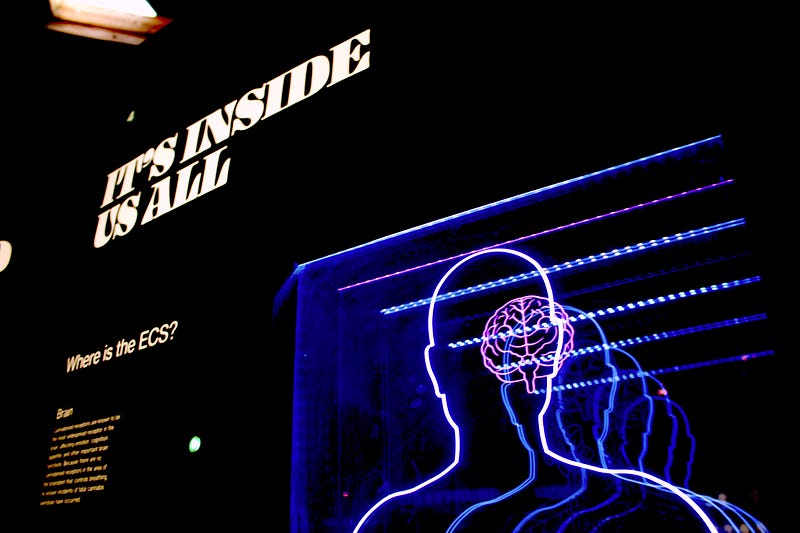
Materialist, the belief that our mental life immerges from our physical brain. People are only objects, the very thing biologists poke and study. The source of all the intimate thoughts, emotions, and consciousness is a material object, our brain. A crucial point to note here is. Some objects are of interesting sort than other objects. When Physicalist say that a person is just a body, it doesn’t end there. According to them, we are just bodies that can do amazing things. Bodies that can think, bodies that can plan, we are bodies that can be afraid, and be creative and have dreams and aspirations. Bodies that can communicate with each other. Bodies that are people.
But we are just bodies.
Theory of Materialism is also the second after Darwinism, which disregards god’s presence.
Paul Bloom from Yale University,
“All of this I think it is very difficult to keep this in mind and hold on to the view of Dualism. I think Materialism, however, uncomfortable; however, unpalatable is a view that science forces us to adopt.”
Let’s talk about why Dualism matters:
- The thing which makes Dualism attractive for individuals is the possibility of surviving our own death. The idea that when this body dies, you continue to exist as a soul. The soul is set free when the body dies. To roam free in this world, or in a spirit world, or in heaven or in hell, or maybe incarnate in another form. But it continues to exist. Religion supports this argument. But Psychologist believes that this philosophy was just tossed into existence to provide some reassurance. And when you die. You die.
- According to a materialist, whatever we are, it’s the brain. There’s no such thing as “You.” Everything from personality-to-character-to-cognitive abilities-to-intelligence-to-emotions-to-grief on the death of a friend-to-falling in love, everything is a result of multiple neurons firing in your body, nothing else. It’s all possible because of your brain. Nothing holistic happening here. Personally, for me, it’s frightening. It takes away the purpose of living. There’s isn’t any meaning to relations. And I just can’t accept that.
Now it’s up to you. Whatever you decide based on your consciousness and understanding. Or maybe, you don’t even have to decide. Just let it be. But do decide what this life means to you and how you want to pursue it.
Dualist or materialist, in my opinion, both of them make pretty good arguments. Materialism having the edge, because of all the scientific findings to date. But I am a firm believer in spirituality. There is something way beyond our understanding. And still, there is a lot which science has to explain. Until then, I’ll believe in Dualism.
And also, if someone’s going to tell me what I am is just because of some neural activity happening up and down my spine. To hell with them and there ideas. XD
I hope this post broadened your perspective towards life. I will continue to bring more and more incredible posts. Thank you for the time you have invested in yourself for trying to know yourself a little better. I genuinely appreciate it. Thank-you!


