Drugs; They Used To Say “Just Say No”
How’s It Been Since Then?

The campaign of “Just Say No” from the 1980s had good intentions. Its literal purpose seemed good for the masses. But how much literal success did it have? I don’t have the statistics in front of me, if there even are any.
Speaking for myself, it certainly did not work for me, but then again, I am pretty sure I wasn’t trying hard to participate in a Just Say No To Drugs Campaign.
When we addicts are in active addiction, we usually don’t find much power in that phrase.
It’s been proven again and again by now, that stopping the active addiction is not about saying no, not about willpower, not about toughening up and just being strong. It’s none of that nonsense. White knuckling is not only torture, but it’s extremely short-lived at that.
We could always try to take some steps back and try that just say no advice again. If we just say no the first time we are ever offered and faced with drugs, well, is that where we may be able to see the philosophy more successful? Unfortunately no.
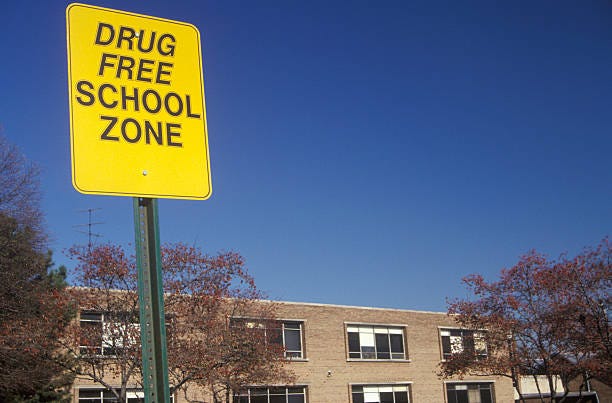
It doesn’t take a lot of words to explain what the problem can be when you tell someone, (child or adult) that they can’t have something. We can’t do it, because it’s “naughty naughty.”
So anyway, the entire concept is obviously well-intentioned. But as I have faced society’s many of vices, I have come to realize that Just Say No, is almost, the force behind the creation of a false sense of security.
Especially when it’s a campaign that touches a majority of the youth. Just say no, makes it all seem so damn easy. No fear, no need to worry, it’s an easy problem, there is no terror or danger, because, you just have to say no. As kids, before we’re even teens, we are taught that drugs are a problem, and we have to make sure we say no.

I don’t have all the answers to this issue. I do think that instead of telling our youth what to say, maybe we should instead show them something. The campaign of things like “Just Say No” is part of many movements that seem to be required in order to remain extremely politically correct. It’s very ironic considering that unoffensive political correctness seems to put a damper on success numbers.
It seems like it can be often the politically uncorrect techniques, that find better results. Longer term too. Of course, it’s a journey of a much different route, that probably requires pushing the envelope.
What are the answers?
I think even as a kid, I was already smart enough to know that “just say no” didn’t carry enough weight. But, I do think, being shown visions of the frightening, dark, deadly results, would have had a deeper impact.
I know we can’t give our children field trips through the streets of the heroin capitals of America, but we sure as hell can show some very scary photos.

We can’t totally allow our children to experience things like jail, or institutions first hand. Would it be so wrong to show the youth first-hand sight, via prison field trips? Show them how small a cell is, and how mean and dangerous your fellow inmates can be. Also, go visit some detox hospitals, maybe a psychiatric hospital, and anything frightening in between.
One last factor, that I think when it comes to firsthand experiences, is the fact that as a child and teen growing up, I never really had a true understanding of the reality that is behind what drugs can do to our families, relationships, friendships, and our finances and careers. I never wanted to be an addict or a criminal when I was a kid.

If I known how much I would break the hearts of family, how many friends I could lose, how I would cut very short a life as a firefighter, and how much trust could be lost, with some of it never able to recovered, maybe I would had understood at a much younger age, just how much the risk was.
Settling, for telling kids to “just say no” is the same as telling our children to “please try drugs.”
“Just say no” did nothing but romanticize drug use, and present it as a naughty, dirty, and guilty pleasure that would make your parents mad.