
Writing — Travel & Photography
Road trip to Sangre Grande, Manzanilla Beach and Mayaro in Eastern Trinidad
The Road Cursed by God and the Ocean That’s “Purging Itself”?
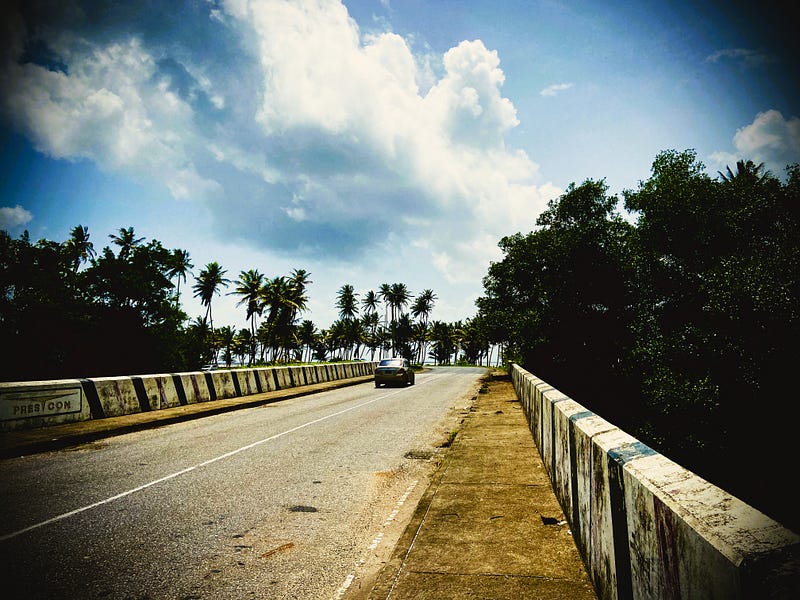
A few weeks ago my husband and I were invited to a big ol’ lime in Mayaro Beach. I was rather excited about this as I had not yet been to the eastern side of the island. So we set out early on a picture-perfect Saturday morning for a drive that would take us around two hours.
We started on the CRH — that is, the Churchill Roosevelt Highway. If you’re thinking this highway might have been built during WWII you would be thinking correctly. A bit of trivia: the U.S. leased an army base here during the war. Once the war was over, the army left and the highway was bequeathed to TT.
When we reached the eastern-most point of the CRH, we met back up with the Eastern Main Road — a road with so much character it could star in its own movie. We drove along the edge of the Aripo Savannas, through the lively town of Sangre Grande, which I will write about in an upcoming post, and on through Manzanilla Beach and the Nariva Swamp.
I do love road trips… any road trip really
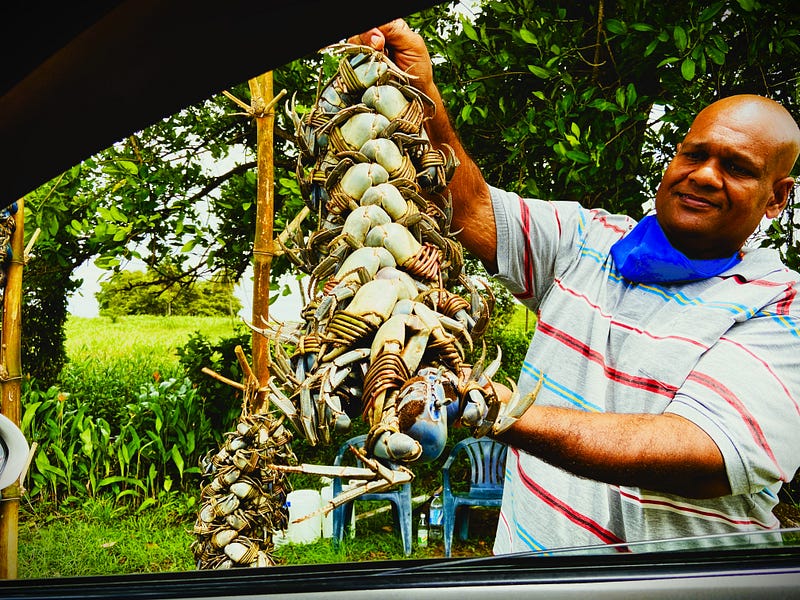
The best aspect of any road trip is being able to watch the amazing scenery go by — the terrain of the land, houses, shops and the many indie vendors selling a myriad of goods: fruits, vegetables, a wide variety of fish and shellfish, brooms and cleaning supplies, snacks and sodas, huge jugs of laundry soap, clothing, jewelry and of course plenty of spirits.
The vendor above was selling these interesting-looking blue crabs—on the rare side from what I’ve gathered. I don’t eat crab—could never bring myself to eat anything that looks that incredibly creepy.
“Did he who made the Lamb make thee?” — William Blake
I do have a certain respect for all things nature though.
How to say Manzanilla
One curious thing of note is that they do not pronounce Manzanilla the way a Spanish person would, but rather in a way that rhymes with vanilla. This threw me for a bit of a loop, but then I remembered that Port of Spain is not called Puerto de España.
Then again, Sangre Grande was able to hold onto its nombre de español, as did Maracas and Las Cuevas… and lest we shall forget, Los Angeles is not called The Angels. It’s called Los Angeles.
I don’t know, I just find this stuff rather fascinating.
The road that was cursed by God?
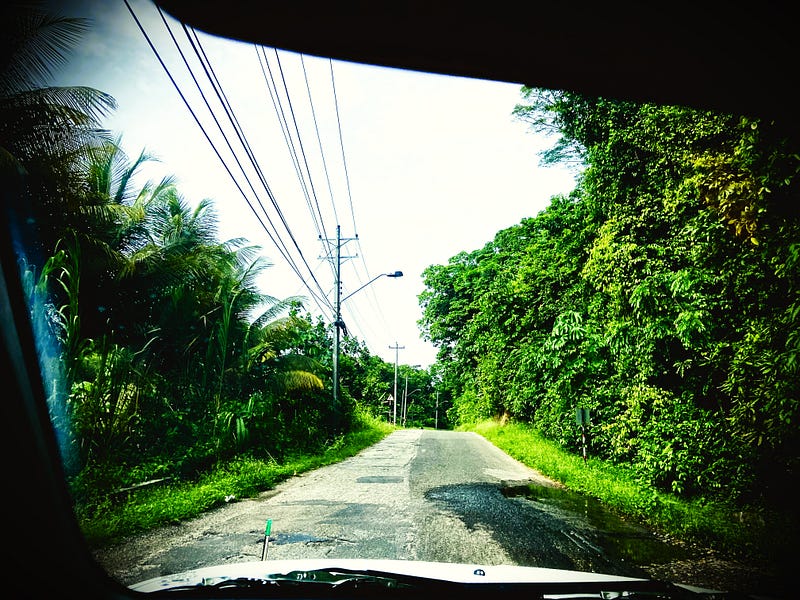
Without a bit of warning, the rather picturesque landscape transformed itself into something else — something that looked more like the setting of a horror movie.
This part of the island is quite flat, with none of the treacherous twists and turns and steep mountainous drop-offs of many of the northern roads. Doesn’t mean that the road still didn’t get incredibly narrow and rough, as you can see from the above photo.
But it wasn’t just that. Most of the island of Trinidad is teeming with people headed this way or that. Here in this neck of the woods though, everything got real quiet and took on a ghost-town sort of feel.
A large beach resort located in Manzanilla, once perhaps vibrant and a rival to Maracas Bay, looks completely deserted and in a permanent state of closure. Soon thereafter we entered an area with vast amounts of sickly-looking palm trees and partially decayed vegetation.
And we also saw creepy stuff like this:
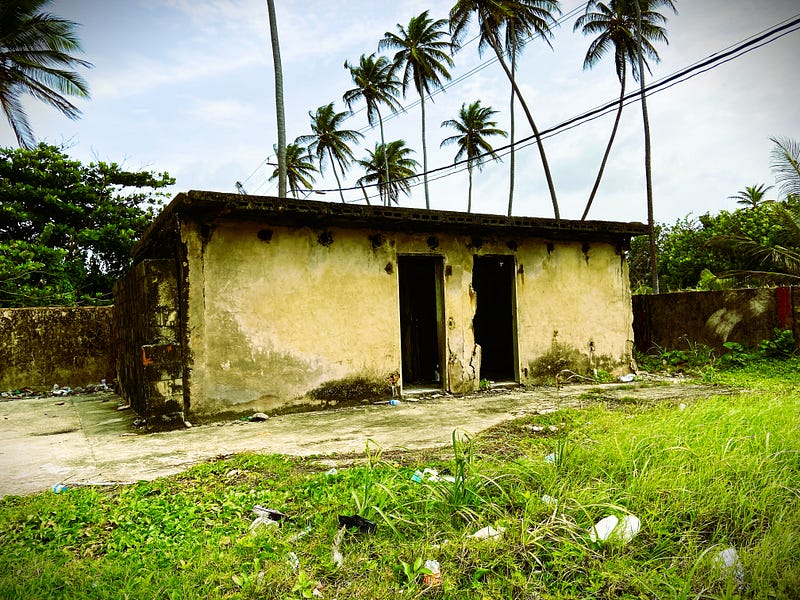
It took a lot of coaxing to get my husband to stop so I could take a few photos. He wouldn’t let me get too close for fear of attracting any ghosts. Scaredy Cat!
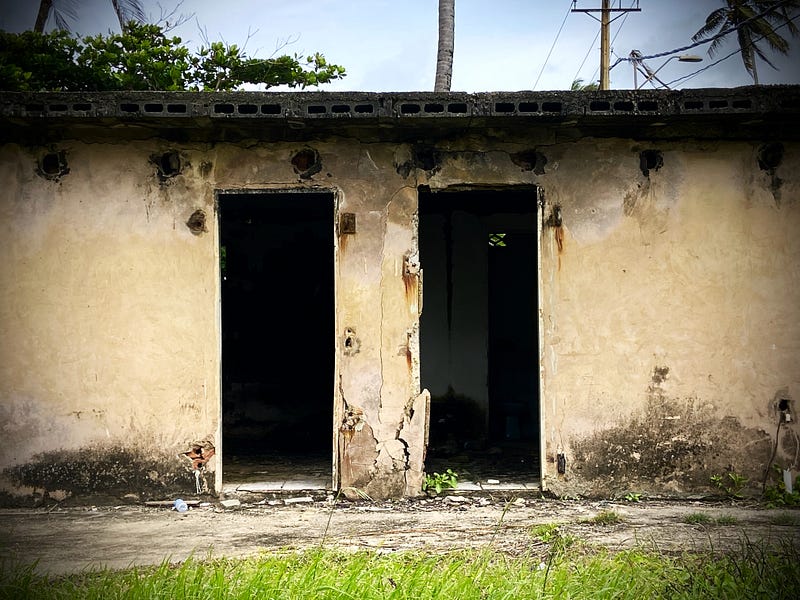
Later, when I got back home and was looking up stuff on Manzanilla Beach I was pretty shocked at the things I found. From what I gathered, valiant efforts have been made to save this declining area, but apparently to no avail.
I also read conflicting accounts alluding to the belief by some that the road, and perhaps the beach area itself, had been cursed by God. There’s much talk of hauntings and ghosts as well.
I found this video, which is terrific in its depiction of just what I’ve been talking about, and offers a bit of explanation on why people think the place might be cursed or haunted (do try and divorce yourself from the 80s porno music): “North Manzanilla Trinidad — The Past is in the Present”.
And the purging ocean?
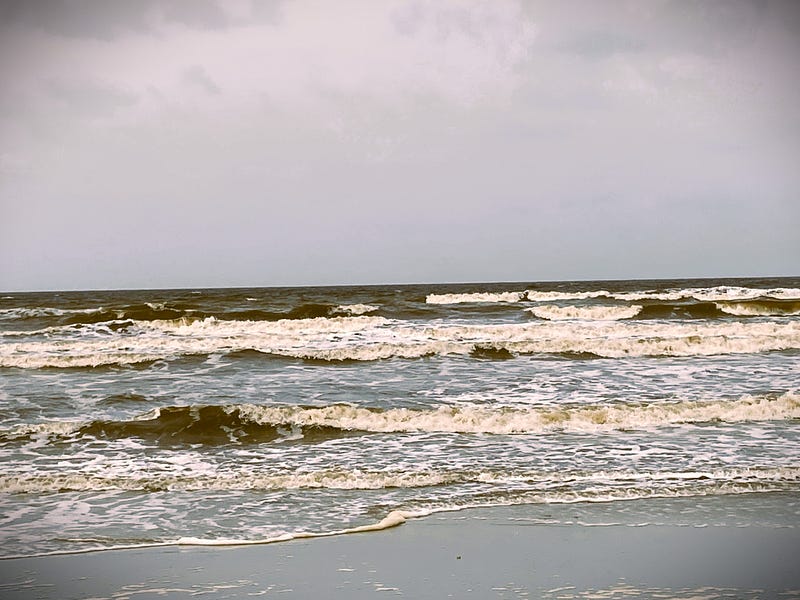
Something else we couldn’t help notice is the abhorrent look of the beach and the ocean water itself. It looked so brown and deadish — and just rather nasty.
What was wrong with it?
The ocean is purging itself is what many people kept telling us.
What in the world is that? No one seemed willing to elaborate.
However, this article in Newsday attempted to clear up some of the mystery: “Manzanilla untouched”. And so it seems that a ferocious build-up of seaweed looks to be the main culprit of the incredibly brackish water.
Apparently this condition has significantly cut in to the way of life for the fishermen in this area. Seems understandable.
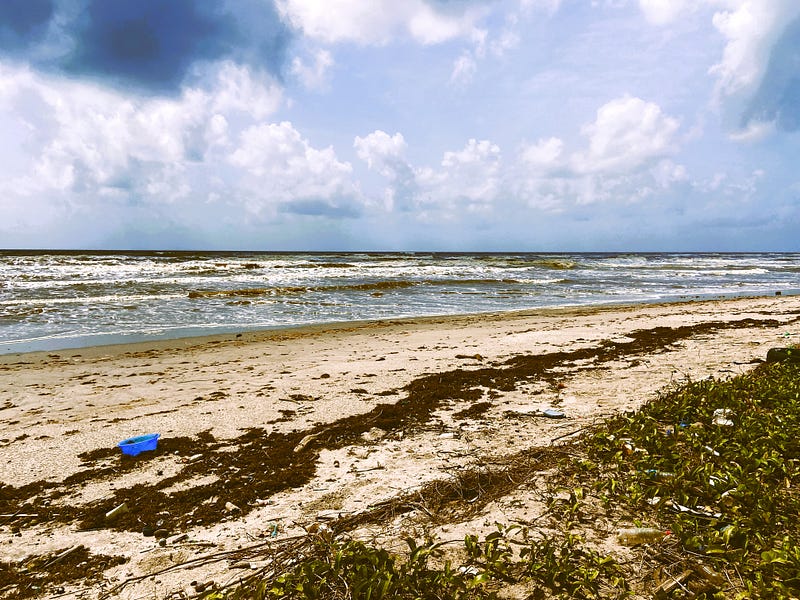
After that, we went on to Mayaro Beach, which I will write about soon. There was just so much to this road trip that it just had to be broken up into chunks.
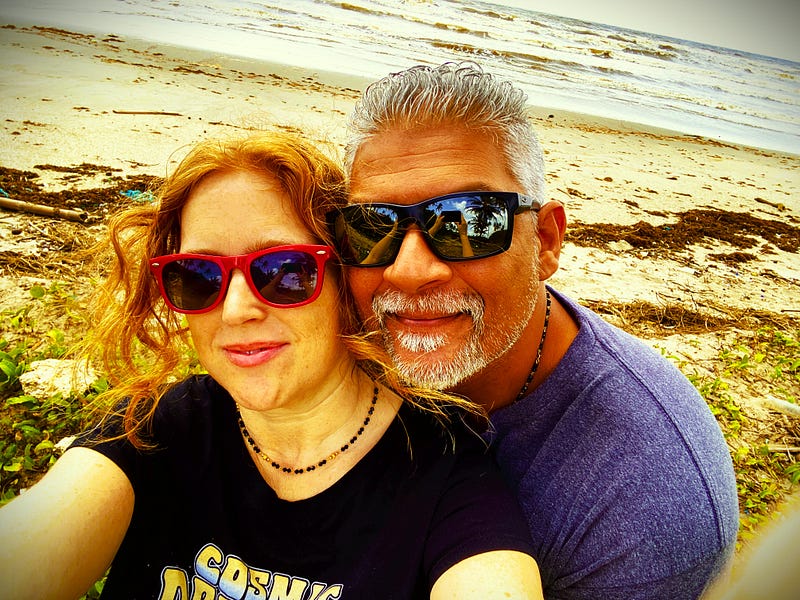
And well, none of the above stopped us from getting a nice selfie before moving on:
To be continued…
Update: Just published part 2: Driving Through the Town of “Big Blood”
More of my writings from Trinidad & Tobago:
For more great travel stories visit Globetrotters on Medium.
Not a Medium member? Join the fun, and an awesome community of readers and writers! Join Medium with my referral link — JoAnn Ryan


