Driverless Cars — I Can’t Wait!
Faster, safer, more efficient — a real no-brainer
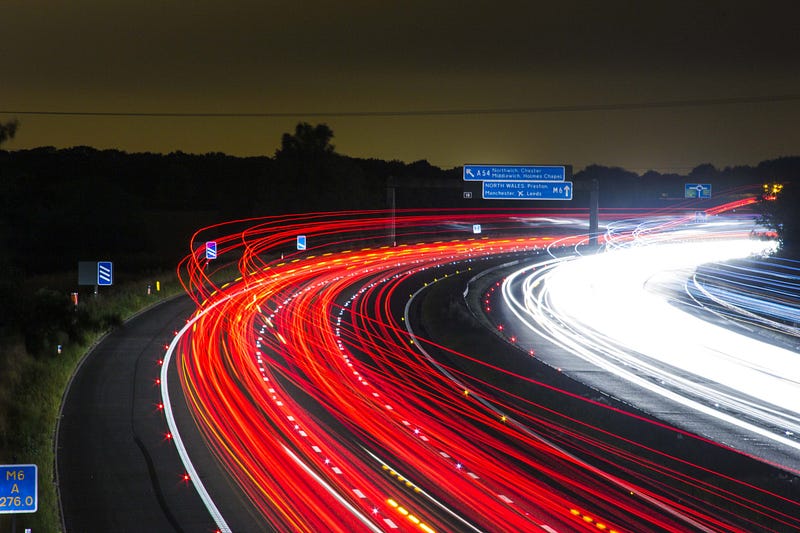
In the 1990s I was lucky enough to get a glimpse of the cutting edge of telematics research in road transport. Europe’s DRIVE programme was part of a multimillion ECU framework covering a wide range of research areas.
Addressing the greatest cause of accidents
Priorities were on road safety, but the technology then was a million miles away from where it is now. Gizmos were being developed that could detect and try to remedy the sorts of things that were causing cars to crash — drivers losing focus, falling asleep, being under the influence … but there was a consensus that these were stopgap measures.
By the 1990s, cars were mechanically reliable. Not without their problems, of course, but motorway verges were no longer littered with cars that had expired through mechanical failure, and we were past the days where routine tasks like applying the brakes were acts of faith with uncertain outcomes.
The vehicle was sorted. The solution that these researchers identified but couldn’t yet provide was to remove the greatest cause of road traffic accidents — the driver.
We are now on the cusp of doing that.
With age comes experience, but also deteriorating eyesight
I thought about driverless cars when heading out the other evening. It was wet, wild, and dark. The country roads had no streetlights. Approaching a junction in bad visibility was a light show of flickering red and white, interspersed with the luminous reflection of road signs, and starbursts where standing water reflected headlights. Had there been a pedestrian in dark clothing at the edge of the road, I doubt I could have seen them.
Even with 100% attention on the road or with the 20–20 vision I used to have, I was no match for current technology. A driverless car would have had a clear 360-degree view, been fully aware of lurking pedestrians, the positions and speed of all other vehicles, and would have had better reaction times than I could have managed in my 20s.
It was only a 10-minute drive, but it made me reflect on all the longer journeys I’ve done. Does anyone’s attention stay fully focussed for every micro-second of any drive … in all directions…? Of course not. To some degree, we all play the statistics — most people on most journeys don’t crash — we hope to stay with the majority. But even when we’re paying attention, we’re also losing focus. A glance in the mirror is a moment’s inattention to the road ahead.
Imagining a world without human drivers
I’ve long thought how wonderful it would be to be able to treat a car journey like a train journey — get aboard, sit back, read, relax, write, do a bit of work, maybe sleep while the car gets on with the business of driving on its own. The more driverless cars on the road, the quicker journeys will be. Not only will there be fewer human drivers to cause problems, but the cars will be able to talk to each other, allowing them to negotiate junctions, and work out optimal routes with speed and precision.
There’s an issue of experience too. I’ve driven thousands of miles over the years, but I’m nowhere near as experienced as a driverless car — no one is. The driverless car can be given the experience of its fellow driverless cars. As soon as one of them meets a new situation, they can all learn from it. A driverless car on its first journey has more driving experience than a person could achieve in a lifetime.
If you want to watch someone take their first journey round town in a driverless car, along with some demonstrations of what can be achieved as these vehicles are rolled out, take a look at the video below from Veritasium. It contains links to safety reports, and some fascinating projections about what could be achieved in terms of safety, speed, and efficiency.
If you’re wary of the whole idea, remember all those people back in the 1940s who swore they would never trust a driverless elevator. Personally, I need no convincing. Driverless cars? I can’t wait!
Subscribe to my newsletter to be notified about new articles. Or sign up for a Medium Membership to help support me and thousands of other writers on Medium. Check out my other articles here.