
Dreaming of whales
I’ve been dreaming of whales. Mama whales and baby whales, rolling and nuzzling and spouting sweet breaths in the gentle waters of the San Ignacio Lagoon. The whale dreams are soothing, meditative, other worldly. I remember how they felt — soft, kind of rubbery, warm.
Too risky to travel?
But we almost didn’t go. Rumblings were circulating.The coronavirus was beginning to spread and travel was risky. Baja was still virus-free and we’d be camping, but airports and planes were suspect. After days of questioning our plans and losing two of our traveling companions to colds, we decided it was a go.
The season for visiting the gray whales where they come to mate and give birth in the protected, shallow waters of the lagoon is relatively short. Most of the whales arrive in December and January. The males are the first to leave, and by the end of March, the females and their young have departed for the thousands-miles-long journey to the cold northern waters where food is plentiful. We were scheduled to arrive on March 9, so the time was limited.
Making a connection
By the time we arrived at the lagoon, we’d put fears about the virus behind us and were thoroughly entranced at the sights of whales rising to the top of the gentle chop of the bay. Lying in our little tents at night we fell asleep listening to the whoosh of whales breathing just yards from the shore. Twice a day we ventured out in the pangas to be awed by the watchful moms who urged their youngsters forward to be petted and oohed over.
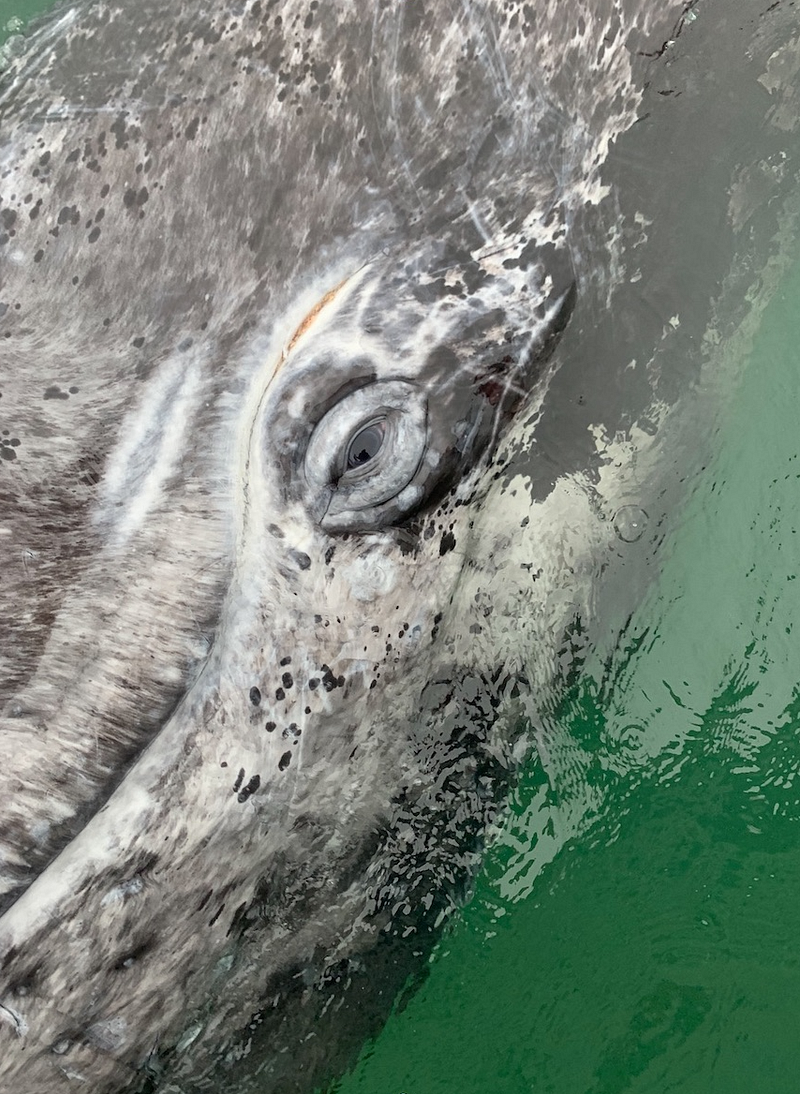
And then the magic happened. A mama whale took her turn, rolling onto her side to gaze into our eyes, one on one. A quiet fell over the panga as we each contemplated the connection with a life form so different from ourselves but with so many attributes in common. Was it that similarity that made the shared moments so magical, so full of wonder? I think so. If it hadn’t been a whale, if we’d communicated with an alien life form, it would have been amazing, exciting, but maybe not so deeply touching.
Evacuated!
And then came the dramatic end to our idyllic sojourn. It started raining, lightly, on Tuesday evening. By Wednesday, tents were flooded and the camp was underwater. By Thursday morning it was time to pack up and get out. We had ten minutes to pack and haul our bags down to the point to load the boats. The surf was up and waves were crashing onto the rocks.
The rough ride across the lagoon was just the beginning. The landing strip where we’d landed was washed out. We loaded into vans and drove two hours across a muddy dirt road that was already crumbling into the drainage ditches that ran alongside. Shortly after we reached San Ignacio, we heard the road we’d just driven was gone. In the Baja desert, water rushing down from the mountains takes out anything in its path.
But we’d made it. In the morning we boarded two Cessnas at a near-by military base with paved runways for the flight to Loreto, then on to Tijuana and the bus across the border. By then we’d connected again with wi-fi and the recognition of what was happening at home struck — schools closed, food shortages, the NBA season called off, talk of shutting down the border.
Home, the virus — and whale dreams
Since then, shelter-in-place orders and social isolation. Waves of anxiety and fear — of getting sick, of not seeing family and friends, of economic ruin. Get plenty of sleep the physicians advise. Dreaming of whales helps.