
2022 LAUSD Elections
Dr. Rocio Rivas: Removing Barriers For Children With Special Education Needs
LAUSD Board District 2 candidate Rocio Rivas shows empathy and understanding for the needs of students with moderate to severe disabilities.
This is the sixth in a series on serving students with severe special education needs. Please read the first part for an introduction to the issue.
“There should be absolutely zero stigmas in regards to special day classes and special education centers.”
- Board District 2 Candidate Dr. Rocio Rivas
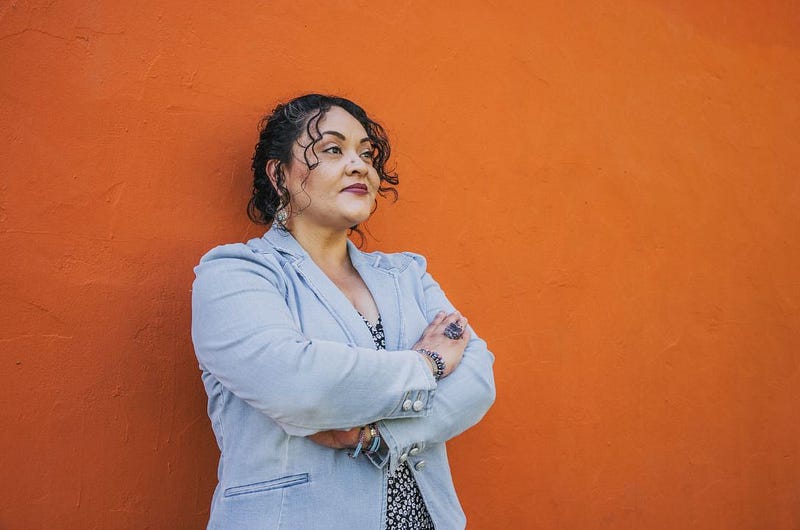
In a district that is increasingly hostile to families who have children with special education needs, parents in LAUSD Board District 2 have a particularly difficult time. Since 2006 they have been represented by Monica Garcia, who holds children with disabilities with such little regard that she considers them separate from “our own kids.” Many of these parents are looking forward to waking up on November 9, 2022, and finding out who will replace Garcia, who is being forced from office due to term limits.
The June primary narrowed down the field to two possible successors. Dr. Rocio Rivas, who was the first place finisher in the primary with 44.17% of the vote, will be facing Maria Brenes. Brenes is the handpicked successor to Garcia and has been reportedly endorsed by the California Charter School Association. The borders of Board District 2 were redrawn especially for Brenes by her husband, Luis Sanchez, who was appointed to the LAUSD Redistricting Commission by Monica Garcia and served as its chair.
Dr. Rivas is an LAUSD parent and holds a doctorate in International and Comparative Education from the Teachers College at Columbia University. She has been endorsed by her primary opponent Erica Vilardi-Espinosa who showed her support for providing a full range of special-education programs in her candidate questionnaire.
Both candidates were presented with a list of questions about special education in the LAUSD, but Brenes failed to provide a response by the deadline. Dr. Rivas did respond and her complete answers are detailed below.
For anyone who cares about the education received by the district’s most vulnerable students, Dr. Rivas provides well-thought-out plans on how to provide services so that these children can reach their full potential. She recognizes the importance of schools like the Salvin Education Center in the Pico-Union community and has seen “first hand the hard work, dedication, love and care that all educators, special aides, paraprofessionals, office staff and principal pour into their students.” Not only does Dr. Rivas “fully commit to keeping Special Education Centers fully funded and to be an option for all families”, but she will also broaden their mission by making them Community Schools.
Dr. Rivas also understands that keeping children in protected environments should not mean that they lose the ability to experience integration with their typical peers. Instead of doing this through forced mainstreaming, she would explore the idea of placing magnet programs on special education campuses that serve students who are interested in pursuing careers in special education. She also supports integration programs like peer buddies and recognizes that providing integration in an environment that meets the needs of all students mutually benefits them all.
It is unfortunate that Brenes did not take the opportunity to address issues related to special education. Doing so would have given her the opportunity to distance herself from the disdain for these students that her backer, Garcia, has shown. With her silence, we can only assume that she will continue the status quo created by Garcia
The following is how Dr. Rivas responded to the questions:
- While inclusion and mainstreaming have benefitted many children with special education needs, these programs are not suitable for all children. For many children, Special Education Centers provide the best option for helping them reach their full potential. Do you commit to keeping these schools fully funded and the option of attending made available to parents during the IEP process?
Dr. Rivas: I fully commit to advocating and working towards the goal of keeping Special Education Centers fully funded and staffed. At the moment, special education centers are suffering from low enrollment as more students are mainstreamed and no new students are enrolling.
All parents with children with special needs should be provided with all the school choices available to them. Decreasing enrollment is a situation that special education centers, like Salvin Special Education Center in the Pico-Union community, are experiencing in the last couple of years. Parents with students with special needs want to attend Salvin Special Education Center but are never or very rarely provided the option to choose in their child’s IEP.
I visited Salvin Special Education Center several times and know firsthand the hard work, dedication, love, and care that all educators, special aides, paraprofessionals, office staff, and principals pour into their students. Special Education Centers, like Salvin, provide the specialized attention students with special needs require. Salvin goes far and beyond to provide students with the knowledge, skills, and abilities to live independent lives as much as possible. Students learn how to take care of themselves so they can live purposeful lives and this is the education that many mainstreamed/inclusive classrooms do not provide for them.
I fully commit to keeping Special Education Centers fully funded and being an option for all families.
- To ensure that children enrolled in Special Education Centers have exposure to their typical peers, do you commit to ensuring that magnet programs are included on these campuses? These magnets would serve children who are interested in pursuing careers in special education.
Dr. Rivas: Yes, I think this is an idea worth exploring. There are students who are interested in working to care for and educate persons with special needs. The more attention and investment is placed on special education as a viable job market, the more students can seriously consider working with special needs children. Peers learning from their special needs peers and turning that experience into a real job experience benefits all involved overall.
There are creative ways in making our public schools spaces to provide unique educational experiences in preparation for a career in caring for and educating children and adults with special needs.
I also commit to working with special education centers in board district 2 in becoming Community Schools as well. This is a model that integrates shared decision-making, provides holistic services for all students and incorporates community involvement and active parent participation. The community school model is ideal for special education centers because the needs of the students and school community are at the forefront and the community assets and involvement are essential ingredients to addressing all student needs. The community school model focuses on providing the holistic needs of the whole child by bringing attention to the care and resources needed to take care of the needs of all students and their families. The community school model integrates the community by building partnerships and creating systems that focus on creating sustainable and viable inclusive school settings.
- How would you support programs like Peer Buddies that find innovative ways to ensure that children with severe special education needs are integrated with their general education classmates even if they are pursuing an alternative curriculum?
Dr. Rivas: Creating a diverse supportive educational setting composed of children with varying learning abilities is important for the social development of all children. Developing understanding and empathy for all the different ways of being and learning is essential to cultivate in schools. The benefits are great as children with special needs are integrated with students without special needs, the more they learn from one another and develop a culture of support and care. We deeply underestimate the empathy and compassion that children can develop and that can be nurtured in the early childhood and elementary years. This helps with eliminating the stigma of being a special needs child.
Children without special needs progress in social cognition and develop a greater understanding and acceptance of children with special needs and diversity as a whole, as a result of experiencing inclusive programming. Overall, the peer buddy system provides all children with a diverse stimulating environment in which to grow and learn.
- Do you commit to ensuring that all members of the staff at the Division of Special Education support children with moderate to severe special education needs and prohibit them from stigmatizing special day classes and special education centers?
Dr. Rivas: There should be absolutely zero stigmas in regards to special day classes and special education centers. These special education spaces specialize to provide the care and education that children with moderate to severe special education needs require, particularly students in wheelchairs who require the assistance of an aide for body movement, communication, and all essential daily tasks. Professional development training for all staff that covers the anti-stigmatization of students with special needs should be expanded to include more proactive approaches to supporting children and their families.
- Do you commit to removing any targets limiting the number of children enrolled in special day classes?
Dr. Rivas: I commit to removing any barriers and discriminatory processes that impede children with special needs from receiving the education and services they legally are entitled to. If the practice of limiting the number of children enrolled in special day classes is done to decrease the number of spaces available for students with special needs without any real reason, then that is a harmful and illegal practice that needs to cease. Many working and low-income parents with children with special needs face many challenges in obtaining the education and services necessary to address their children’s needs. Limiting the number of children enrolled in special day classes places additional burdens on these families.
_____________________________
Carl Petersen is a parent advocate for students with special education needs and public education. He is an elected member of the Northridge East Neighborhood Council and serves as the Education Chair. As a Green Party candidate in LAUSD’s District 2 School Board race, he was endorsed by Network for Public Education (NPE) Action. Dr. Diane Ravitch has called him “a valiant fighter for public schools in Los Angeles.” For links to his blogs, please visit www.ChangeTheLAUSD.com. Opinions are his own.