Dr. John’s LED Gardens.
Practical Use of Spare Bedrooms as Indoor Potting Sheds.

Genesis
Thanks to Jeanne Yacoubou, MS for inspiring me to write this story about my LED gardens.
Been in my west-facing apartment for nigh on 25 years. The lovely veranda attracts the fierce afternoon sun and thunderstorms with horizontal rain bullets. In Winter, what isn’t nailed down, is gathered up by the wind and deposited neatly on the yapping dogs below. I like the wind.
My middle son, married with twins has vegetable and flower gardens. Unlike his dear ol’ dad, he knows gardening. His grandmother taught him the “proper” way. She had an encyclopaedic knowledge of trees, plants, bugs and ways to look after them. Conversely, stories of my gardening expertise abound, especially the attempted pumpkin patch. In those memorable times, I was forbidden use of trowel and watering can. Son looked after grandmother’s prized orchards.
Took charge and responsibility for my health and sanity in the 90’s, got one out of two right. In the noughties, for some reason, I decided to introduce sprouts into my diet. Didn’t like store bought sprouts, labels said fresh, I said composting.
One holiday, I Leapt into growing sprouts. I bought my own trowel and a watering can! Ordered seeds from a catalogue. Didn’t know where to start, so I purchased a selection, lots of them. After all, I thought, my family would love sprouts too.
I didn’t count on the time it took for seeds to arrive and the holiday ended all too soon. But, I had my trowel and watering can, secret smiles. That’s where this story starts.
Sprouts.
Eventually the seeds arrived. Sowed them in shallow trays of light sandy seed raising mix. At one stage I had 14 varieties of sprouts including alfalfa, micro-greens, wheat, barley, and even some sort of grass. Much to my surprise, everything sprouted.
The first harvest was memorable for its novelty and variety. I enjoyed sprout side dishes with every meal apart from breakfast (wheat and muesli don’t mix). The grass was a step too far for my taste, mouth and digestion. The family dutifully accepted their share of produce.
Over time, the sprout novelty wore off, but I was hooked and curious. Observation of growing patterns convinced me that there was not enough sunlight in the room to support all the sprouts. I moved some to the veranda where the weather took care of them and the yappy dog below had a meal of sprouts.
First “Serious” LED Garden.
I did not know enough to make informed buying decisions about LED grow lamps. Actually, I didn’t know enough to make any sort of decision. Here’s where my impulsiveness is an advantage. The LED lights I chose were quite well known. They had good reviews from cannabis growers. I bought three of them.
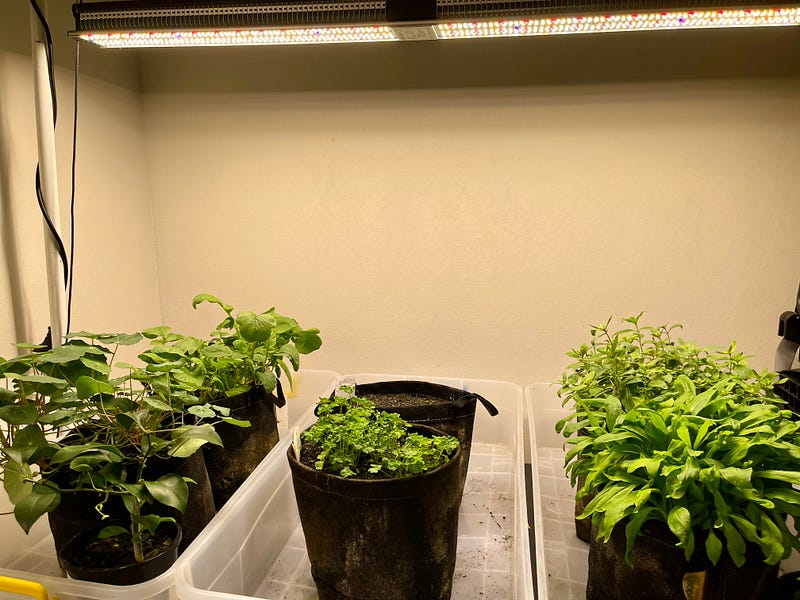
The three, rather heavy LED units arrived. They required 600 watts of power and had two fans for cooling. How high should they be above the plants? I knew enough to ask that question. I built a support frame to give the maximum hanging height possible (you can still see it in the top picture). The three units were equally spaced and about 1.3 metres (50 inches) above the plant canopy, I could lower them as required.
I used the rest of my sprouts as experiments. They seemed much happier under the LED’s. The noise of 6 fans took some getting use too. The heat output required an evaporative cooler. The power bill required a sedative.
Grow Lamps are “full-spectrum” lamps, my first ones had two spectrums one for vegetables, the other for flowers. There were recommended heights to position the LED’s above different types of plants. Since I’m an engineer, I looked at how to measure spectrums. The techniques made a great many assumptions, particularly about my patience. Then, I found each variety of plant wanted slightly different spectra. I wanted to experiment with a wide variety of plants. Back to basics.
Learning by doing was my preferred and only approach. I set the LEDS as high as possible and on full power. I observed the plants growth and the conditions of the leaves. Some plants, like the vanilla vine thrived on full power, while the rosemary needed a bit of shade. Over past few years I’ve juggled plant positions and learnt what I could grow and where in the garden. The vanilla vine just grows and grows. I think its about 30 metres long.
LED’s in 2022.
Fan noise of the cannabis LED’s grew from noticeable to irritating. I replaced them with one very large LED unit that had a curved heat-sink and no fans. The unit weighed well over 20kg (44 lbs). The silence was welcome. Although this monster used less power, it put our more “growing light”. There were issues with the evenness of lighting and I don’t think the LED’s spectrum was well suited to my chosen plants.
In mid 2020, I experimented with a unit from Mars and loved it. I then used a borrowed removalist’s trolley to dispose of the monster. The Mars lights are in my pictures. All together they use less than 40% of the original power, heat output is not noticeable. I do use a fan on a timer for air circulation.
LED grow lamps typically have a rating of 50,000 hours, that is 15 to 20 years of use. However, if your LED’s are a few years old and you see plants dropping leaves or changes in colour or spindly growth then maybe it’s time to change. Mine are fine. I did have a pepper vine that hated the LED’s. It’s now thriving in son’s garden.
Seedlings
Seedlings were the order of the day for my son’s flower, vegetable and border gardens. I use cheap square plastic pots and closely sow seeds. The combination of richly fertilised organic potting and seed raising mixes under LED lights accelerates germination and plant growth. Careful watering, absence of insect pests and elimination of inclement weather led to strong healthy seedlings.
Seedlings are acclimatized for a week or so before planting. Now after nearly three years and well over 150 pots of seedlings, I can say I’m happy. Not only has my son saved money, but he has heirloom varieties that are usually unavailable in local nurseries. He has many favourable comments from his friends and I have shared some seedlings with them. I have had a great deal of fun and a wonderful hobby that would have been impossible without the LED lights.
Flowers
“Learning by doing” knows no limits. I wondered about flowers. I also decided to try growing full size plants. I must admit to being sceptical, but it came down to just “having-a-go”.
I setup a second LED garden. I bought one Mars LED strip light that was nearly 1.1 metre (43 inches) long. It was 250 watts and I set it a lower height than the larger LED’s. Instead of a timber stand, I made a stand out of an old clothes rack. Amazing what a metal saw, grinder and welder can do.
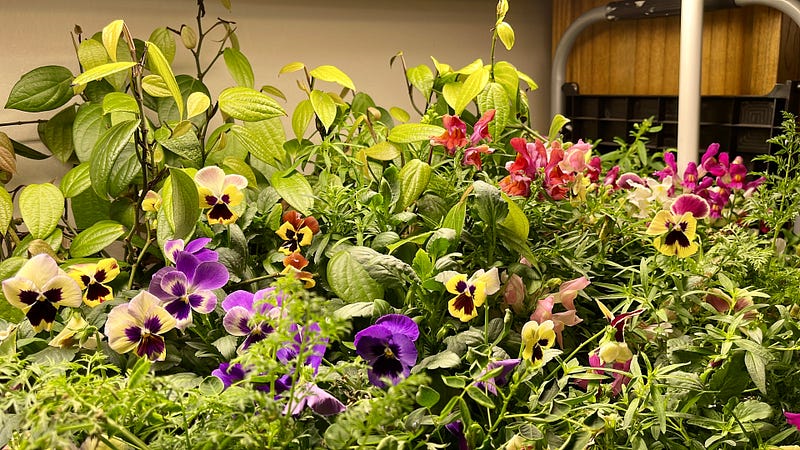
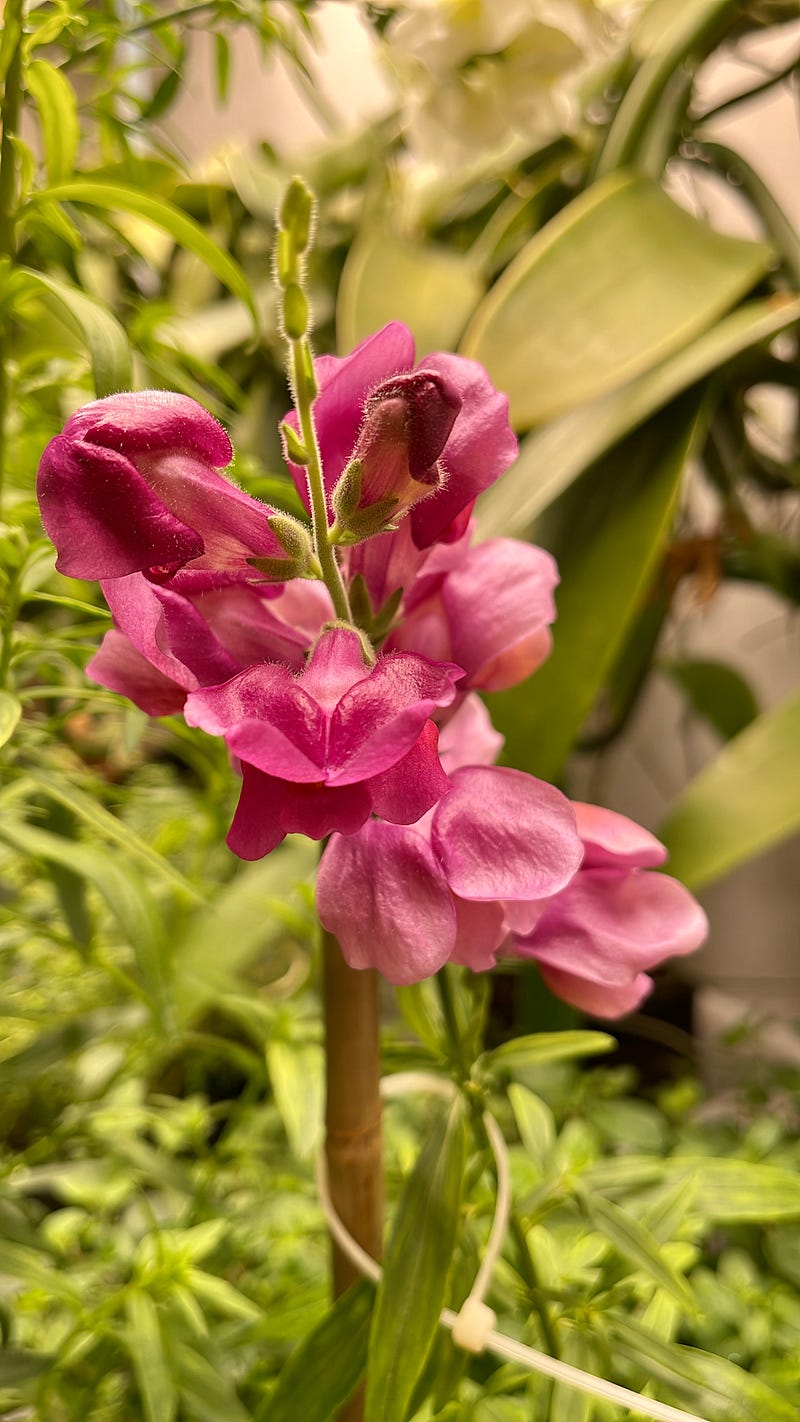
The picture below shows my first year of flowers. I used a few large fabric pots and overplanted. I didn’t know if things would work. To my delight every seed sprouted and grew rapidly. Flowers came in abundance over some months and turned the room into a riot of colour. The snapdragons were stunning. The scent of flowers in the unit was refreshing and lifted my spirits.
I can’t tell you what it means to me to have the beauty of growing flowers in my living space. The LED garden allows growing flowers all year round.
Herbs, Spices, Condiments and Strawberries.
The vanilla vine was happy, so much so, that it decided to flower. I had to learn how to hand pollinate the flowers. It is an exacting ritual and the flower must be pollinated within two hours of first bloom. LED’s came into their own here. The lights are timed to come on at 7am. Flowers bloom by 7:30, I pollinate by 8am. The flowers seem to bloom one at a time over two weeks.
Between my son’s skill and my clumsiness we managed to have 5 pods grow. They take up to 8 months to ripen, so hopefully in about 4 months the picking and preparation starts, another 6 months to vanilla scrolls, ice-cream and other treats.
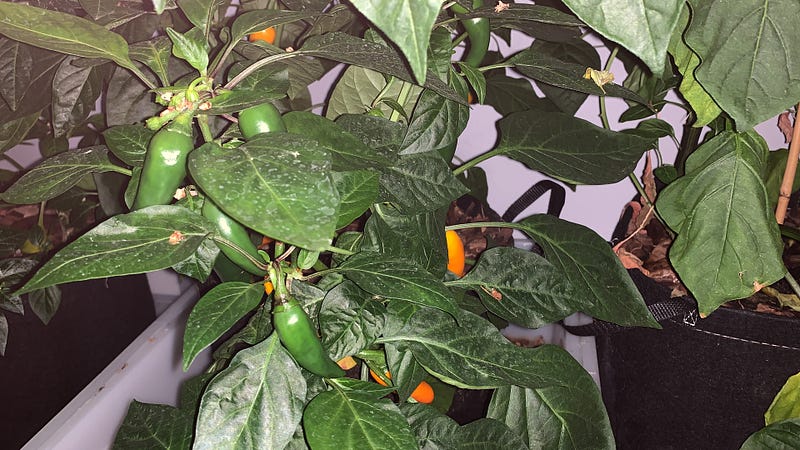
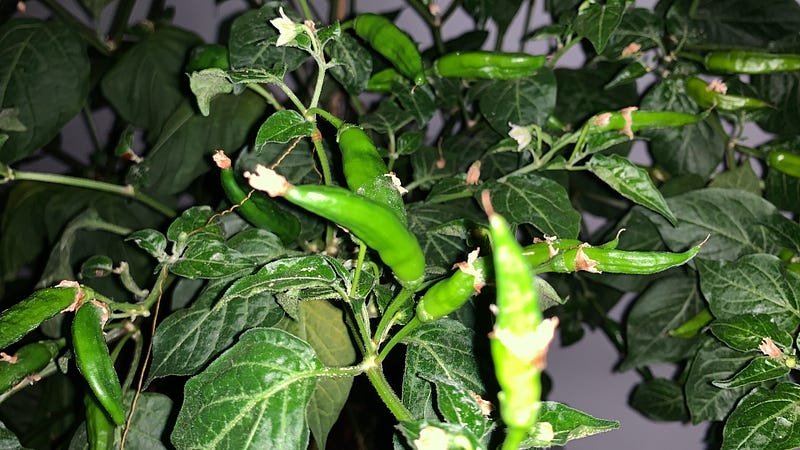
My first vegetable harvest consisted of spicy hot chillies. I had several rare varieties. These chillies are ferocious and delicious. My favourite is the lemon chilli. I have bags of assorted chillies for Indian curries, Thai dishes, chilly sauces and oils. The lemon chilli oils do wonders for prawns and steaks.
Right now, I have rosemary (shaded by vanilla vine), thyme, basil and parsley. In my other garden I have just planted carrots, shallots, radishes, more basil, nasturtiums, paper daisies and asparagus. I have two orange trees growing from seed. The mango trees are now too big and they are growing on the veranda.
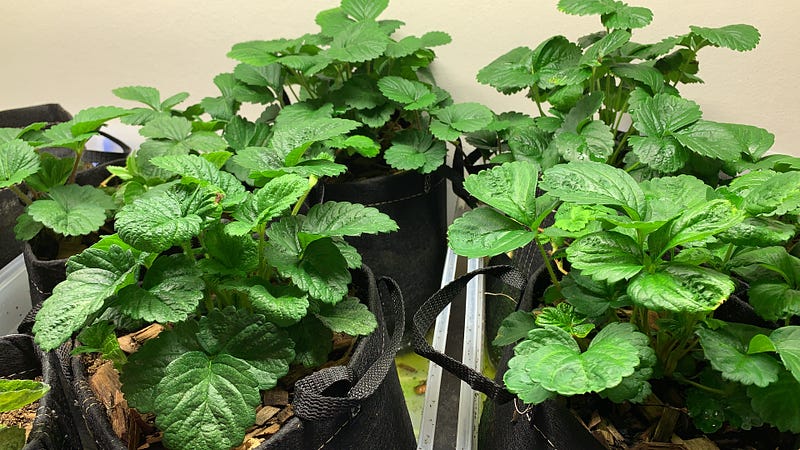
Strawberries have been painful. The first time (see pictures), the strawberries grew vigorously, but they went straight to runners. No flowers and no strawberries. Planted them out (nearly 30 plants) in my son’s garden and they have grown, flowered and produced strawberries. These plants are heirloom alpine strawberries. The fruit is small, but each one is an explosion of heavenly delight, they are still growing. Grandchildren check the plants and voraciously eat any strawberry not pinched by the cockatoos.
Cleanliness
Cleanliness is essential in an LED Garden. The gardens are in my spare bedroom and there is carpet. The LED’s plentiful light, fresh air and regular watering create an environment where mould, moss and fungi will grow if given half a chance. I do like the beautiful colours of mushrooms when they grow.
Things can and do come in with potting mixes, so I let them age and check for bugs and other undesirables before use. You’ll notice that I use high sided trays in the gardens. This catches everything from spilled water, leaves and other detritus. I clean these trays at least every two weeks.
I use fabric pots (apart from seed raising). They are easy to hold and use. Easy to change mixes and repot. If I drop them they don’t break and more often than not won’t spill their contents. An added bonus is that if I drop them they don’t break my feet.
Reflection
I think I have been lucky. But, I have learnt from my mistakes and I have an LED setup that works with some constraints. Space is the biggest limit. My experience with strawberries demonstrates other limits that I need to learn about. The gardens are not inexpensive either in power usage, fertiliser or soil.
The gardens encourage fast growing. Fresh soils and liberal use of fertiliser are a necessity. I did experiment with recycling soil, but a sharp decline in germination and quality put a stop to that folly. I freely admit to being an amateur in all this, my son has been a wonderful source of knowledge and sound advice.
Love to hear your comments.