
Dr. Death — The Neurosurgeon Serial Killer Who Took Upto 60 Lives
How Michael Swango gamed the US medical and judicial systems

If there is a profession that’s closest to God, it probably is that of doctors. They’re supposed to save our lives and keep us away from everything that can go bad with us.
And if you are talking about the United States of America, your expectations of really getting the world’s best healthcare go up a notch.
We’re not done yet, add to it the coveted field of neurosurgery — you must surely be in the hands of the best of the best.
That is indeed what Michael Swango was — the best. But not at being a savior of lives — but at taking lives — as many as 60 of them.
Michael Swango aka David J. Adams, Michael Kirk, Jack Kirk, Michael Swan, Dr. Death is believed to have committed as many as 60 murders including his patients and colleagues.
The Making of a Criminally Sick Mind
Michael Swango was born in Tacoma, Washington in 1954 and was raised in Quincy, Illinois. His father was a noted US Army Officer who served in the Vietnam war, and was also troubled by alcoholism, and ended up being separated resulting in Swango not seeing much of his father growing up.
Swango served in the Marine Corps and received an honorable discharge in 1976. While he never saw any action overseas, his training left him with a commitment to physical fitness.
Swango graduated from Quincy summa cum laude and was given the American Chemical Society Award. Following his graduation, Swango went to medical school at Southern Illinois University School of Medicine.
The early red flags were there but like most cases went unnoticed. While he was a brilliant student at SIU, he showed some strange behaviors. He preferred to work as an ambulance attendant than attend his regular classes. He also displayed a strange fascination with dying patients.
Many of his assigned patients suffered life-threatening emergencies with at least five of them dying.
Despite many other red flags seen by the Institute’s management, he was allowed to graduate on some conditions of completing his classes, assignments, and other such minor disciplinary actions.
Ohio State University and Continued Alarm Signals
Despite his shabby track record at SIU, he managed to land an internship with Ohio State University Medical Center, and later on, went on to secure a residency.
While at OSU, it was noticed that many patients began dying mysteriously at an oddly frequent rate. A nurse once also saw Swango inject some medicine into a patient that led to her condition significantly deteriorating.
On reporting these incidents, the management didn't pay enough heed to the warnings, and Swango was cleared by a cursory investigation in 1984. It was later revealed that he got his residency for fears of OSU management that he may sue for termination without cause.
Return to His Hometown, Quincy, and First Conviction
He returned to Quincy in July of 1984 and took a job as an emergency medical practitioner.
Suspicions again began to arise when a lot of his fellow paramedics observed that whenever Swango got them coffee or food, a lot of them would fall violently ill after. In August of 1985, he was convicted of aggravated battery for poisoning his colleagues and sentenced to 5 years of imprisonment.
A later report about his stay at OSU suggested that there were glaring gaps and lack of action by OSU authorities despite obvious and significant signs of wrongdoing.

Release from Prison and Aliases to Game the System
In 1989, now released from prison, he found a job as a lab technician, where similar to his previous jobs, his colleagues complained of severe stomach pains during his tenure there.
This is about when he met Kristin Lynn Kinney, a nurse with who he fell in love and planned to marry once they were settled.
Daniel J. Adams is Born
In 1991, Swango legally changed his name to Daniel J. Adams to attempt to get a job as a doctor again.
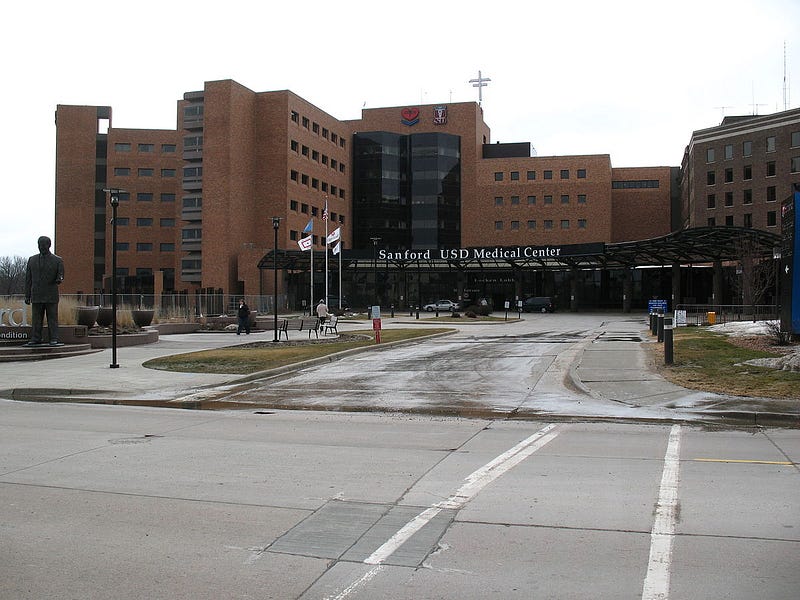
In 1992, he began working at the Sanford USD Medical Center after having forged a series of documents to hide his trail of convictions.
He forged a fact sheet from the Illinois Department of Corrections that falsified his criminal record, stating that he had been convicted of a misdemeanor for getting into a fistfight with a co-worker and received six months in prison, in place of the actual five years he had served for poisoning his colleagues.
He also made most of his future employers believe that he was a victim of false charges, or that he was a reformed man and was ready to practice as a physician again.
The Inevitable Mistake
Swango soon built a solid reputation at Sanford under his new identity but as all criminals do, he made a mistake.
He committed the error of trying to join the American Medical Association. A reputable nationwide organization like that was bound to have more thorough checks and background verifications than most other medical bodies. The AMA found out about the conviction and the AMA report frightened colleagues leading to Swango being fired from Sanford.
For some time then the AMA lost track of Swango, who did find a temporary job in New York while on the run, under more falsified identities.
During this time, his girlfriend Kinney left Swango and a few months later also committed suicide. There were traces of arsenic found in her body as well on post-mortem.
Final Arrest and Potential Extent of Crimes
After a cat-and-mouse game of Swango hiding from FBI and the authorities, including fleeing to Zimbabwe, Swango was finally arrested by the FBI in June 1997 from the Chicago Airport while on his way to Saudi Arabia.
With a lack of evidence around his murders, Swango initially pleaded guilty for defrauding the government and was sentenced to three and a half years in prison. The FBI and the government used this time to gather more concrete evidence around his numerous crimes.
As part of the investigation bodies of his former patients were examined and traces of poisonous substances were found in the bodies. His crimes weren’t limited to the United States of America. During the investigation, the Zimbabwean government also charged him with poisoning seven patients of which five died.
On September 6, 2000, he pleaded guilty to the three murder counts, as well as counts of wire fraud and mail fraud. Had he not done so, he faced the possibility of the death penalty in both countries. At his sentencing hearing, Swango admitted to causing three murders, lying about his role in causing a fourth death, and lying about his 1985 conviction.
In his book Blind Eye, Quincy native James B. Stewart estimated that counting the suspicious deaths at SIU, circumstantial evidence links Swango to 35 suspicious deaths. The FBI believes he may be responsible for as many as 60 deaths, which would make him one of the most prolific serial killers in American history.
The problem here isn’t that the world saw yet another serial killer — the real issue lies in the obvious and apparent modus operandi he used and it kept going unnoticed. Doctors have a job that can be easily misused to wreak havoc with their patients’ health if they misuse the power. Hence the need to monitor the profession rigorously and not ignore red flags is important so we don’t lose lives in the quest for commercializing healthcare.
References:
https://en.m.wikipedia.org/wiki/Michael_Swango
https://unsolvedmysteries.fandom.com/wiki/Michael_Swango
https://murderpedia.org/male.S/s/swango-michael.htm