
“I didn’t teach you about caring for people.”
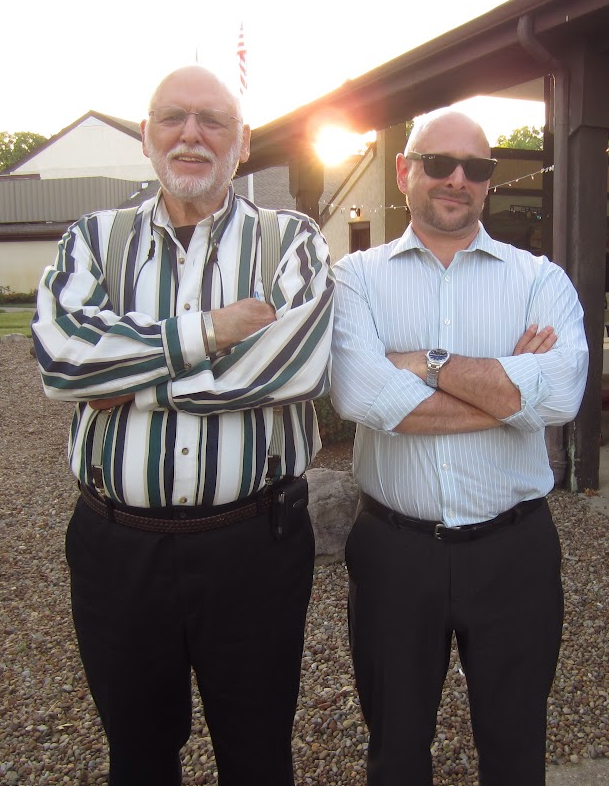
It was never easy to get my father to talk about his past. It’s not a place he wanted to be. He generally refused even listening to ‘50s music because of this. My mom put on some Sha-Na-Na once. He left the room with a dismissive wave of his hand, a scene I saw repeated until I understood it wasn’t the song, it was where it came from. Music carries memories of the time you discovered it.
Even getting him to sit down with me to talk about something deeper than That Local Sports Team required months of back-and-forth emails between me and my mother, his designated representative. I made repeated assurances that this wasn’t about blame for our childhoods he always thought he mishandled. This was about me trying to let go of that, to have that moment when you’ve been a father and you understand how it was for the kids.
I heard the clock ticking — I was on the plus-side of 40 and starting to seriously wonder if the only way I’d ever get to know his past better — And mine — was to hear it through the nostalgia-tinged lens of his eulogies.
When it finally happened, we sat at a coffee shop in Cleveland on a July afternoon, A/C humming to provide a cloak of questionable sonic privacy.
I found out how, after my parents lived with their parents right after they got married, my grandmother made my Mom’s life miserable (“When you got married, it was like you died,” my Dad’s mom told him).
I found out why he never talked about his father, and the real story about why my grandparents always — Strangely to me as a child — had separate bedrooms.
…And I found out my father’s regrets about his family — About us.
In fact, none of us ever knew until very recently how much guilt and shame he harbored, throughout his life. My mom has been going through his papers since he passed, unbelievably over a year ago now. He would write long journal-style missives on yellow legal pads, and she’s recounted to me how she’s found many of them still aching for his mother’s beyond-the-grave approval, still trying to be the best version of himself, if only in his mind to balance the scales from whatever unfixable mistakes he perceived he’d made with us.
He wouldn’t let me record what ended up being two hour-long sessions together. I braindumped everything I could right after each one though, and one quote stood out:
“I didn’t teach you about caring for people when you should.”
He was right, of course, I didn’t dispute that. I’ve thought about that hundreds of times in the years since then, trying to unpack who I was then and what it meant.
I used to believe that teaching people how to care for others was unnecessary because I thought it was innate in humans, driven by our survival instincts. However, what I realized then, is that this instinct can be eroded. You can be taught to prioritize self-reliance over caring for others, especially when being imprinted by your environment, your parents.
It explains why I chose careers that let me work in solitary — Radio personality (Only one in the room, full control of the output), sales (Adapt or die), and software training and development (Look what I know, and Watch the Show).
It explains why even in my most intimate relationships we generally didn’t combine funds, we didn’t create entanglements that kept me from getting out with minimal damage. I had an Asperger’s style with the people I related to — I didn’t feel that I innately knew how to help them, I only knew it from analyzing the available data and deciding this was “the right thing to do.” I have a good heart, and good intentions. I also have a brain that remembers my upbringing — That life will disappoint you, that there’s much to fear.
(He had a saying: “The car knows,” meaning that if you had some extra money left after all the bills were paid, for example — the car would know this and pick that time to need expensive repairs. I never realized until much later that this helped me internalize a feeling that some nebulous “they” were always there to steal your abundance)
I’m still unwinding all this. As AI changes the way we live, I’ve seen some of my more traditional revenue streams dry up, and I’ve been forced to continue re-learning the lesson that none of us does this alone. The more I want to retreat into my Solitary Bubble, which tech work provides quite nicely in many cases, the more I see how fulfilling it is be a part of something bigger than yourself.
We are all the sum total of our choices. I am fascinated to continue unraveling why I made those choices, and to discard what no longer serves me. Not just for myself, but for the people who love me. I’m trying. Every day, I’m trying.


