
19 341 Feet: Kilimanjaro Part XVII
Don’t Worry. This is Normal
Our last refuge
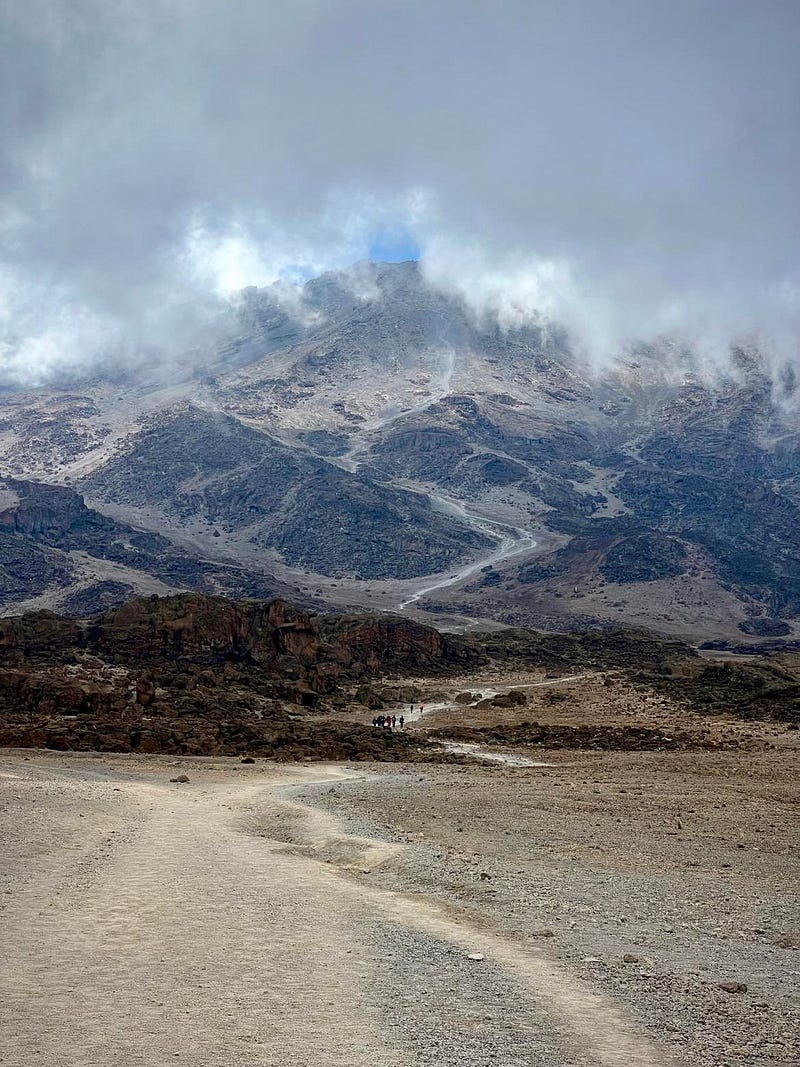
I’m squatting in an outhouse.
This is what 7500 miles, 7500 dollars, and 75 hours of climbing have come to.
If I wanted to be generous, I might call this outhouse door flimsy. If I wanted to be accurate, I’d say there are three holes the size of a human eye in the wood and no lock. Not that I’m particularly worried about peeping Tumpes. Our whole host of porters could walk in on my bowel movement, and it won’t bother me enough to protest. Everybody poops — even on Mount Kilimanjaro.
I’m worried about something else. I can’t breathe. At least not like I’m used to breathing.
The good thing about climbing above 15 000 feet is that I no longer have to wonder what Acute Mountain Sickness will feel like. It’s here, and it is profoundly unpleasant, a prodrome battle royal between nausea, dizziness, and extreme fatigue, competing to become the primary symptom.
Any ounce of exertion requires dozens of deep breaths to get back to normal, and inside the outhouse at Kibo camp — a privy shared by forty climbers experiencing frequent bowel movements— I find myself reluctant to take a dozen deep breaths.
I feel as if I’ve aged twenty years since I woke up this morning. We’ve climbed too fast. Our bodies don’t belong here. The World Health Organization recommends ascending a maximum of 1000 feet per day in order to minimize health complications. Every day we have climbed well over 3000 feet.
Our lungs have just gotten used to the idea of being above the tree line, and four hours from now we will propel them another 4000 feet. Even the most experienced guides and porters on our team are under the spell of altitude. There is none of the usual laughter and horseplay at Kibo Hut. Everybody is too busy breathing.
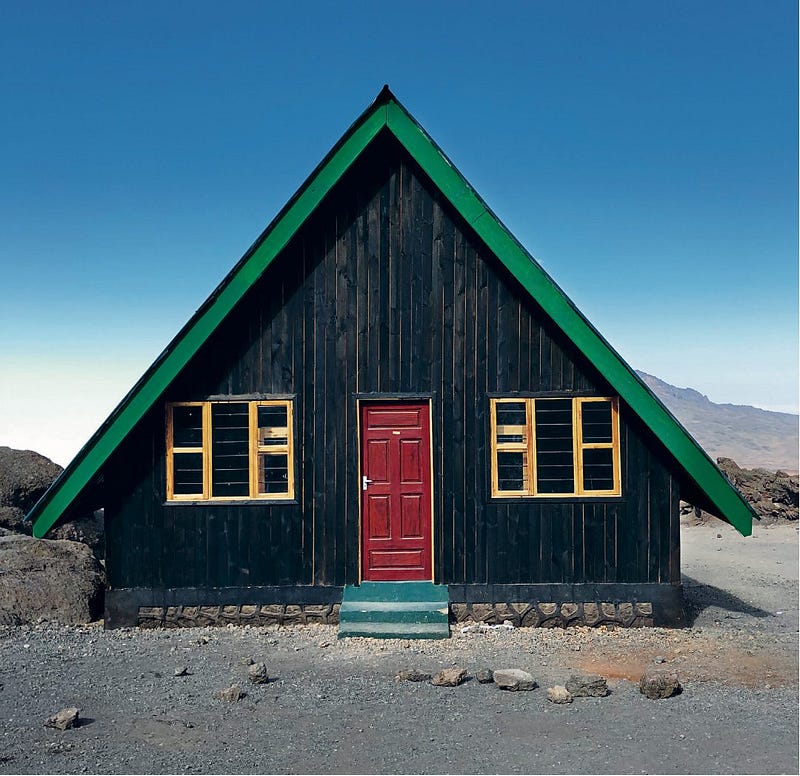
Dinner is served in a stone cabin, built almost a century ago on the mountainside by Kilimanjaro’s earliest climbers. There is a long, dark hall that leads to a room lit in pieces by climbers’ headlamps. It’s about as warm as a walk-in fridge, and it smells like a hundred years of nervous sweat. But at least we are out of the wind.
Our cooks deliver our last supper — spaghetti; carbs; fuel — with instructions to eat as much as we can. I am too nauseous to be truly hungry, but I was raised on spaghetti. If I have to eat two heaping bowls, then by God I’m going to do it.
Ibrahim, our lead guide, joins our table to give us our final briefing. In the past he has joked his way through the briefings, leaving us feeling light-hearted about the task ahead. Tonight, we are seeing Ibrahim’s serious side.
“If you have to vomit, don’t hold it in,” he says. “Don’t pretend you are feeling okay. Your head hurt, your breathing hurts, you tell someone. When we stop, we don’t stop long. Long rest equals long freeze guys.”
The other guides who will take us to the peak have all gathered to listen to Ibrahim’s briefing. I can see the anxiety in their eyes as Ibrahim explains what will happen if we need to make a rapid descent. This isn’t the flight attendant telling us that our seat cushions are also flotation devices. Emergencies happen all the time. Each of these guides has experienced a rapid descent.
Outside of the old stone cabin I spy a group of cement blocks. They are building new cabins at Kibo, but these slabs look more like graves in the moonlight. There are sixty souls in this camp, but I can’t hear a single human sound. Tomorrow has subsumed us all in a great hush.
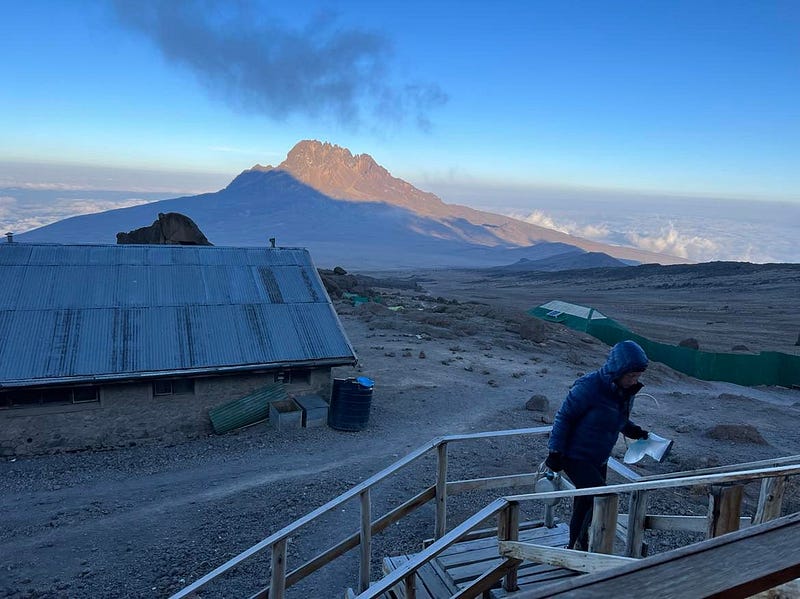
Mounting the twelve stairs to our hut leaves me out of breath. All the bodyweight squats, all the practice hikes, and I can’t catch my breath after twelve measly steps. Don’t worry. This is normal.
I get into my sleeping bag and synch it around my head. It’s cold in this cabin. My body heat doesn’t warm me the way it used to. I can see my breath freeze as it passes from my mouth like steam from a kettle. Don’t worry. This is normal.
My heart is racing, another effect of altitude. We’ve all measured our resting heart rates, and they are well above a hundred beats per minute. Lying down at 15 400 feet is as taxing as a brisk walk at sea level. Don’t worry. This is normal.
I don’t sleep. I roll over a hundred times, and I can hear Claire, Stanley, Dr. Quinn rolling together in a chorus of creaking bed frames. Then our alarms begin to ring, each distinct quirk chiming in one after the other. On the night when we needed it the most, none of us have slept. Don’t worry. This too is normal.
Tanzanians say that Uhuru peak is the place where heaven reaches out to touch the earth. So now, with ski poles and snowsuits, we ascend for heaven.
Catch more of my Kilimanjaro series here:
Also check out this unconventional travel article about gas station cuisine from Maggie Gigandet: