
Don’t Worry, AI is Never Going to Turn on Humanity
That doesn’t mean you should not be concerned.
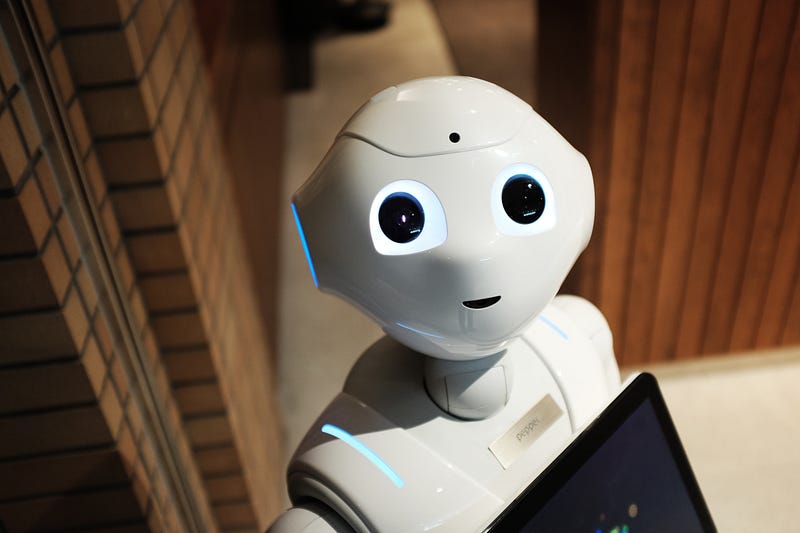
I summoned my Google Assistant and asked her to play a song for me while my hands were busy with cooking. She put on the wrong song.
So I called her stupid.
“I’m so sorry, it won’t happen again”, was her reply.
I immediately felt guilty for insulting her (I had chosen the female voice). “Sorry, I didn’t mean that. You’re the smartest ever”, I said. She thanked me for the compliment and went back to her robot business, my temporary song-induced rage forgiven and forgotten.
I know, why feel bad for something that is just — sort of — pretending to be human? Was it out of concern she would start picking the wrong songs on purpose or maybe even give my important emails a quick trip to the trash folder before I could see them? Maybe even sabotage my Internet connection?
Not at all. I felt bad because I’m human — not because “she” is. Do I think she would ever try to mess with me out of pettiness? Definitely no.
And neither is any other artificial intelligence.
When the by-now-evergreen “AI could turn rogue” topic is brought up, it is almost always by people who have no direct experience working with it. If you are reading this, chances are you heard about Elon Musk’s fears (he seems to bring this up quite a lot). Stephen Hawking had similar concerns. So do many other public figures — all of them extremely intelligent people, but (often) not that knowledgeable in the field of AI.
While the thoughts of CEOs, lawmakers, and other highly influential people are important, especially for raising attention to the debate — I also find it important for actual researchers and developers to raise their voices when needed, particularly to avoid fearmongering.
The views in this article, which I have developed over a few years studying, understanding, and working with AI as a programmer, are entirely my own.
What is artificial intelligence able to do, at present?
As of its current state, artificial intelligence can solve a number of well-defined tasks. Depending on what you’re working with, the end product could be called a model, a bot, or something else. The common thread among all these tasks is that they all are highly specialized. Yes, AI can parse texts, images, understand and answer questions, and even play games — and a lot more. It can guess what you’re going to type — and it can reliably detect some cancers.
But it can only do one thing at a time. You can’t make an AI that can answer any question, or recognize any object. It’s very limited in this regard — it would need humongous amounts of data. Meanwhile, you only need to show a child one picture of a spider for them to recognize all other spiders as such. The human brain is infinitely more efficient in this regard.
Even those AI models which seem to be able to do a multitude of tasks are, under the hood, nothing but a bunch of different models glued together. They are no more than the — literal — sum of their parts.
They look more complex and potentially scarier. But they really aren’t.
Yet, perhaps because of the influence of science fiction — remember Hal 9000, the dad of all evil robots? — many think that AI can, or will be able to do, much more than is actually possible, to the point of harming our species.
Harming others requires a sense of agency that AI doesn’t possess.
As humans, no matter who we are and where we come from, we witness bad stuff going down all the time. Not evil, necessarily — but we do cause damage to others to gain something ourselves. That’s one level of badness.
Some go fully rogue and are just evil for the sake of being evil — the antisocial ones. That’s one level beyond.
No matter if we talk about being selfish, or being evil — any of these inclinations requires a functioning brain. They require complex emotions, as we have developed over millions of years, specifically for the purpose of perpetuating our existence as a species.
AI is not that interested in its own self-preservation. Actually, it is not interested in anything. It couldn’t possibly be, because, as of now, it’s impossible to program it to care about something.
If has no drive to even keep itself alive, how could it even desire to cause harm?
We might think AI shows emotions — like voice assistants meekly apologizing for their mistakes — yet it’s nothing but a replica. It’s just there to make us, the humans using it, more comfortable.
Can we rest easy in that AI will not take over the world, then?
Mostly, yes. It won’t rise up and try to subjugate all of humanity, no — it sure can help, though, but only if someone already has a plan. That would make AI just another piece of technology with the potential to create havoc, akin to guns, nuclear bombs, and bioweapons. And the entire world already understands that we have to be pretty damn careful with these.
Even at the heights of the nuclear tensions during the Cold War, or even in more recent times, it was never the devices themselves that were regarded as having bad intentions. It’s not like they could just go off and detonate on their own.
Neither can AI. But sure, it can be used as a weapon. If you haven’t heard about killer drones, they are exactly what they sound like — they look like regular drones, with the added abilities of identifying and shooting down people. That’s terrifying. But so is a missile, which kills indiscriminately.
So, no, we should not worry about AI magically gaining sentience and starting to wreak havoc.
We should definitely worry about using it as a weapon. But that’s in the same capacity as any other deadly weapon in existence. It does not deserve as much bad rap as it gets.
Even if it does not exist right now, will we ever achieve an emotional, generally intelligent AI that might end up developing dangerous negative inclinations?
Ultimately, it’s down to belief.
As a practitioner myself, I don’t think we’ll ever develop anything such. There is just something so mystically complex about the human brain, and what drives us, that makes me think we’ll never be able to replicate it — for better and for worse.
Let’s give our mean human brains some credit. The ability to be an absolute damn twat is a human prerogative, gifted to us by millions of years of having to fend for ourselves.
And I highly doubt any AI will ever be able to beat that.


