
Don’t Tell Me You’re Boycotting Mulan for These Reasons
Even if they’re valid points.
I want to say that I’m not taking away your right to have these reasons as to why you’re personally not watching a certain movie. Those are valid.
I just don’t want to see them under my posts discussing the human rights abuses in Hong Kong and Xinjiang.
They’re disrespectful because you speak over and dilute the discussion that’s meant to bring more attention to an issue. This is true even when the resulting action (e.g., of not watching a certain movie) is aligned with what people are advocating for. It misses the reason behind it.
It’s tiring to see these comments and DMs because they’re discouraging. Are people really listening? Do people really understand what’s going on? As an activist, one constant consideration about whether you’re communicating something well enough to a diverse audience, and replies are often one form of feedback on that.
That’s why I’m setting a boundary on what comments I’m getting on posts and I’m trying to shed light on what it’s like to be active about these topics.
Live-action remakes are trash.
I agree (to a limited degree) to this statement — live-action remakes don’t scratch the same itch as the original animated films. I think it’s in part due to the format, but also in part due to the nostalgia factor. Watching something for the first time as a jaded no-fun 26 year old that I am now (okay, small exaggeration? maybe) is not the same as the magical experience of seeing the original animated film at 4 years old.
AND
Regardless of how true this statement is, it holds less gravity when the current discussion is about people dying or being incarcerated for no reason.
Don’t share this opinion in discussions of human rights abuses. Do share this opinion when the discussion is about the quality of film-writing.
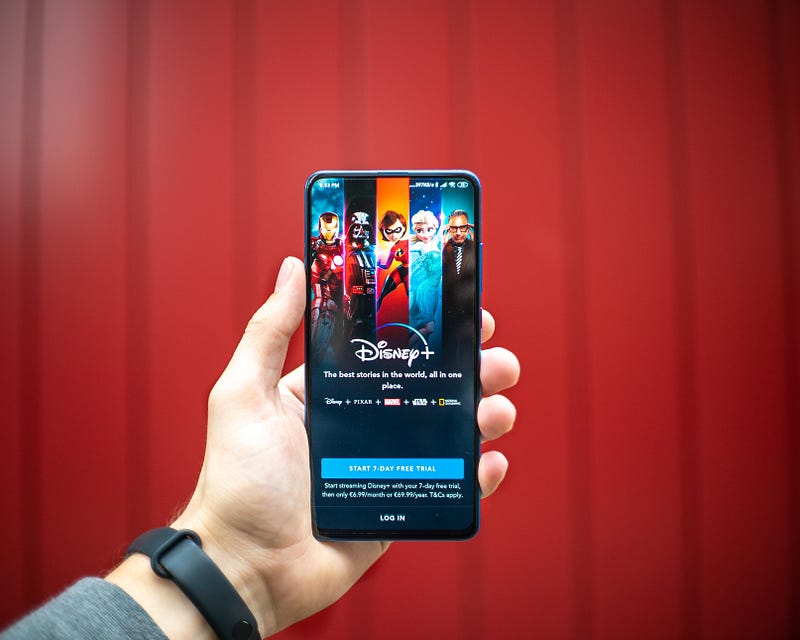
Disney+ is a ripoff.
I also agree with this statement. It annoys me that streaming sites have become the new cable companies, selling such niche bundles of shows that you have to pay for 3+ subscriptions just to keep up with the “good” shows. This is a valid discussion on how subscriptions are meant to maximize company profit while providing less and less value to consumers.
AND
It is a distinct issue from that of human rights abuses, and in adding that comment, it shifts away from the discussion. I would actually suggest that you make your own post about this with your own points because I think this is such a valid criticism. This discussion is important and a) shouldn’t take away from other criticisms of a film and b) deserves its own platform and space for discussion.
Don’t share this opinion in a discussion of human rights abuses. Do make your voice heard in your own space on this topic, without taking away from another discussion.
I am expanding my International taste in films
I’ve gotten a few of these DMs in my inbox asking me validate their choice in “supporting” the representation of “people like me” on the screen.
The reasoning behind their argument:
“I am engaging in anti-racism work by expanding my film-watching films with BIPOC within the cast. So what’s wrong with watching Mulan?”
Speaking over BIPOC on this topic
Choosing to watch this movie anyways prioritizes the view that this movie represents Chinese culture, and is a way to connect with cultures other than your own. It speaks over the people, often people who have a direct relationship with this history and story, who are advocating against watching this movie because a) it is a Chinese story flattened through the lens of an all white behind-the-scenes team, b) it is associated with human rights abuses within China’s borders. If you are interested in doing anti-racism work, to learn about other cultures, consider listening to the BIPOC who are currently talking about it.
There so many other films out there
Parasite and Crazy Rich Asians are some of the popular ones. Delve into Korean dramas like Crash Landing On You and It’s Okay To Not Be Okay. There are so many options out there besides Mulan that it crosses a line to insist that Mulan is the only option for considering “International” films.
When people commit to only watching Mulan as a commitment to opening up to “representation of Chinese people”, they ignore that seeing only one film presents only one view on this representation. And the case of live-action Mulan, a quite problematic one viewed through the lens of white screenwriters.
They are seeking my approval for their anti-racism work
Anti-racism work is personal work. Don’t expect BIPOC to give you praise or validation for this work, because it’s exhausting. Don’t do the work for the sole reason of getting praised, do the work because you realize that everyone deserves to be treated like a human being. Validate yourself on your own work. It takes a lot of energy to share lived experiences, let alone expending more effort to make sure that allies feel like they’re committed enough to the cause to continue. Don’t contribute to activist burnout by expecting that.
So:
Don’t limit your understanding of international films to stereotyped portrayals of other cultures through the lens of white writers. Do expand your knowledge by engaging in works by BIPOC* creators.
Glossary
- BIPOC: Black, Indigenous and People of Colour
Lucy (The Eggcademic) wants to thank you for taking the time to read this article. These were difficult words to write as she constantly wonders if she is alienating allies who had good intentions but damaging actions. Ultimately, she decided to publish this because she is learning to believe that people with good intentions are receptive to boundaries. Most of the days, Lucy writes poetry: on the two modes of writing; on people who get offended; on simplicity. She recommends checking out Björn Jóhann’s article: Trump’s Tweets Are Being Weaponized Against Him — Here’s How.


