
Don’t Tell Customers What To Do
Inexperienced or panicked marketers often fall into this trap

A version of this article first appeared in Canada’s Strategy Online magazine.
Five years ago, a bunch of people started eating Tide Pods for fun. I think it’s fair to say that mass stupidity has produced far more serious consequences since then.
An extra headache faced by Procter and Gamble in 2018 — besides their brand being associated with calls to poison control centers — was that its effort to quell the online mania backfired. Even though the brand quickly released messages featuring cool NFL star Rob Gronkowski telling kids to stop eating the pods, a few months later the number of people doing the challenge had skyrocketed.
Why? A psychological effect called “reactance” that often bedevils PSA efforts such as anti-smoking campaigns. Simply put, human beings don’t like being told what to do, and reactance is the pushback, or even (as we saw with mask and vaccine mandates) a doubling down on the unwise behavior in question. Which brings me to a recent advertising initiative in France that was intended to promote environmentally friendly alternatives to driving.
Turning drivers into villains
Last year, the French government mandated eco-conscious disclaimers in automobile advertising. Many eyebrows were raised in the marketing community, accompanied presumably by a few Gallic shrugs. TV commercials and other mass media ads for cars suddenly had to include one of three messages: “For short trips, prioritize walking or cycling,” “Think about carpooling,” and “Take public transport every day.” Advertisers who failed to comply could be hit with a whopping 50,000 euro fine per run.
What seems strange about the French decree is that it targets all car ads, not just those selling vehicles with internal combustion engines. The European Union has already proposed measures that effectively ban the sale of new gasoline and diesel vehicles as of 2035 so this initiative seems to make villains of drivers no matter their choice of fuel.
The French auto industry was quieter than an idling Prius in response to the new advertising rule. This may have been due to concerns of tainting the valuable brands they own by publicly disagreeing with a pro-ecology initiative. In contrast, one of France’s main automobile clubs immediately struck back, accusing politicians of stigmatizing the country’s car owners.
I’m a huge fan of investment in public transport, but I’d argue that the new advertising regulations probably caused reactance among hard-core gearheads, leading them to double down on their love for four-wheeled freedom.
As the Tide Pod case shows, the world should have learned by now that when it comes to influencing behavior, telling consumers that they have to do something is rarely effective, and may even be counterproductive. That’s because the converse psychological driver to “reactance” is “agency”. One of the main attractions to owning a vehicle is autonomy (ask any teen who’s just got their license!). This autonomy is often verbalized as “freedom,” a word we now hear in all kinds of unsavory contexts.
We are now driving “lifestyle machines”
Cars are not just metal boxes that get us places — and automotive brands have always known that. When asked about self-driving cars in a 2021 interview, Jeep CEO Christian Meunier revealed, “We sell lifestyle machines that people enjoy driving and have fun driving in. So, we’re not going to eliminate that.”
It’s this lifestyle aspect that attracts people to cars in the first place over alternatives such as public transport. Beyond this, some newer drivers view their car as a smartphone with wheels, featuring navigation and entertainment systems powered by Apple or Google. The Fisker Ocean electric vehicle has a 17-inch dashboard screen that rotates from vertical for navigation to landscape for video. What do they call the latter? Hollywood Mode.
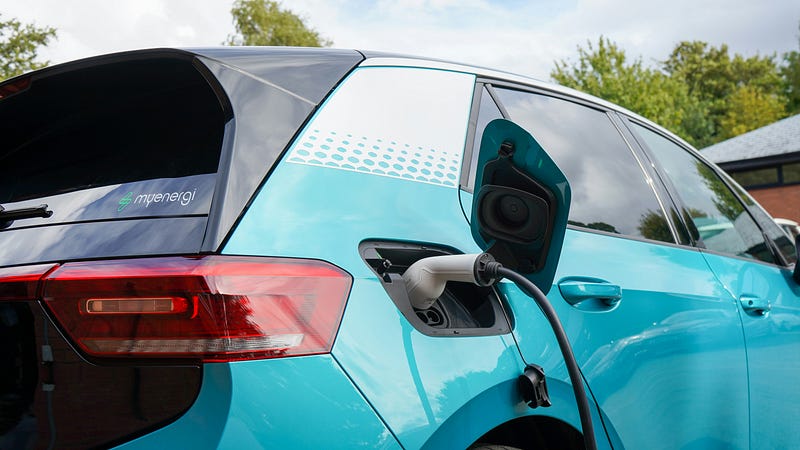
A quick but important aside: electric vehicles are only as environmentally friendly as the electricity that fuels them. For example, driving an EV in Poland, where electricity still comes from coal-fired plants, will still be responsible for a big belch of greenhouse gases. But less than 10% of the energy produced in France is derived from fossil fuels (and in Quebec, where I live, it’s around 5%) so an EV in France really is a clean solution.
Reacting to reactance
It’s been almost twenty years since an article entitled Reactance to Recommendations: When Unsolicited Advice Yields Contrary Responses appeared in the Marketing Science journal. Communications professionals need to apply the counter-intuitive findings of scientific studies like this if they genuinely want people to develop new habits. Wouldn’t it therefore have been better to include a fourth disclaimer on the French government’s list of messages? Something like, “Choosing an electric vehicle drives cleaner skies” or simply, “There’s a cleaner way to drive.” Positive outcomes and information about options are proven ways to avoid the issue of consumer reactance.
One thing’s for sure: whether it’s in a gas-guzzler or an EV, every trip might be a guilt trip for French drivers. And that’s no way to encourage a change in behavior.
Want more articles like this? Follow me on Medium, or read my Discomfort Zone newsletter on Substack every second Thursday. This article was written without the use of artificial intelligence. #zeroAI