
POETRY
Don’t Take the Rain
A free verse poem
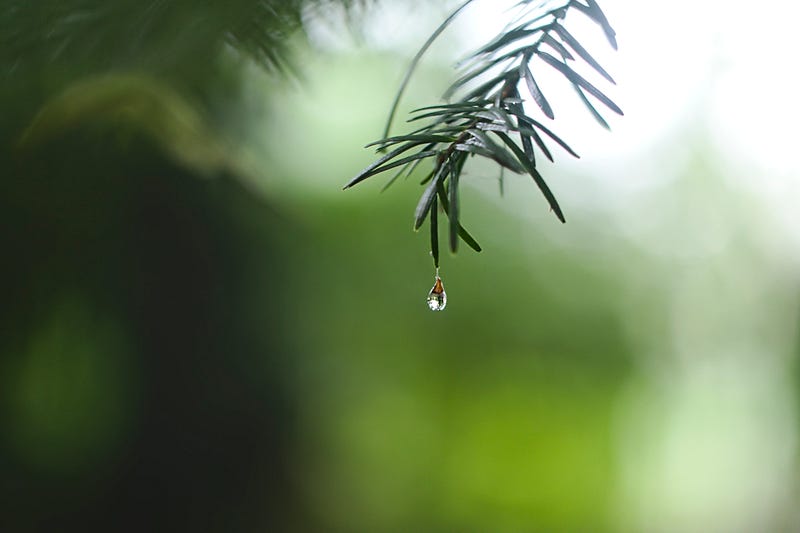
Bald cypress trees elbow up through brackish waters, great spirits of the earth laced against the sky, and I think of the rain and of you — of those spring rains you shouldered into my life. Droplets big as earthquakes. The meandering rivulets channel my skin and soul.
I think of the embrace that ignites me yet stills me, unquenchable, even with the rain you bring. Each time you step out with a smile, the clouds roll in
— we laugh about this —
with lightning searing the sky and torrents, we watch with smiles on our faces. Rain knows no boundaries. It is simply unleashed.
But as anyone knows, storms can be unruly. They can erupt without compassion. They can damage the open and exposed. We take cover. We watch, unwetted and safe. But are we ever truly safe?
I drift toward the upturned leaves. I am just this way. I lean into the wind, feel it stirring with the air I breathe. I crave the skies, unstable or dark as they must sometimes be. The darkness and the light are both necessary. The bald cypress knows this. The heron knows this. The bryophytes — spongey sphagnum mounds — keeping the soil grounded when the rains flow too strongly — they know this too. Roots and rhizomes bind the soils so they do not wash away. Waters drain, settling beneath, into the very water table that sustains us. Each droplet; a purpose. So must we be.
Muscovies heave and hiss and follow us, looking to be fed. The turtles bob their noses and regard us. They have no worries. Rain or shine, they’ll be there, nosing their way to sustenance.
I, too, pierce the surface, but I am mindful of the rain. I shall dance in the rain, mouth open, tongue out, arms extended like branches catching the wind. Eyes squeezed shut can still smile wide as ponds, safe spaces for herons and hearts. How can we know more about tomorrow than these? How do we sail from safe spaces to unknowns, if the waters are not quite still and the surfaces not quite clear and the skies altogether too draped in storm?
There’s no better feeling, to me, than the electricity that precedes a storm. I delight in the veined white leafy faces worshipping stormy skies yet also welcoming spring. A cyclic celebration of it all — birth, life, renewal, blossoms that burst with joy. Biological as we are — we also require these.
The moon is right behind you, you said. How I turned in need of the moon. To see that sliver in the sky, the pale ocean churning below. How you navigated the skies for me.
I had not known I needed this, you say. I had not known I needed this either, I think to say, but the words escape me. We contemplate our place beneath the sky.
I only ask that when you leave — don’t take the rain. I need the rains. I need them, and you; As soil aches for water. As plants ache for sun. As young bald cypress sprouts ache for their place along the bank.
Thanks for reading. If you enjoyed this poem, may I suggest the following?

Christina M. Ward is a freelance writer in cannabis, wellness, and clean beauty. Christina’s professional work has been featured in Today’s Health Science, LA Weekly, Village Voice, Men’s Health, and OK! Magazine, among others.
Christina also writes on personal journey, productivity, and relationship topics for Medium publications like this one. If you want to read more of her work on Medium use this join link for unlimited access. A portion of your small monthly dues will go to support the work of the writers and poets that you read.
Books: Amazon. Newsletter: Fiddleheads & Floss Newsletter.


