
Don’t Stop Reading the News, Just Change How You Do It
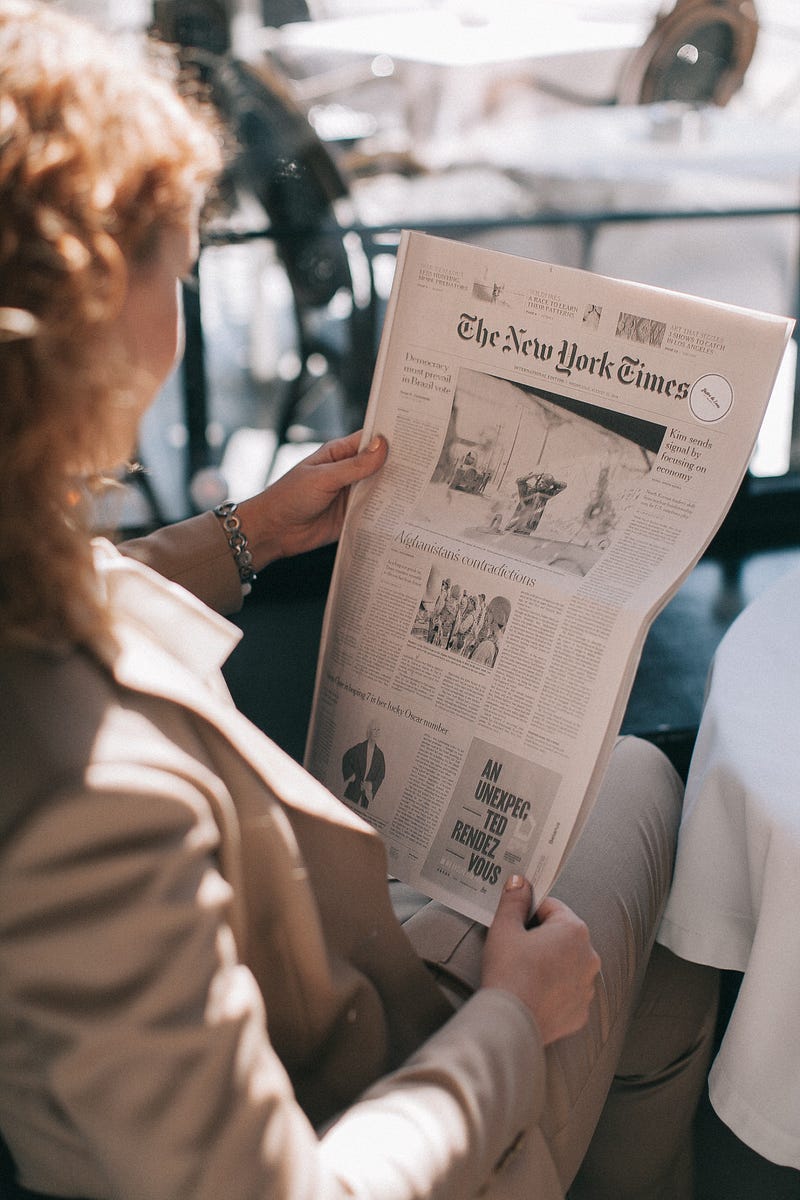
Life is full of activities, job commitments, relationships, necessary daily functions, and more that are all competing for our attention. So the question I would like to pose is, “Why do we read the news?” I believe that many people would answer that their intention is to stay informed about the larger world around them. However, I would like to continue to push this line of thought with a follow-up question: “What is the purpose of staying informed?”
I would argue that the primary reason we stay informed about the world around us is so we can make knowledgable decisions about how we should act. Unfortunately, I believe there is a huge problem with how we choose to stay informed, and it relates to the incentive structures of our media outlets.
In this article I talk about the issue of sensationalism in media and how that affects consumers and society at large. I also propose a new way of prioritizing our media consumption around the things that we can actually impact.
Sensationalism Sells
Similar to almost any issue with the world today, the problem with the media can be connected back to Donald Trump. The reason this relates back to Trump is that he is a master (whether intentional or not) of manipulating the sensationalist news media.
The President continually ignites crisis-level news stories that overwhelmingly grab the attention of the daily news cycle. This coerces every major news network, whether liberal or conservative, to talk about his latest scandal or idiotic statement. Steve Bannon refers to this strategy as, “flood the zone with shit.”
And I’m certainly not the first to notice this: Ezra Klein eloquently talks about this idea in this piece on Trump’s racism. This issue, though, is not a new one. It has only been amplified by Trump’s strategy. The news cycle, in my opinion, has been too focused on the sensationalization (Bushism?) of daily issues since the advent of 24/7 cable news that incentivizes media outlets to be as eye-catching as possible.
This resulted from the fact that, similar to any competitive industry, cable news networks are competing for their consumers (or viewers, in this case). This competition forces networks to become more sensationalist because the more commotion a network can stir with its stories, the more likely viewers will stay tuned in.
Jon Stewart talks about this in his youtube-famous discussion with Fox New’s Chris Wallace (see 4:57 for the key quote: “Because I think their bias is towards sensationalism and laziness.”). I also believe Garth Sundem at HowStuffWorks does a great job in this article at talking about how these incentive structures lead to sensationalism and opinionated sensationalism, which in turns contributes to polarization (@Ezra Klein).
As a result of this bias towards sensationalism, viewers don’t get the relevant information they need to inform their lives.
Why do I think you’re probably not getting anything from your daily news? Ask yourself when was the last time your worldview was ever truly changed by a daily news piece. My guess would be that this rarely happens.
If the answer is frequently, then carry on, because you’ve clearly found some very valuable news sources and I’d hate to infringe upon your learning process. However, if you don’t feel like your news sources are allowing you to develop new world-views, which are by definition key to developing a better understanding of the world, then I’d implore you to stay with me.
The Impacts of a Warped News Cycle

There are many reasons to reprioritize how you consume media, such as the daily news cycle’s negative impacts upon our mental health, ability to think creatively, and even our physical health (due to its constant engagement of the limbic system).
But, I think the biggest reason has to do with the fact that we’re not getting out of it what we want: information on how the world works that will, as a result, inform our actions. By focusing on the sensationalist daily news, we are frequently bombarded with tiny bits of irrelevant information that do little to actually inform us of how we should act.
How many times have you heard an article, news station, or youtube clip talk about some certifiably idiotic statement spoken by our dear Leader — excuse me, President — or some new level of corruption that he’s stooped to? My guess would be about 10 times a day since his first election campaign started. And guess what. It’s not going to change. He says stupid shit and manipulates the government to his bidding. Stop paying attention to it. Because you knowing the 54,567th stupid thing he’s said isn’t gonna change your opinion of him and it’s not gonna allow you to stop him from saying the 54,568th stupid thing. The same goes for his corruption.
I understand that this argument can be difficult to hear because we want to believe that by paying attention to all the things Trump does we’ll be able to somehow exert some control over him, but unfortunately, we can’t. All we can do is ensure that, no matter the obstacle, we turn out in bunches to vote for whatever democratic candidate runs for office in 2020 against him, because it is crucial that we stop this imminent threat to our democracy and to our country.
In the mean time, you may be wondering how to approach the rest of the news cycle. Well, I’m not going to go as far as Rolf Dobelli and say that we should stop reading the news entirely.
I believe that there are news outlets out there that are providing valuable insight. In my opinion, the best places to find these outlets are by looking at the same incentive structures that led to this mess. News outlets or media sources that do not have to compete for their viewership to keep their organization going will be less likely to be sensationalist, and more likely to be objective and provide genuine insight into how we should act.
However, remember to look for more than just monetary incentives though, fame or status is also a powerful driver of sensationalism (@twitter).
When you can, talk to people directly about the views that they will likely have the most insider information on. For example, agricultural workers will likely have the best information about how our industrial agricultural system impacts them.
Focus on Impact
Getting rid of sensationalist news outlets will greatly improve your interactions with the news. But, I think there’s something even more important we can do once we’ve rid ourselves of these outlets. I believe we need to reprioritize how we consume our news by focusing on the actions we can impact, rather than ones that are largely irrelevant to our lives.
Take the Yemen crisis as an example. It is incredibly atrocious and deeply saddening that this is going on in our world. But, unfortunately, 99.9999% of us have no capacity to do anything about it. So, while learning about these sorts of situations can make us feel like we are doing something good, it is likely not the case.
This does not mean I think we can go about our lives frivolously unaware of the events going around us, I just believe relying on the sensationalist daily news — which, to be clear, I don’t blame for the situation, it’s just an unfortunate fact of the incentive system we have in place — isn’t the best way to go about this.
Instead, I would argue that we start by analyzing our own lives and everyday actions and begin to question them one by one in order to start making a real difference on the world. To lighten up this article a bit, let’s say you’re someone that buys coffee everyday. Start looking into coffee production, business practices, reusable containers, the whole nine yards. Then, once you’ve amassed enough knowledge on the situation, start to change your actions as a result. Choose to view this not as a potential further restraint on your everyday actions, but as an opportunity to affect real change in the world by following your morals in everything you do. While I chose coffee as an example, I believe this can apply to any action we take, whether that be voting, working, what we eat, or how we interact with others.
Once you feel that you have most of your everyday actions on lock (which I believe will take quite some time, and likely remain a lifetime pursuit), don’t return to the sensationalist daily news cycle, look instead to issues you yourself are passionate about, and learn as much as you can.
Do deep dives. Talk to friends about them at your next get together. Look at scholarly articles. Do whatever you feel is necessary to help yourself understand the issue. The in-depth analysis and forced challenging (or expanding, depending on your perspective) of your view on the world allows for so much more growth to happen.
To end, I’d like to say that this sort of dramatic change is not easy. I know it’s not, because I try to live it everyday. Despite this difficulty, I believe in this approach, and as a result, I am doing my best to walk the walk. In times of difficulty though, I try to remind myself of this powerful quote from cultural anthropologist Margaret Mead:
“Never doubt that a small group of thoughtful, committed citizens can change the world; indeed, it’s the only thing that ever has.”
~Margaret Mead


