
Don’t Risk Passing Up this Article!
The absolute risk of relying on relative risk

In writing my book on nutrition, metabolism and weight management, I came across a lot of both medical and nutritional journal articles that refer a treatment’s ability to reduce the “relative risk” of some disease or condition. What I hope you will see by the time you finish the article is that trusting researchers that only emphasize the relative risk, without discussing it in the context of the “absolute risk,” can be, well, risky. The risk here comes from misinterpreting the results that are shown. I see this misinterpretation in lots of articles here on Medium — many by doctors or personal trainers recommending diets based on the relative risk reported in a study.
The easiest way to discuss Relative Risk is with a concrete example. One I recently came across deals with meat consumption: “Meat consumption and colorectal cancer risk: Dose‐response meta‐analysis of epidemiological studies,” by Teresa Norat, Annekatrin Lukanova, Pietro Ferrari, and Elio Riboli.

A “meta-analysis” is an analysis of several other research studies on a given topic — it presents the results of several studies and basically presents the “average results” in hopes of mollifying any extreme results found in the literature. Before getting to the meat (sorry) of their report, let’s look at some terminology.
Nutrition researchers are often interested in how a diet — or a particular category of food — impacts health. The study linked above was interested in the impact of eating meat on colorectal cancer. Because it is a meta-analysis, it looked at other studies that examined the link between meat and colorectal cancer. Each of the studies covered in that meta-analysis would have looked at two groups of people: a “Control Group” of people who didn’t eat meat (or ate very little meat) and a “Test Group” of people who ate a lot of meat*. They would then calculate the Absolute Risk of colorectal cancer in each group. The Absolute Risk would be the percentage of people in the group (either Control or Test) that had colorectal cancer at the end of the test.
The Relative Risk is difference between the 2 Absolute Risk values ÷ the Absolute Risk of the Control Group. So, Relative Risk = (Absolute Risk in the Test Group — Absolute Risk in the Control Group) ÷ Absolute Risk in the Control Group.
In the study linked above, the reported Relative Risk of developing colorectal cancer because of eating meat is an increase of 14%. Sounds scary at first and might make you think twice about eating meat! But let’s look a bit deeper and ask “What were the Absolute Risks of developing colorectal cancer in the two groups?” Well, those values are not presented. And THAT should be our first clue that there is some smoke and mirrors action taking place.
As the authors of the meta-analysis don’t report the Absolute Risks, I searched the internet for the world-wide incidence of colorectal cancer. It turns out it’s 19.7 per 100,000 people, or 0.0197% (about 1/50th of 1 percent). With this number, we can work out what the Absolute Risk of colorectal cancer there was in the Test (i.e., meat-eating) Group:
(X - 0.0197) ÷ 0.0197 = 0.14
Here, X = 0.0224.
So, according to the meta-analysis, if you eat meat your risk of developing colorectal cancer goes from 0.0197 to 0.0224. That’s an increase of 0.0027 of one percent — that’s 1/370th of 1 percent. But that 0.0027 increase is 14% of the starting value of 0.0197 — and 14% grabs a lot more attention than 1/370th of 1 percent.
Of course, most nutrition research is, not surprisingly, based on observational data as opposed to data from a controlled clinical trial. Why is that not surprising? Because to control what a group of people actually eat, over any length of time if they are just otherwise living their normal lives, is essentially impossible.

But the smoke and mirrors routine is used routinely in medical research, especially research on the effectiveness of drugs. Take this example published in The Lancet: Prevention of coronary and stroke events with atorvastatin in hypertensive patients who have average or lower-than-average cholesterol concentrations, in the Anglo-Scandinavian Cardiac Outcomes Trial — Lipid Lowering Arm (ASCOT-LLA): a multicentre randomised controlled trial (The Lancet, April 5, 2003, Peter S Sever, et al). This was the drug trial that formed the basis for the marketing campaign for the statin called Lipitor. In the test, just over 10,000 people were randomly assigned to one of two groups: one group received the cholesterol-lowering drug; the others were given a placebo. Health outcome data were then compared after 40 months. You can see a summary of this research here.
This research was used as the basis for ads for the drug tested (marketed as Lipitor). The ads said that “Lipitor reduces the risk of heart attack by 36%.” That sounds great! I mean, how would you feel if you were in the risk group mentioned in the long title of the Lancet article and your doctor told you that you could reduce your risk of a heart attack by 36% by taking the drug? Do you think you’d take the drug?
Now, let’s look at what that 36% really is. Okay, you are 36% less likely to have a heart attack — but 36% less likely than what? The “reduces the risk of heart attack by 36%” refers to the Relative Risk. But the ad doesn’t mention the Absolute Risks that result in the 36% Relative Risk — at least not clearly. The Absolute Risk of having a heart attack in the Control Group that just received a placebo (taken from the Lancet article) was 3%. In the Test Group — the participants receiving the drug — 1.9% had at least one heart attack over the test period. So the Absolute Risk of having a heart attack with the treatment was 1.9%.
Remember, the Relative Risk is calculated by taking the difference between the Absolute Risk of the two groups [0.019–0.03= -0.011] and dividing it by the Absolute Risk in the Control Group [-0.011 ÷ 0.03 = -0.36] or a 36% reduction in Relative Risk.
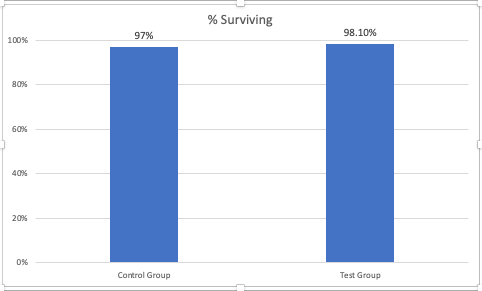
Now, think of how you would feel if your doctor said: Your risk of having a heart attack in the next 40 months is 3%, but if you take this drug every day for the next 40 months your likelihood of having a heart attack is 1.9%.” How does this feeling compare to the one I had you think of before? If you thought you’d be likely to take the drug based on the 36%, do you think you’d still be interested in it when you know all the facts surrounding that 36%? Especially when there are serious side-effects to taking the drug which include Type-2 diabetes — which can result in cardiovascular disease and heart attack!?
By using only the Relative Risk figure, we are left with an impression that the drug results in a substantial reduction in heart attacks when really, your odds of having a heart attack are about the same whether you take the drug or not.
In this case, the researchers showed all the data in their published papers — but the advertising emphasized the relative risk. The problem is that when results of a study are shared in a press release with the media, or practitioners in the fields of medicine or nutrition, often only the relative risk results are shown. And most practitioners in those fields, let alone in the media and the general public, don’t understand how Relative Risk is calculated and/or how it can be used to misrepresent small changes in Absolute Risk.
Now, if a drug reduced the Absolute Risk of developing a particular condition from 30% down to 19%, that would be amazing — and that also equates to a 36% reduction of Relative Risk. But in a case like this, the 11-percentage point drop in Absolute Risk is impressive on its own and doesn’t really need the mention of Relative Risk. So when I see Relative Risk reported in the media or in a research paper, it always makes me suspicious of just how small the effect of the drug, food type, diet, etc., really is.
Thank you for reading this article — hopefully it contained something you found useful.
If you aren’t a member of Medium but are thinking of joining, please join through my page! If you do sign up to Medium through my page, some of your membership fee goes to me (but you still pay the normal membership price).
With a paid membership to Medium, you will get to read more of my work plus you get unlimited access to thousands of Medium writers. And it’s only about $5.00 a month!
I wrote a book about nutrition, metabolism and weight management where I cover these topics in a way that you don’t need an advanced degree to understand! See my profile page for more details, if you are interested. It’s available on Amazon.
* Some will have segmented people into one of several groups on a meat consumption spectrum, from none to low to high. For these cases, the analysis is a bit more complicated so the focus here is on the one that’s easier to illustrate the issue at hand.


