
Seven bridges strategy. Reinventing business strategy
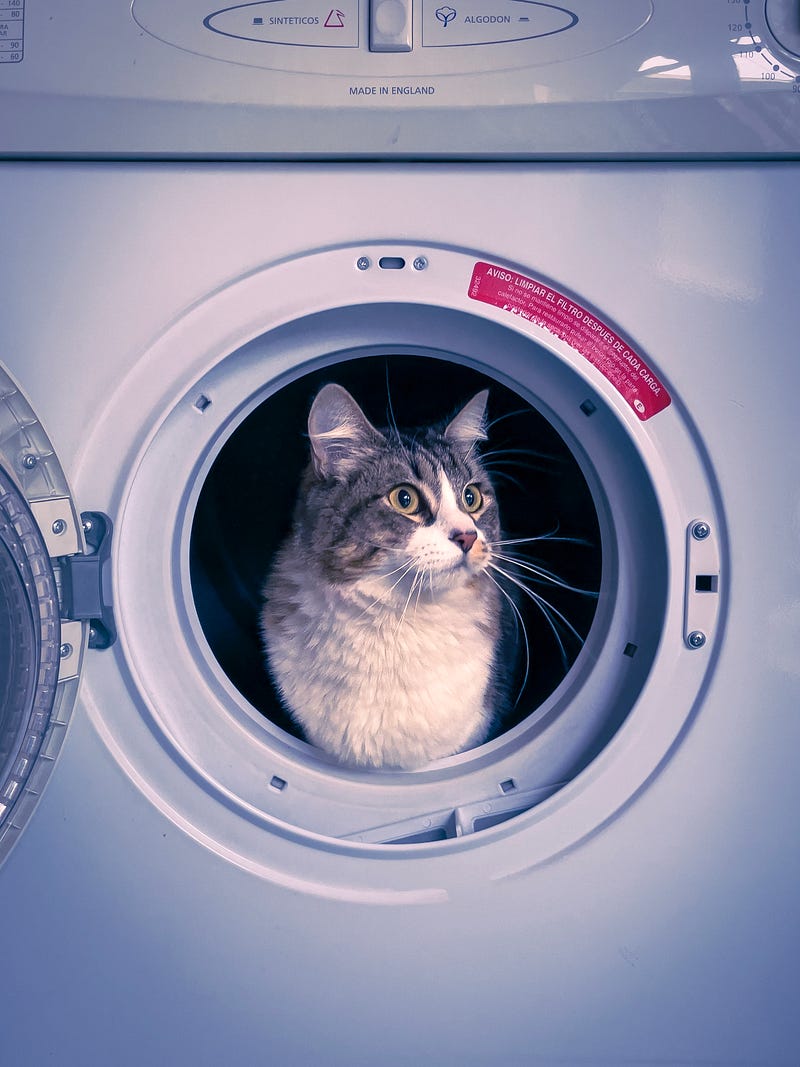
Don’t Rethink Washing Machine
How to create new customers and new markets
The true purpose of a business is to create and keep a customer, not to make you money.
Theodore Levitt
Do you like to wash your clothes? I don’t. And even though we rarely wash by hand, I believe it isn’t your favorite pastime.
You need a washing machine (which occupies so much space), laundry detergent, a clothes drying rack (which occupies even more space), and patience.
What if we didn’t need it at all? What if our clothes got clean on their own? Or, what if they didn’t get dirty?

Reinventing washing machines (or laundry as a process) may be exciting. But some companies act differently.
They don’t look for competitive advantages. They create customers.
Ryanair
Ryanair, an Irish low-cost airline, began operations in 1985. It wasn’t the first airline in the European market. If its founders decided to establish yet another traditional airline, they would have to flounder in a very red ocean.
But they didn’t try to steal customers from other airlines. They found people who didn’t fly, preferring trains or cars.
And Ryanair offered them to pay the same price but travel much faster.
Airbnb and Uber
Airbnb also didn’t compete with big players. It didn’t build a hotel chain. It connected people who wanted to rent an apartment with those who wanted to rent it out.
Uber connected drivers with passengers.
It’s hard to say if they created new consumer markets. People stayed in the hotels and rooms and took cabs long before these businesses appeared. Did more customers begin to take cabs when Travis Kalanik launched Uber? Nobody knows.
But they certainly built up new markets for gig workers and apartment owners. A friend of mine bought two flats in Ljubljana, Slovenia, and says he will never get back to the office.
Meal kit delivery services
Do you like Indian masoor dal soup? Or the Serbian soup ‘chorba’?
If you don’t live in these countries, you are unlikely to know how to cook them. Finding the right ingredients is another problem. So, if you want to eat them, you have to go to a restaurant.
But some meal kit delivery services can help you cook many complicated dishes at home and pretend that you’re a great cook.
Netflix taught us to watch movies online.
Dropbox gave us the possibility to store our files in the cloud.
By the way, Amazon also didn’t create a totally new consumer market. Back in 1995, it offered the same products (books) to the same customers. It was stealing customers from brick-and-mortar stores. However, small independent merchants gained access to the customers through Amazon.
Looking for new ideas
“The purpose of business is to create and keep a customer”
Peter Drucker.
Creating a new market is difficult and risky. But the winner takes it all.
Many theorists tried to find the holy grail of disruptive innovation. Clayton Christensen wrote a number of books on the topic.
The authors of the Blue Ocean concept offered their own approach. But it has some flaws — read more here and here.
I also don’t have a ready-made, one-size-fits-all framework for this task. But, I would like to share some ideas I use when I work with startups and mature businesses.
1. Inconveniences
Steve Jobs thought mp3 players in the late 90s were ugly and not user-friendly. So, he created iPod.
The legend says that Drew Houston, a co-founder of Dropbox, came up with the idea when he forgot a flash drive at home.
Another legend says that once Travis Kalanik tried to hire a limo in San Francisco but failed — and founded Uber.
It may seem that these ideas struck them by chance. It’s true, but only to an extent.
All the successful entrepreneurs I met were susceptible to inconveniences. As soon as they encountered them, they would start thinking about how to eliminate them.
Any discomfort sooner or later becomes someone’s business idea.
And inconveniences are all around us.
- Numerous aggregator platforms offer air tickets, but none work as a personal assistant. One of my customers develops a chatbot. It talks to customers and tries to find a perfect match between their needs and airlines’ offerings.
- We can watch movies on the big screen only at home or in a cinema. Another customer of mine created a mobile projector. You can download a movie or connect to WiFi and watch your favorite TV shows anywhere. All you need is a white wall.
These products are unlikely to become big game changers. But the second one has created new customers. These people don’t buy projectors instead of TVs or smartphones. They buy them in addition to TVs.
Given that watching a movie projected onto a wall doesn’t harm children’s eyes, unlike screens, it is a product of great value for them.
Doing laundry is all about discomfort. You can invent a better washing machine or help customers eliminate this tedious task.
Collect inconveniences. Always ask people around you or in your industry about their discomfort when buying and using current solutions. Motivate your team members to do the same. Create a database of inconveniences. Discuss them regularly.
Let me repeat it: any discomfort sooner or later becomes someone’s business idea.
2. Non-customers and anti-customers
No matter how common a product or solution is, some people don’t use it. Not all people use smartphones, shop online, or use streaming services.
But they are different.
Some of them are non-customers, others are anti-customers.
Anti-customers are ones who will never use a product because they don’t need it.
Non-customers are ones who need a job a product does for customers. But, for some reason, they don’t like a particular solution.
For instance, millions of people listen to music online through Spotify or Apple Music. But many don’t.
A part of them don’t like music. They are anti-customers.
But others love to listen to music. But they don’t have smartphones, or using online platforms is too tricky for them.
If you find a solution that helps you convert them from non-customers into customers, you’ll create a new market.
Millions of people want to buy a new house but can’t afford it. They are also non-customers. If you find a legal way to offer them houses at a lower price, you’ll create a new market. For example, if you invent a technology that significantly reduces building costs.
I recommend that you follow some simple steps while researching markets and customers:
- Find a market or a niche. Don’t be afraid of major industries. If a market is big, chances are the number of non-customers is also significant. Niche products remain so because few people have such a specific need.
- Research the market. How many people who, in theory, could consume the products don’t do it? Why?
- Divide all such people into two groups — non-customers and anti-customers.
- Research non-customers thoroughly. Walk in their shoes. Use Customer Journey Maps or Value maps to learn as much as possible about their fears, superstitions, problems, and pain points.
- Build up a database of your findings. Discuss them regularly with your team. Hypothesise. Try to find the solutions to the problems you discover, even if they initially seem unrealistic. Video calls or online shopping once seemed unrealistic, too.
Conclusion
This approach isn’t a silver bullet. It guarantees nothing. But practice makes perfect. The more ideas you have, the higher your odds of creating a product that will make your startup or business successful.
Stay curious. Observe. Ask many questions. And be patient.
One of my customers and his team conducted more than 500 customer interviews before discovering a gap between what customers in their market needed and what companies offered.
Do you like the story? Share it in the social media.
You can support my work by becoming a Medium member via my personal link. I will appreciate your support.
Join our community of strategic thinkers by subscribing to my newsletter to get exclusive articles via the link.


