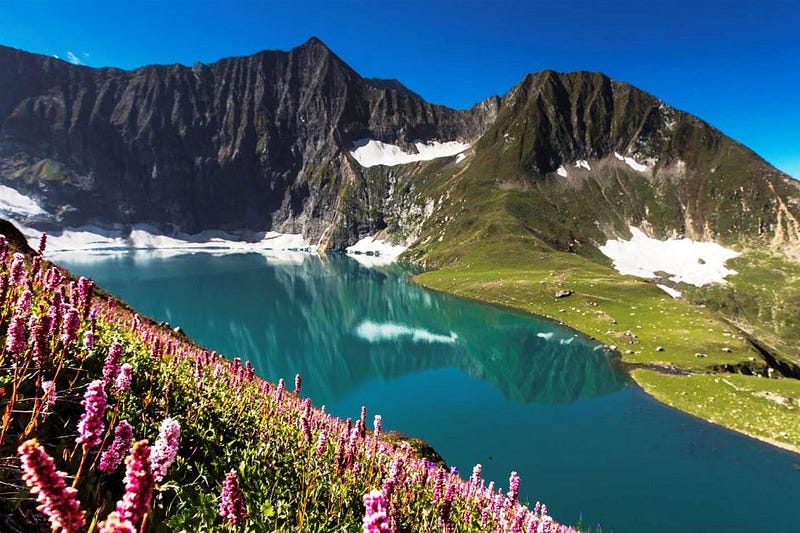
Don’t Play Naive About Kashmir Please
A detailed background for the people of India and Pakistan. Read it before talking about Kashmir again.
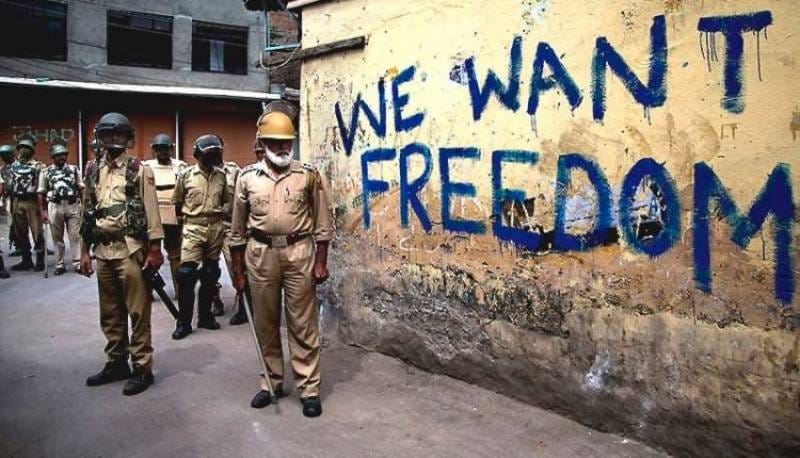
I had decided to never write on political issues because they get heat from people and I cannot suffer from it due to my mental health issues. But being a Kashmiri it hurts like hell when I see people from the Indian or Pakistani side show their biased opinions on Kashmir issue.
What hurts more is the way they treat us, the Kashmiris, during their arguments about being the rightful owner of Kashmir. Can anyone be really that shallow? Claiming a piece of land without even considering the inhabitants as human beings?
That’s what I see whenever I read something written about Kashmir by an Indian or a Pakistani. Of course, there are exceptions like Arundhati Roy, who painted a very true picture of Kashmir in her recent novel ‘The Ministry of Utmost Happiness’. I recommend every Indian and Pakistani to read that book instead of living in the blissful ignorance that is spoon-fed to you by your governments.
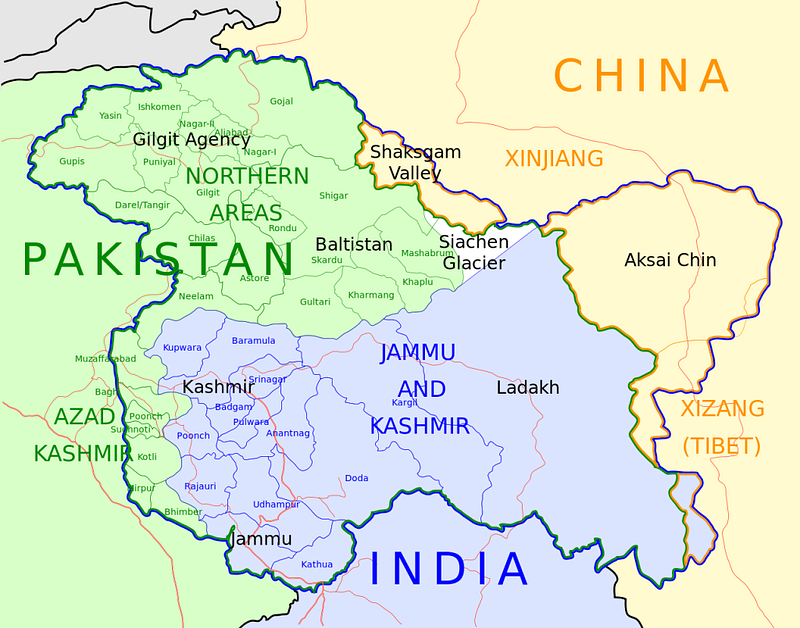
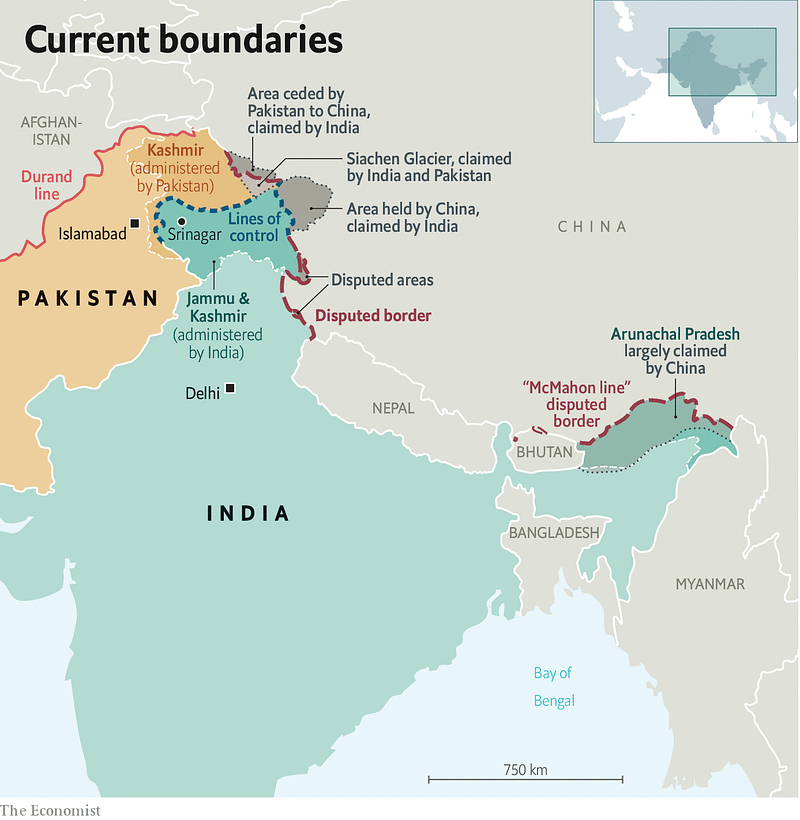
Geographically Kashmir is located in the north of India and Pakistan and south of China. During British rule, Kashmir was a princely state like many others in the region. British East India Company won the control of Kashmir after the first Anglo-Sikh war, Gulab Singh helped the British in this war against Sikhs. British then sold Kashmir to Maharaja Gulab Singh for 7.5 million Nanakshahee (currency of the Sikh empire) rupees in 1846.
The last Maharaja of Kashmir was Hari Singh. He was a young Indian Raja who the British used to call a coconut, brown from the outside and white from the inside. His education and upbringing were closely supervised by the British. His youth was filled with infamous adventures and he did not have the appetite for state offices. Yet he did some service to Kashmir by making primary education compulsory, banning child-marriage, and allowed the lower castes to worship in any temple they want.
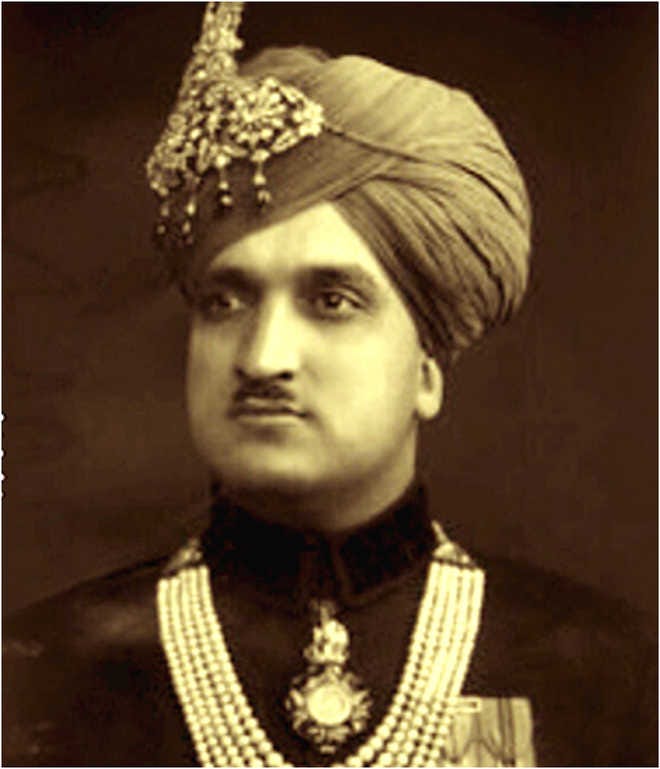
When the British were leaving India, the rulers of all princely states were given the right to become part of India or Pakistan or stay independent. They were bound to do so by taking a vote from their public. Hari Singh decided to keep Kashmir independent because he was not on good terms with Indian leadership and he did not agree with the creation of Pakistan in the name of religion.
India and Pakistan came into being in mid of August 1947. Kashmir remained independent. But in October 1947, Pakistan sent Pashtoon tribal militia in Kashmir to ‘free the Muslims of Kashmir’. This militia won almost 30% land of west Kashmir from Maharaja and Pakistan declared it a part of Pakistan on 24th October 1947.
This childish and vulgar act started the nightmare for Kashmiris that is still going on.
Hari Singh begged the Indian government to help him against Pakistan. Indian government asked him to sign the papers declaring Kashmir a part of India and they will help. Hari Singh agreed only on a temporary accession and signed the papers. On 27th October 1947, India deployed its army in Kashmir. The western region of Kashmir that was called Gilgit Baltistan did not approve of Hari Singh’s actions and they decided to become a part of Pakistan.
The main reason behind India and Pakistan’s such great interest in Kashmir is not religious. Kashmir included the whole of Pakistan’s north and a little of India’s. The two big rivers flowing into Pakistan, come from Kashmir. The mighty Indus starts in the deep Himalayas and the Jhelum River flows from Srinagar. These two rivers provide for more than 70% of the water needs of Pakistan. Other than this, Kashmir has so many other natural resources too.
If Kashmir was still independent with the same area as 1947, then Pakistan would not have any border with China. We all know how important the relationship with China is for Pakistan and vice versa. That’s where China comes into the picture. Pakistan being China’s nearest way to the sea, China always kept Pakistan in its good books. To avoid any difficulty in the future, China also claimed around 15% of the Kashmir land. All of this happened without the consent of the Kashmiri people.
So after October 1947 with the tension raising in Kashmir due to the presence of the Indian army, Pakistani head of the state, Mr. Jinnah asked for the referendum in the valley so that the people themselves would decide their fate. Lord Mountbatten offered to get it conducted by the United Nations, but Jinnah rejected the proposition and demanded that the referendum should be done under the supervision of the Governors Generals. It was evident that Jinnah was hoping to win the whole Kashmir through his Militia and did not want the United Nations to get involved. Because the Chief Minister of Kashmir, Sheikh Abdullah was a supporter of Indian National Congress and it was possible that under his rule, Kashmiris might choose India instead of Pakistan.
On the other side, the Indian Prime Minister Nehru was so restless to make Kashmir a permanent part of India. The presence of almost a million Indian army was not going well with the Muslims of Kashmir and the temporary accession of Kashmir could collapse anytime.
India took the issue to the UN security council despite the opposition of Sheikh Abdullah, which resulted in the set-up of the United Nations Commission for India and Pakistan. In 1948 the UN passed a resolution that asked for an immediate cease-fire and called on the Government of Pakistan
“To secure the withdrawal from the state of Jammu and Kashmir of tribesmen and Pakistani nationals not normally resident therein who have entered the state for the purpose of fighting.’ It also asked the Government of India to reduce its forces to minimum strength, after which the circumstances for holding a plebiscite should be put into effect ‘on the question of Accession of the state to India or Pakistan.”
The UNCIP reported to the Security Council in August 1948 that,
“The presence of troops of Pakistan” inside Kashmir represented a “material change” in the situation. A two-part process was proposed for the withdrawal of forces. In the first part, Pakistan was to withdraw its forces as well as other Pakistani nationals from the state.
In the second part, “when the Commission shall have notified the Government of India” that Pakistani withdrawal has been completed, India was to withdraw the bulk of its forces. After both the withdrawals were completed, a plebiscite would be held. The resolution was accepted by India but effectively rejected by Pakistan.
In the end, no withdrawal was ever carried out, India insisting that Pakistan had to withdraw first, and Pakistan contending that there was no guarantee that India would withdraw afterward. No agreement could be reached between the two countries on the process of demilitarization.
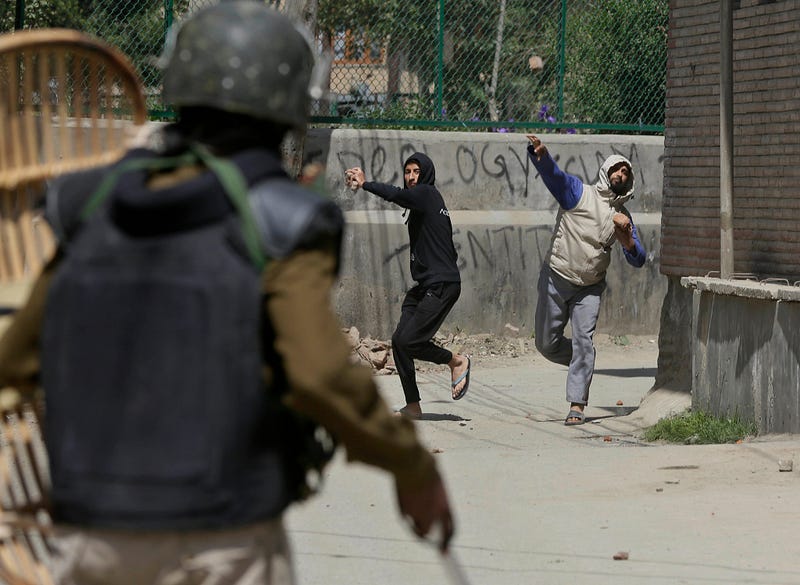
Pakistan and India fought three wars, without reaching to any mutual understanding over Kashmir. Indian army started the horrible crimes against the Kashmiri population in the name of war against terrorism. On the other hand, Pakistan started creating and funding Jihadist organizations to fight in Kashmir. In the 1990s, thousands of Pakistani youth were brainwashed and trained for Jihad in Kashmir. Pakistani trained jihadists fueled the flames of hatred for Muslims and common Kashmiris suffered from it.
In 1999, after the Kargil war, finally, Pakistan stopped sending the jihadists to Kashmir, sealed the borders, and banned the Jihadist outfits. The atrocities of the Indian army did not stop. They only got worse because many Kashmiris still fought for their right to choose. The human rights violations in Kashmir have given birth to a huge anti-India sentiment.
A fellow Kashmiri writer Raisa Nastukova wrote in a recent article,
“The Indian security forces are far from the fair and just face of law. In fact, they’ve been accused of rampant human rights abuses. A 2019 leak exposed some of these abuses, which are openly encouraged and widely practiced among the ranks of the Indian security forces. Sexual torture is an epidemic and rape is treated as a weapon against communities. These charges are denied by the Indian Army but many independent organizations have confirmed the Kashmiri’s charges including a report by the US State Department which claimed that “Indian authorities use Armed Forces Special Powers Act (AFSPA) to avoid holding its security forces responsible for the deaths of civilians in Jammu and Kashmir.”
The recent actions of the Indian government have created another wave of uprising in Kashmir. Because according to UN resolutions, no Indian or Pakistani can buy land in Kashmir unless this conflict is resolved. Pakistani side is still obeying this rule (other than the 70% land occupied by Pak army), but the Indian government has allowed the Indian citizens to buy and own land in Kashmir.
I have family on both sides of Kashmir. My own father fought for the independence of Kashmir all his life on all forums. So when I read the one-sided opinions of people, I feel wronged. Common people of India and Pakistan do not know that both of these countries have violated the rights of Kashmiri people. Kashmir is still suffering after 73 years due to the selfishness of India and Pakistan. Oh, and also China, though the part China occupied, does not have much population.
The people should understand that what is happening in Indian occupied Kashmir is not just Islamophobia. There are so many other factors too. They should know that if the Pakistani army is not harassing people on their side then it is not just because they are all Muslims, there are rivers and trade with China also involved.
At the end of the day, it is Kashmiris that suffer. They are paying the price for crimes they did not even commit. It is high time for the world to take some action and release them of their yoke. A free Kashmir can bring so much revenue only by tourism that it wouldn’t need to depend on any other country. India and Pakistan both do not allow foreign tourists to enter Kashmir and still, they earn so much through local tourists visiting Kashmir. That is how beautiful that bleeding piece of earth really is.