
Don’t Panic But Money is Gonna Disappear
How central banks are running like hell to catch the train

Money is a protocol between two parts.
Soon, it will be exchanged in digital coins and digital currencies.
You already pay with your phone. Now you do it in dollars. Soon you’ll do it in cryptocurrencies.
You just have to put some historical perspective on your mind.
Some centuries ago, things were pretty cool, concerning advanced technologies.
One day, a brilliant young and eccentric American explorer, William Henry Furness III, trained in medicine, before converting to anthropology, made a trip to a remote island south of the equator where he stayed for 2 months.
This remote Micronesia island called Yap had a highly sophisticated monetary system, to young William’s amazement. It was almost impossible not to notice about the money, due to be extremely unusual.
Money was formed by fei- “big wheels of stone, strong and solid, that varied in diameter between thirty centimeters to three and a half meters. Having a hole in the center whose size varies according to the diameter of the stone and in which a stick, long and strong enough to support the weight and facilitate transport can be inserted.”- Felix Martin in ‘Money- The Unauthorised Biography’
These stones were mined on an island three hundred miles away and most of it was brought to Yap.
‘The remarkable feature of this stone circulating coin…’ wrote Furness, ‘is that there is no need for its owner to assume ownership. After concluding a deal that implies the price of a fei too large to be conveniently transported, its new owner is satisfied with accepting the mere acknowledgment of ownership and, without a mark indicating the exchange, the currency is, in peace, in the former owner’s house.’
William Henry Furness III was amazed by this advanced technology from a remote island without access to the modern world.
When Furness expressed astonishment at this aspect of the Yap monetary system, his guide told him an even more surprising story.
In the neighboring village there was a family whose wealth was unchallenged — recognized by everyone — and yet no one, not even the family itself, had ever laid eyes or hands on that wealth; it consisted of a huge fei, the dimensions of which are known only by tradition. It was universally accepted that the accident of falling overboard while transported from one island to the other did not interfere with the purchasing power of that stone. The purchasing power of that stone remains, therefore, as valid as if it were visibly leaning against the wall of its owner’s house.- Felix Martin in ‘Money- The Unauthorised Biography’
Innovation is not something that happens in the present.
For you to have everything for granted, someone had to create a new innovation among a handful of nothing.
Wealth Is the Ability to Fully Experience Life
Money was just a necessity. It was not an invention.
When you needed something you didn’t produce, you would have to find someone who was willing to change it for something you had. But that was not always possible.
The system had a flaw.
We had to find someone who had precisely what we wanted and, in turn, wanted what we had at the same time.
Fortunately, Adam Smith, in his chapter ‘From the Origin and Use of Currency’ of the founding text of modern economics: Survey on Nature and the Causes of Wealth of Nations:
(…) To avoid these situations, all prudent men in all periods of society, after the initial establishment of the division of labor, must, of course, have endeavored to manage their business from format to term always with else, to in addition to the specific products of their own industry, a certain quantity of this or that commodity that they thought it was likely that few people would refuse in exchange for the products of their industry. “
Many different commodities were used for the exchanges.
Cattle, salt, shells, dried cod, sugar, tobacco, leather, and even nails.
The most prestigious was gold and silver, and other precious metals. They were easier to keep, and also could be divided into any number of parts.
However, currencies and current currency are useful symbols for recording the underlying credit account system and for executing the underlying clearing process.
Yet, the circulating currency is not money in itself.
Money is the system of credit accounts and its compensation represented by the current currency.
In the modern world, we’ve been watching several monetary engineering that transformed all the simple system of monetary compensation into a much complex world and in a way, into a perverse spider web.
Wall Street is the perfect lab.
Through the years, Wall Street created the tools for a new playground they called derivatives, swaps, or options.
It’s the best environment for those who like to bet on the future.
There is nothing new on Wall Street or in stock speculation. What has happened in the past will happen again, and again, and again. This is because human nature does not change, and it is human emotion, solidly build into human nature, that always gets in the way of human intelligence. Of this I am sure.- Jesse Livermore
A high school student named Jeffrey publicly documented a lucky streak of wins on an online forum called WallStreetBets.
So I had 900 left in one of my accounts and decided to YOLO it.- Jeffrey
The acronym YOLO, which stands for You Only Live Once, is a popular term used in this forum.
The next day he made a new post titled:
I decided to YOLO again with the 4k from yesterday.
Another forum user, by the nickname thewulfmann posted: You know what to do next.
One day later, Jeffrey made a new post titled:
900 to 21k just in 10 days.
This young 21-year-old kid was starting to rise as a rock star. The community was astonished and the forum went crazy. But it wasn’t over.
The next day, Jeffrey, who’s nickname was World_Chaos posted:
Y-O-FUCKING-LO, 900 to 55k in 12 days
A high school kid had used the stock market and a lucky streak to take a few hundred bucks and turn it into $55,000 in less than two weeks.
If you want to be even more surprised, read the same book I did, by Jaime Rogozinski, called ‘WallStreetBets: How boomers made the world’s biggest casino for millennials’.
But first prepare your stomach, cause you will feel cramped.
The Future of Money Is Digital Currency
Money is not a thing, but a social technology.
It is a set of ideas and practices to organize society.
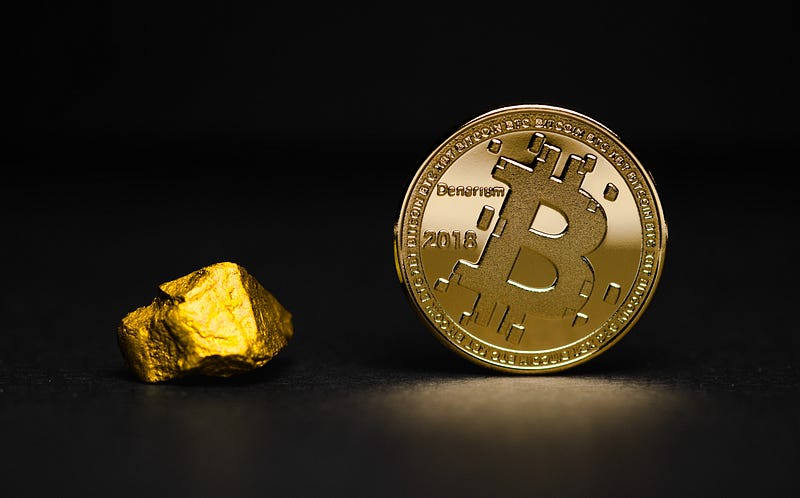
In the disruptive world we live in, cryptocurrencies tend to be the near future of every social trade.
12 months ago, almost every central bank in the world said that cryptocurrencies were too small to even acknowledge and that they weren’t gonna affect the monetary policy.
8 months later, here we are, with all central banks, and governments. Even the commercial banks, studying the best way to get into the crypto world.
In the digital planet, things don’t just happen. Things happen just.
Stablecoins have been evolving in such a rapid way, that people from the real world, like great investors, bankers, governors, and treasury chairmen are all trying to catch up with this digital tsunami.
A stablecoin is a new class of cryptocurrencies that attempts to offer price stability and are backed by a reserve asset. Stablecoins have gained traction as they attempt to offer the best of both worlds — the instant processing and security or privacy of payments of cryptocurrencies, and the volatility-free stable valuations of fiat currencies.- Investopedia
If you have big sharks like Paul Tudor Jones and Stanley Druckenmiller setting 1% of their huge portfolio into the Bitcoin, it’s because you are witnessing a massive shift in the asset classes, by some of the most successful investors alive.
Things are changing very fast. In a recent interview with Raoul Pau from Real Vision and Michael Saylor, the CEO of Micro-strategy, Michael said:
If I can actually take 100 million dollars in gold and dematerialize it, separate them into 1 million pieces, moving around the world 100 times a second, something new is gonna happen.
You can trade any dematerialize money in a foreign country on a Saturday afternoon in a nano-second, being charged with a tinny fee.
Money is being dematerialized as Apple did with mobile devices, Google did with libraries and videos, Facebook did with your social network, and Amazon did with the storefronts.
And if these gigantic companies had the power to see the opportunity to put an entire industry into the system, why shouldn’t we recognize it’s gonna happen also with the monetary system?
Conclusion
We are on the threshold of a new revolution.
This time it’s about money.
The blockchain is preparing the perfect environment to dematerialize the monetary system.
Stablecoins are gonna be a reality. Well, not a real reality.
More like a digital reality.
But the principles will maintain the same. Protocols must be followed, between the saver and the creditor.
If the new owner of a big rock they called fei, in the remote island of Yap, is satisfied with accepting the mere acknowledgment of ownership, the protocol is verified.
Money is a protocol between two parts.
We just have to face the reality that physical money is finally disappearing into a new world.
The digital world.
Thank you,
Nuno


