
Goals | Strategy | Business
Don’t Milk A Dead Cow
Aim to make it, not break it
We are programmed to work smarter, not harder. When presented with a choice, the majority will pick the most efficient path. Only a few will explore other possibilities.
The safe choice seems to ensure a steady journey. Moreover, we can imagine our outcome — timelines and milestones are clearer. However, it’s surprising how the unknown sometimes offers more than just a desired outcome.
It was an ethnographic camp — one of those where weird people go when they want to run away from the world. Ditch it, if quite honest. Phone — through the window. No news or Netflix. Just nature, art, new cultures and an overwhelming sense of exploration.
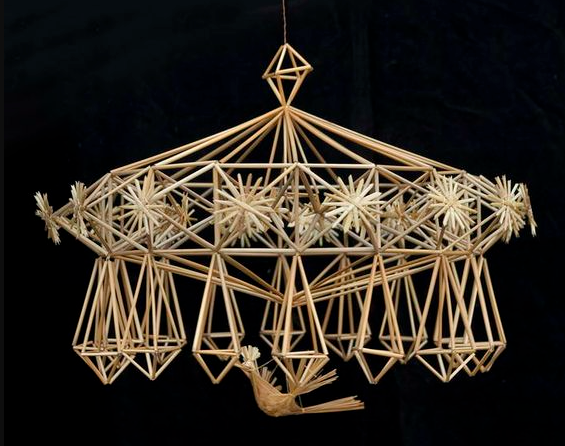
Divided into groups of ten, we went to find our designated buildings. Different activities were scheduled and days got cut into smaller chunks. That morning offered something rather unusual — we were about to make hanging gardens.
Ten people sitting across a massive table. Our guide waltzes in — his embrace full of straw. It’s all long, dusty and raw — straight from the fields!.. The harvest lands on the table and it’s funny how our puzzled expressions wander from straw to the guide. We don’t know what to make of it!..
It’s a straw garden, for goodness sake! — thoughts echo as I wrap my head around this realisation. We’re actually using these fresh straws. Oh. my. gods.
Silence in the room didn’t last long — it was cut by a slamming noise as a massive bag found its way onto our straw-filled table. Eyes of hawks immediately noticed: the bag was filled with clean straws.
The guide smiled widely and said we were free to choose.
What would you go for? Freshly collected straws or clean ones?
The logical choice, of course, is a shortcut. What practical value does it give me to start from scratch, if I can use a template? — I thought to myself as a handful of clean straws landed in front of me.
Nine out of ten. A single woman decided to start from scratch. In a silent agreement, we stole a glance at her — Must be adventurous, awfully curious or just likes hard work.
By the end of the session, nine people wished they too had started from scratch.
Lessons learned:
- We didn’t collect and process the straws, so we had no understanding of how brittle they were.
- We were overly confident in choosing our desired patterns. We underestimated the task and overestimated our capabilities (and the time assigned).
- We failed to risk manage. Measured the straws exactly how we needed them according to the desired patterns. When cutting, many broke or lost their shape, deeming them useless. If we measured with a contingency in mind, we would have had some wiggle room in case the straw broke.
- We remained optimistic and didn’t adjust our strategy. Cutting our losses and starting from scratch didn’t seem like a good idea - we still hoped to succeed with our patterns.
- By the time we realised that we didn’t have enough time (and/or straws), it was too late to create a new pattern.
Overall, our hanging gardens turned out to be humble (if not crippled). Dignities were shattered. Sure, all adults here and it wasn’t a competition — but failing at such a small (it seemed!) task, left us bitter.
What about that one person who chose to do it from scratch? It was an immense success — her hanging garden was spectacular! Why?
- Processing the straws she learned how fragile they were.
- It made her wonder if she could manage a complicated structure, so she evaluated her capabilities and chose a simplistic design.
- Having experienced how brittle the straws were, she marked them with contingency — just in case they broke. Many pieces did, but they were still usable (for other parts of the structure).
- Seeing our panic and depleting resources, she benchmarked how well her hanging garden was progressing, so added a few more details to improve the design.
Overall, the structure was gorgeous. Most importantly, she enjoyed the process and felt inspired and creative.
We are programmed to work smarter and avoid problems where unnecessary. But sometimes exploring the blue ocean might not be a bad idea. In life and business, red waters are stained with problems — scarce resources, limited time, and poor quality of products, services or ideas.
When presented with a task, exploring the blue ocean might not seem like the best choice. However, it often brings in-depth knowledge and skills, allowing us to better evaluate our circumstances and benchmark how we are performing according to competitors.
It wasn’t that one person was better than us. We didn’t fail because of our initial choice. Nine people failed because of the sunk cost fallacy. By the time we realised things were not going according to plan, we had already invested too much resources, time and effort. It didn’t make sense to pull the plug and start all over.
This story could have several conclusions.
Failures are lessons, but those who don’t learn from their mistakes forget to pull the plug. Sometimes the project will crash no matter how strongly we hold onto it.
Exploration can be an unfair advantage because it brings knowledge. Knowledge can determine if we make it or break it. And most of all, it’s the difference in how we feel in the process.
Would you like an embrace of raw straws or a bag of clean ones? Choose wisely.
My scribbles dive into a variety of topics. Yet whether I scribble fantasy or horror, highly opinionated or research-driven pieces, I hope it leaves you with something to ponder: makes you feel better (or worse?..), strikes an inner monologue (hopefully, voiced out in the comments!) or simply gives you something to chew on, inspiring to keep the creative ball rolling.
Thank you for reading!


