
Don’t look for signs- it is ok to expect a partner to be clear on what they want
As long as you are busy searching for signs of someone’s affection, you will not feel worthy of a good relationship
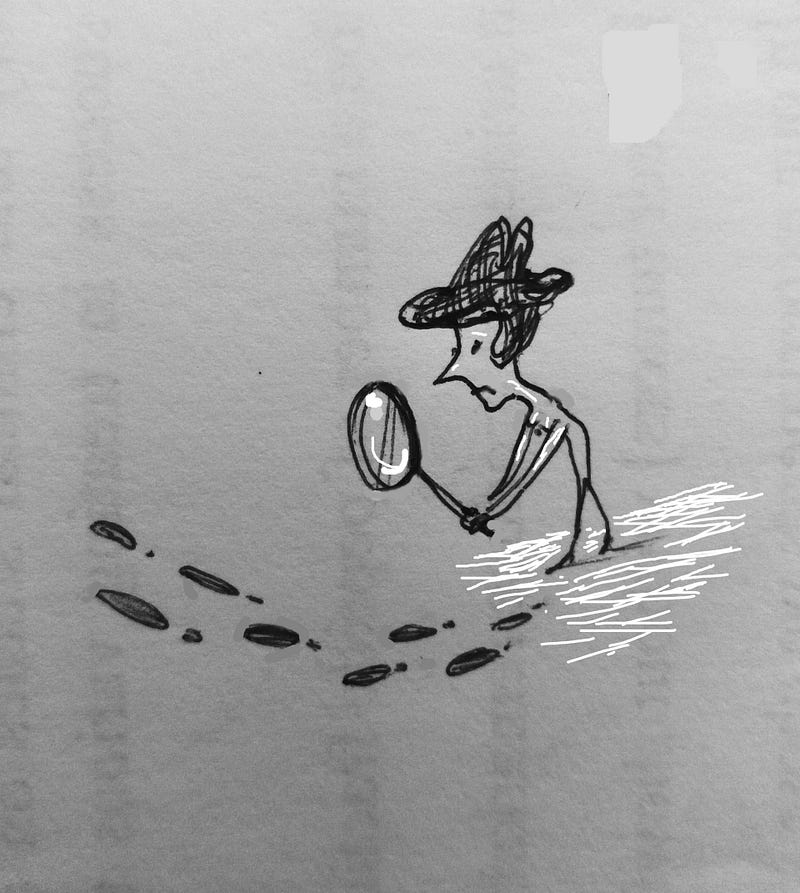
Refuse to be in detective mode
Although it can be painful to hear, many of the unhelpful relationship patterns that people struggle with, particularly those that run on repeat, are far from coincidental. If you are consistently finding yourself in the grey zone with partners where you are left wondering and second-guessing whether they like you enough or not, then you have more control and ownership over your situation than you might realise.
The idea of thinking it is ‘our fault’ that relationships go downhill is barely an uplifting prospect, but do hear me out; It is empowering to recognise that you have control and decision power over the health and wellbeing of you and your relationships.
It is not down to chance as to whether you keep hanging on to relationships in which you are phased out or are having to work full time to deciphering clues, reading messages and asking your friends to help figure out if the person you are dating is really into you.
You hold complete power over the limits of your tolerance and how you allocate your boundaries. Chances are that the person you are seeing appeared more clear in their intent in the early days of dating, but has then shown a dwindling interest. In this case, you would still want to act on the situation as it is presenting itself in the present time. Choose to get out of detective mode and into a role where you execute full decision power over your relationship health!
You are not doomed to be in negative relationships
For those who come from a family background of healthily attached and consistently nurturing parents, it may seem stupidly obvious that you get what you sign up for in relationships. For so many people, however, a healthy attachment style is not a given and our attachments, unlike our control over setting boundaries, is sadly not something that we control.
Still, we are not doomed to operate within the framework of our ‘allocated’ attachment style. Research has demonstrated how our brain can rewire and learn healthier patterns of relating, so long as we choose to aim for those relationships that can provide security, nourishment and love consistently. We can also do some of the groundwork all by ourselves by choosing to look out for ourselves and by learning to love and validate ourselves. For those who are keen to take it to the next level, you can also try using repeated positive imaginal experiences paired with positive emotions. Ref: Rewiring Your Avoidant, Anxious, or Fearful Attachment Style | Psychology Today
To think that we can relearn and adapt to a healthier way of relating is an extremely boosting thought to carry along when you face the daunting nature of modern dating.
Are you able to spot destructive patterns in relationships?
Most people will have some awareness of what an abusive relationship looks like (although that in itself says nothing about someone’s ability to get out of it). For many other people, it is the inability to notice the more subtly destructive patterns of relationships that has them scratch their heads while wondering ‘How can I constantly attract these types?’ whilst yearning for love from those unavailable to provide it.
Signs that your relationship is not worthy of your continued investment
For this reason, I thought it might be helpful to include a small list of relationship patterns that should set off your internal alarm bells and ideally mobilise your relationship catapult option before you get too stuck. Frighteningly, these are often the more addicting and ‘exciting’ relationships.
Do not confuse excitement and feeling of light panic with the feeling of true love!
- Relationships that feature intermittent reinforcement in one way or another. This can be a pattern of classic ‘hot and cold’ behaviours from your partner, or those that feel like moments of euphoria when you are face-to-face but ultimately lack in growth, connections and/or even contact all other times.
- Relationships that are on someone else’s terms only while you are eagerly left waiting for them to ‘choose you’, and/or relationships where you are gradually but steadily being phased out.
- Relationships where you are shrinking your needs, because you intuitively sense that being yourself and expressing your needs would scare your partner away. You therefore spend time worrying about when and how you will be able to see evidence of the next point of growth. Instead of noticing that you are constantly doubtful, you pay far too much attention to the occasional hot blow and have a disproportionately positive response when one comes your way.
Someone gesturing that they want to see you or initiating contact should not be seen as a cause for celebration- a need for clarity should be treated as the minimum criteria for your continued investment!
Likewise, a cute text message or someone popping over for sex is not something to write home about, if these behaviours follow weeks and months of periodic absences where you are left guessing what their true intentions are.
I often say to my young therapy clients who are used to speaking regularly to friend groups about their relationships: Read your friends’ faces when you tell them about their latest actions. Do they look as excited as you feel?
A relationship gamble is by default unpredictable — your relationship should be a place where you feel safe, not an emotional roulette
Intermittent reinforcement is always a problem in a relationship since it breeds insecurity and doubt. As a Psychologist and gambling addiction expert, there is not a day that goes past when I don’t get to witness the devastating and deluding effect that gambling psychology has on our psyche. Concerningly, being exposed to intermittent ‘rewards’ can have the freaky effect of increasing the recipient’s motivation to ‘win’ the other person over while also resorting to erroneous thinking about their control over the situation.
When the mind experiences a loss of control internally, it will try to create an illusion of control. This often attaches itself to our external reality and events. In a relationship context, this means you might get more preoccupied with focusing on how to ‘clock’ the relationship code, rather than paying attention to the fact that the relationship is not worth having in the first place!
Being ‘crumb-fed’ keeps you on your toes and makes you think that a ‘payoff’ that follows a period of emotional starvation means more than it does.
What to do if I find myself trying to ‘read signs’ to help establish if someone likes me
The short answer is: Start wrapping it up and accept that things are unlikely to change! Try to compassionately acknowledge that these dynamics have real and enduring negative effects on your sense of worth. Unhook yourself from thoughts like ‘what if I can never find better’ and accept that you have to act your way towards better relationships. If you notice that a fear of being alone is part of your reasoning for remaining in a substandard relationship, then attending to your boundaries and self-worth are good starting points. This is often best done by taking a small hiatus from relationships altogether.
If you don’t feel ready to end the relationship just yet, focusing on self-love and boundaries will eventually ensure that you can perceive the difference between someone who treats you well (you) and someone who doesn’t (them).
How can I motivate myself to act worthy before I feel it?
- Visualise yourself having the kind of relationship you want and need. Try to connect with the feelings you would experience (happy, calm, secure, loved etc) from such a relationship and dwell in them. This will help establish links between novel and healthier emotional states and your upgraded roadmap for good relationships.
- Permit yourself to have normal expectations and to be someone who deserves a good and healthy relationship. Act on these expectations.
- Trust what you are experiencing — No more arguing with reality and stop believing the rationalisations in your mind.
If you are experiencing doubt on a daily basis, this is your cue to check what might be activating your attachment system. It is not a cue to cling more to turn into a detective and look harder for clues of someone’s affection!
Even if you come loaded with your own emotional baggage, you can still have enough discernment to note the difference between someone keen and fully into you, vs someone who is on the fence, full of internal conflict and keeping you waiting for answers. No matter how difficult it is, you have to believe that other people can like you enough to want you to feel sure about their intentions! Yes, you might not have come across this person as of yet, but that can also be explained by the fact that you have allowed people who do not meet these criteria to circulate in your life for too long!
Look beyond your emotional ‘addiction’ even when the truth hurts
Obsessing, compulsively checking, reading, dwelling and second-guessing are all examples of behaviours that fuel the part of your mind that ensures you remain unaware of what is taking place in your relationship.
If somebody is consistently not finding the time to see you, message you, take your calls or in any other way prioritise the relationship you have no further business looking for explanations here. Believe their actions, accept that they are not keen for whatever reason they may have and immediately protect yourself from repeated rejection by drawing your lines in the sand.
Relationships cannot grow as long as you are busy decoding signs and remaining hopeful of someone’s investment
In most other walks of life, we would not be satisfied with situations where we are kept in the dark or have a minuscule chance of getting it right.
Look at the following examples:
Would you go to work if you were paid one of 5 days only even if you did not know which day you would get paid for?
Would you shop online if the vendor only showed you select aspects of the item that they are selling?
Probably not. With the same logic, why would you settle for a relationship where you are having to spend your time guessing if, and hoping that someone is into you? Trust that someone that is genuinely interested and ready for a commitment will also have what it takes to show you that this is the case. In the highly unlikely event that you mistook someone’s real interest and investment for disinterest and wishy-washy-ness, you can probably still trust that their ability to prioritise a relationship is not where it should be at this point in time.
When your relationship is secure and stable, you can afford the luxury of having a life as well as a relationship. You will be amazed at how much energy and time that has gone to waste in the mission of figuring out what other people’s intentions are. Forgive yourself for this and enjoy the relief of working for yourself first!