
Don’t Let Greed Destroy Our Natural Resources
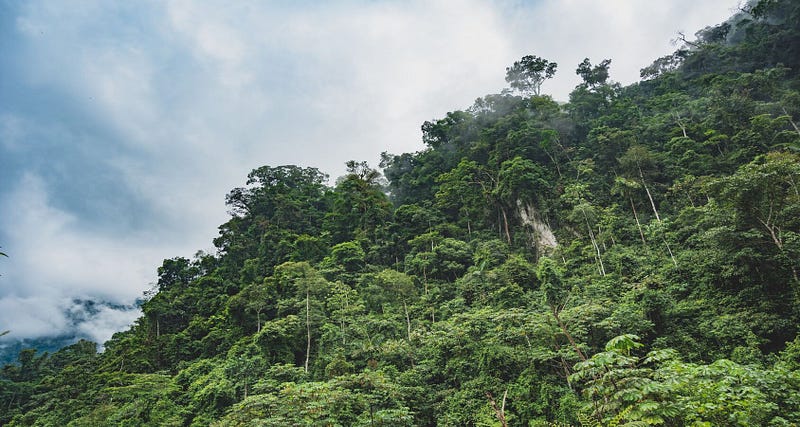
Prioritize Our Forests Over Profits

In a press article on Sept 5, our Natural Resources Minister, Nik Nazmi said there’s much more work to be done in terms of biodiversity conservation, and that Malaysia’s approach to preserving biodiversity is holistic and forward-thinking.
Separately, our Prime Minister, Anwar Ibrahim said that measures to protect threatened wildlife will be strengthened, when tabling the mid-term review of the 12th Malaysia Plan (12MP) on Sept 11.
This is all well and good, and on the surface, sounds reassuring.
But as with most cases, the politicians can make all kinds of statements and declarations, but what truly matters is whether or not they actually implement and carry out such measures.
Longstanding Case Of Greed For Profits Over Preserving Our Forests
The fact is, deforestation has been going on in this country for a long time, and in many cases, it’s due to the greed of the political class who are in cahoots with certain corporations, to utilize the land for various lucrative plantations and/or development projects.
Therefore, if our government is truly committed to being more proactive in biodiversity conservation, serious steps need to be taken immediately to effectively eradicate the serious weaknesses in our country’s forest management system.
Most of the points here have been raised by several groups, including the Socialist Party Of Malaysia (PSM), and the Save Kledang Saiong Forest Reserve Coalition (JSHSKS).
There Are Many Serious Flaws In Our Management Of Forests
Such weaknesses in our country’s forest management system, include:
i) A large part of forest areas is designated as ‘State Forests’ and ‘Production Forests’, which can be approved for logging.
ii) The authority to issue logging licenses in each state is concentrated in the hands of the head of state (MB), who also appoints the State Forestry Department’s director.
iii) The Environmental Impact Assessment (EIA) mechanism fails to act as a genuine deterrent against logging because the EIA consultant usually sides with those paying him — the logging company.
iv) The Indigenous (Orang Asli) community’s interests aren’t protected in the National Forestry Act 1984 (Act 313).
There are no provisions requiring their knowledge and permission to carry out logging or agricultural activities in forest areas located near their villages.
v) Most areas that are logged to create Plantation Forests, fail to get developed as such.
The licensed companies disappear after reaping profits from the logging phase.
vi) Logging has and is, among others:
- destroying water catchment areas
- causing river sedimentation and flooding
- destroying wild animal habitats
- threatening many species with extinction
- triggering clashes between wild animals and rural communities, and
- destroying the country’s biodiversity
All these points are a clear indication that our government truly doesn’t care about the check-and-balance of power, being responsible and accountable, as well as preserving and protecting our forests and by extension, our natural resources.
Instead, they view the forest land as a lucrative financial opportunity.
It’s High Time The Government Acts Responsibly By Rectifying These Weaknesses
Given such serious systemic weaknesses, several crucial, immediate steps need to be taken to rectify them, such as:
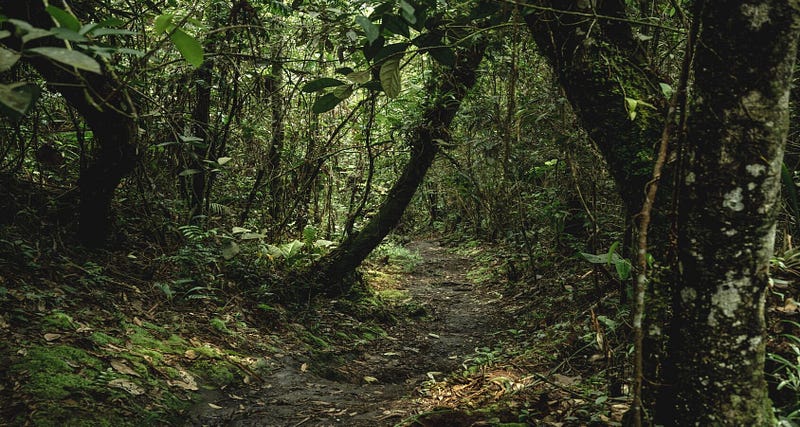
1. Reviewing the current classification of a large proportion of permanent reserve forests as ‘production forests’.
Then, the authorities must determine how many of those need to be changed to ‘flood control forests’, ‘water catchment forests’, ‘wildlife protection forests’, etc.
2. Creating a state-level check and balance mechanism, including a committee to monitor the approval of logging licenses.
Such committees should be free from the MB’s and Director of Forestry’s influence and have the power to defer any unsustainable logging approvals until they can be debated in the state assembly.
3. Transferring the power to appoint EIA consultants to the Department of Environment.
4. Classifying forest areas near the Indigenous villages as ‘communal forests’ that cannot be approved for any commercial activity, until the village’s application for those forests to be gazetted as Indigenous reserve land is resolved.
5. Strictly enforcing the Forest Plantation Project moratorium, declared in December 2022, including projects approved before that date, but not yet implemented.
6. Establishing a state-level compensation fund and requiring logging license holders to contribute a portion of their gross income to this fund to cover the cost of any damages or losses sustained by local communities due to the logging.
The People Need To Speak Up For The Sake Of Preserving And Protecting Our Forests
In conclusion, the time has come for us, the average citizens, to apply pressure on the Federal and our respective state governments, and demand that they act sincerely as well as responsibly in protecting our natural forests.
Those in positions of power must never let their greed for profits lead to the destruction of the country’s natural resources.
Copyright Raveen Jeyakumar, 2023. All rights reserved.
Originally published at http://reformthesystem0.wordpress.com.
Thanks for reading my article! I’d appreciate your comments. If you like my article, please consider subscribing to (and not just following) my blog, so you can receive direct emails every time I publish an article. This ensures that you won’t miss any new articles from me. Your support is greatly appreciated!
I have a Substack Newsletter which you can check out as well for more of my articles!