
Don’t Get Sued for Using Song Lyrics In Your Writing
Go through the proper channels to get permission
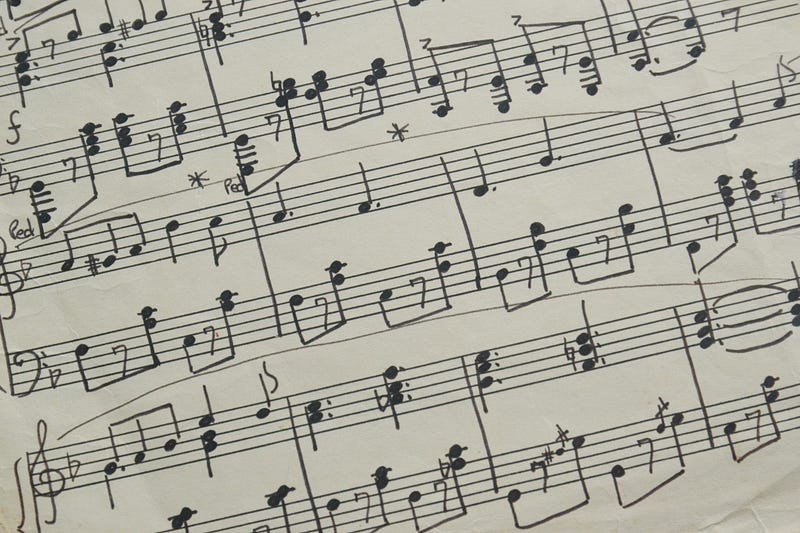
Sometimes you might want to use a song lyric in your writing and think it’s fine to quote lines from a well-known song. But you need to be careful, because song lyrics are copyrighted works and using them without permission could get you into trouble.
Writers’ Digest.com say:
Song lyrics are copyrighted, which means you need permission to use them. According to our legal expert Amy Cook, there isn’t any specific law about how much you can take under fair use, but it’s common for the music industry to say you need permission for even one line of a song.
This is consistent with what I’ve heard elsewhere in my writing career. You should not assume that even a single line from a song is OK to use without getting written permission from the record company.
“The music industry is pretty vigilant about song lyrics,” Cook says. “This is especially true if you’re using the lyrics in a novel to progress the story or add atmosphere. If you’re a music critic reviewing a CD, you have more leeway under fair use.”
Expired Copyright and Public Domain
Not all songs are under copyrighted however. Some old songs will have seen the copyright period expire and others will have been deliberately placed in the public domain, so they are free to use.
John Iovine wrote about this last year. He says…
Public domain works are not protected by copyright. In the United States songs published before 1924 are in the public domain and may be used. Of course, these older, public domain songs may not invoke the atmosphere or emotions the writer is looking to set up. Songs published after 1924 will need to be checked to see if they are in the public domain or not.
You might think there are loads of examples online where people use song lyrics in memes or blogs. There are even websites dedicated to song lyrics! You’re right. There are. Some of these sites might be licenced — they’ll have paid a fee to use the lyrics. Others might be taking a chance with the risk of legal action. The latter is not an approach I can recommend.
Finding the copyright owner
To use lyrics legally, you’ll need to find and contact the copyright owner. How is this done? You could contact the record company directly — for example licensing enquiries for Sony Music can be directed here.
But if you’re not sure who owns the copyright, you can check out www.copyright.gov, which includes all copyrighted works, going back to 1978. This will tell you who owns the copyright to a piece of music. Information relating to earlier material can be sourced from the U.S. Copyright Office but there may be a fee.
Alternatively, the American Society of Composers, Authors and Publishers (ASCAP) or Broadcast Music, Inc. (BMI) may be able to help you find the publisher’s contact details.
What happens when you seek permission? Writer’s Digest says…
Once you find the rights owner, you must ask for his permission. He could offer you the rights for free, completely deny you the rights or ask you to rename your dog after him. The price is completely up to the music publisher.
You may be able to get assistance
If you’re using the lyrics in a commercial venture — perhaps you’re publishing a book with a professional publisher — the publisher will probably help you secure the rights to use the lyrics. It’s not something to worry about until you’re close to the stage of publishing — as long as you don’t then forget to seek permission! And you may need a fallback position (Plan B) if you don’t like the licencing terms.
Titles
Titles are not usually copyrightable, although there may be occasions where they’re regarded as trademarks or unfair competition. For example, The Beatles’ ‘Yellow Submarine’ song is closely associated with the band. Writers’ Digest says, if you start using ‘Yellow Submarine’ in your work, it may result in a letter being sent from music industry lawyers, because it’s so strongly associated with The Beatle’s music.
Conclusion
Personally, I’d avoid using music lyrics without permission because I’m no expert on fair use and I’m risk averse. I prefer not to take my chances with copyright infringement because I like to keep my life stress-free and peachy.
If you want to associate a well-known song with your story, you could simply mention the song title and the artist, then work it into your story. Why not have a character listening to the music, or humming it, but don’t write down the lyrics themselves. It’s a safer way to integrate the music into your story.
Extra section on fair use and reviews
If you feel your work may fall under ‘fair use’ for the purposes of review, for example, but you’re unsure, it would be sensible to seek legal advice. I’m not a lawyer, and I’d always suggest people seek permission from copyright holders to avoid potential legal action.
Fair use can be subjective and is often disputed in court. If you’re a member of a writers’ union or authors’ society, which offers legal assistance as part of the membership package, they might be able to help you with legal enquiries. In my opinion, it’s better to be safe than sorry.
I’ve explored the subject of fair use a little more in the story below…
© Susie Kearley 2022. All Rights Reserved.
More from me on copyright…
- Students Get $5000 Legal Demand for Using CC Image on a Blog
- Best-Selling Novelist Sued for Copyright Infringement — How to Avoid Legal Challenges
- Blogger Who Made $6 is Sued for $150,000 over Creative Commons Image
- No, Manipulating an Image Does Not Protect You from Copyright Lawsuits
- Join Medium using my referral link so you can read unlimited stories


