
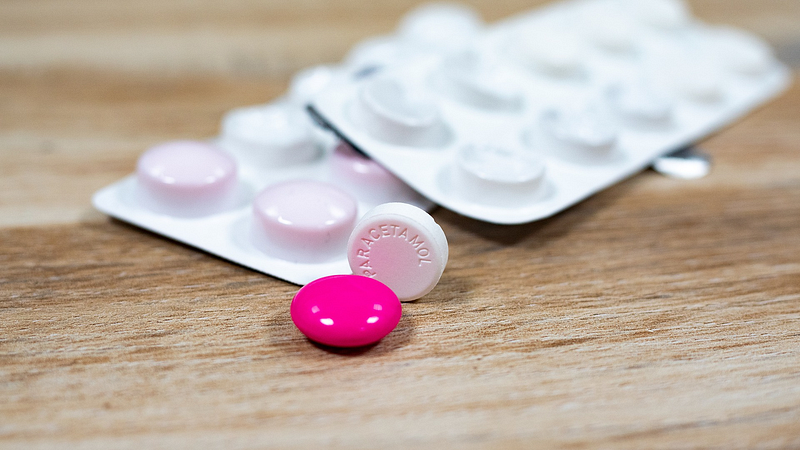
Don’t Fret About Ibuprofen Worsening Covid-19, Studies Find
How the confusion started and what clinical data really shows.
In March, many were concern about the potential danger of ibuprofen worsening Covid-19 symptoms. Ibuprofen is one of the most widely used nonsteroidal anti-inflammatory drug (NSAID) to lower fever and inflammation.
How it Started
The French Health Minister tweeted on March 14 that: “The taking of anti-inflammatories could be a factor in aggravating the infection. In case of fever, take paracetamol. If you are already taking anti-inflammatory drugs, ask your doctor’s advice.”
The WHO followed suit, announcing that: “In the meantime, we recommend using rather paracetamol, and do not use ibuprofen as self-medication — that’s important.” But a few days later, the WHO changed their statement due to insufficient evidence, as also agreed by the Public Health England, Italian Society of Pharmacology, National Institute for Health and Care Excellence, and the UK Commission on Human Medicines.
What is the rationale against ibuprofen use in the beginning? A June review in Drug Safety, titled “Does Ibuprofen Worsen COVID-19?” outlined three sources:
- The theory that ibuprofen could increase the expression of ACE2, the receptor SARS-CoV-2 uses to infect cells. But this is based on only one animal study and has never been reproduced in humans.
- Unconfirmed anecdotes that people with severe Covid-19 have been taking ibuprofen, as well as past cases of severe pneumonia. But these are biased as severe pneumonia cases don’t respond well to paracetamol. So, ibuprofen would be used instead. In other words, “a stronger anti-inflammatory drug tends to be administered for more severe symptoms,” a separate review by Cambridge noted. “And the presence of the drug in these cases could be misidentified as the culprit for the severity of the infection.”
- The argument for letting the fever do its job in controlling the infection. Ibuprofen lowering fever, thus, might allow the Covid-19 virus to run free. But this would apply to the fever-lowering effects of paracetamol too.
What Clinical Studies Show
In a 2020 systematic review of six clinical trials, ibuprofen affected neither death rate nor the severity of common respiratory viral infections. In fact, ibuprofen helped them better manage their cold symptoms.
An Israeli study published in June tracked patients who took ibuprofen or paracetamol one week before Covid-19 diagnosis until the final disease outcome. Among the 403 confirmed cases, 22% and 32% were on ibuprofen and paracetamol, respectively. Both groups also had similar baseline characteristics. And they found no differences in disease outcomes between the two groups, in terms of death rate or the need for breathing support.
“In this cohort of Covid-19 patients, ibuprofen use was not associated with worse clinical outcomes, compared to paracetamol or no antipyretic,” the study closed.
The June review above also cited a pre-print study that recruited 12,808 people across five Eastern Massachusetts hospitals in the US, of whom 2271 were tested positive for Covid-19. The study wanted to examine how common drug prescriptions would affect Covid-19 outcomes. Results adjusted for confounds or covariates are as follows:
- Among the 15 drugs, only ibuprofen (35% less likely) and naproxen (61% less likely) were associated with a lower risk of hospitalization.
- Among the 15 drugs, only ibuprofen was associated with a 58% lower odds of requiring ventilation. But this result barely reached significance for its lack of power because its confidence interval reaches one (CI: 0.139–1.04). If it reaches one, it means that there is no difference in the outcomes between two events.
So, if anything, the ibuprofen prescription might be protective against Covid-19. “At this point, there exist no scientific data to support an increased risk of SARS-CoV-2 infection or Covid-19 severity with ibuprofen,” the June review concluded.


