
Don’t cry and I won’t gouge out your eyes
Victims of China’s illicit organ trade
A child snatched from outside his home
In 2013 a six year old boy called Binbin was found screaming in a field. The boy had been playing outside his house in Linfen, a Southwestern city in China’s Shanxi Province. Binbin did not respond when his mother called him inside around 8pm. The child was discovered in a field later that night by his relatives.
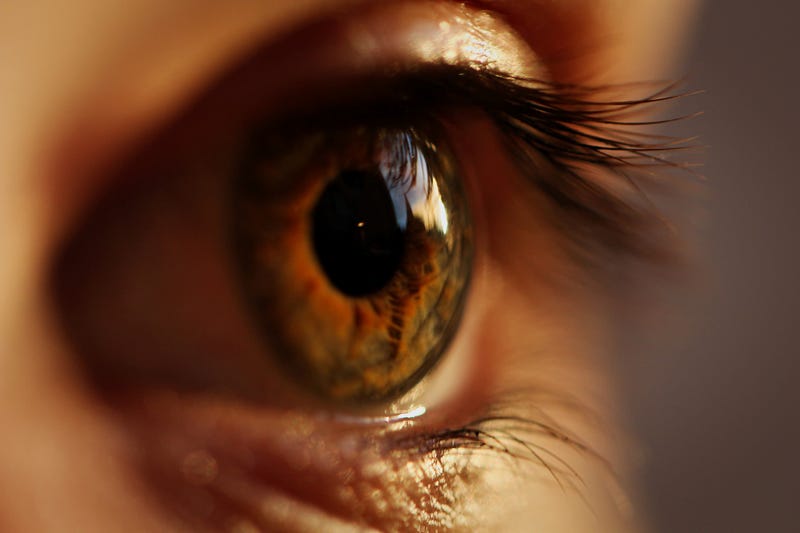
Initially Binbin’s father thought the boy had fallen and hurt his face, which was covered in blood. Then he noticed that his son’s eyelids had been turned inside out and his eyeballs were missing. The eyeballs were found nearby but the corneas had been removed, fuelling suspicion that he had been the victim of an organ trafficker. The suspect, thought to be female, had told Binbin she would not gouge his eyes out if he didn’t cry. Doctors suggested the boy had been drugged before his eyeballs were taken.
The younger the better
China has been the world leader in organ tourism for years. Patients with enough money can travel to China and order a body part. The requested organs are removed from prisoners, shot to order. They may be the lucky ones. There are reports of organs being removed whilst the victim is still alive.
Whilst many internal organs such as the heart, liver and kidneys must come from a patient with the same body and blood type, there is no similar restriction on corneas. Anybody can take an eyeball from anybody else.
The case of Binbin is particularly disturbing but not surprising. Younger victims are generally believed to have better , healthier organs, giving their body parts higher value. For an organ trafficker, the eyes of a child make a bigger payday than the eyes of an adult.
Kidnapped by authorities
Available reports suggest the majority of organs are still taken from adults. Stories of Falun Gong practitioners being kidnapped and medically screened are easy to find. A Fox News article from 2020 tells the harrowing story of Jiang Xiqing, who was kidnapped by the authorities in May 2008 and sent to a forced labour camp. Xiqing’s daughter Jiang Li visited her father along with three family members on 27th January 2009. The next afternoon Jiang Li received a phone call telling her the prisoner was dead. He had been in god mental and physical health when they had seen him on the previous day. When Jiang Xiqing’ family arrived at the labour camp to see his body, they were told they could see him for five minutes only, under supervision in the freezer room. Also, they could only see him from the neck up.
When Li’s sister touched Jiang Xiqing’s face it was warm. His teeth were biting his lip. The prisoner was still alive. Family members pulled him out of the freezer and prepared to perform CPR on him, but they were dragged out of the room whilst their father was pushed back into the freezer. The family were forced to quickly sign papers and pay cremation fees.
Han Yu’s father, another Falun Gong practitioner, was kidnapped and placed in a forced labour camp in 2004. Like Jiang Li, Han Yu learned of her father’s death in a phone call. When she was allowed to view the body, a month later, it was under the surveillance of dozens of authority personnel. Han’s father had obvious injuries to his face, visible even under heavy make up. There were stitches running from his throat all the way down to his stomach, which Han noticed when she unbuttoned his shirt. She was dragged out of the morgue by a police officer. At the funeral, once again under heavy surveillance, the family was not allowed to mourn. No autopsy was provided and the body was quickly cremated. Han suspects her father’s organs were removed for donation.
The organ factory
China’s official line has been that organs are taken from prisoners on death row, who willingly donate body parts to pay back their debt to society. Reports from survivors and the relatives of victims, as well as the sheer number and availability of organs belie a far less idealistic reality.
Binbin’s eyeballs may have been removed by a lone operator but there is also a far more organised infrastructure operating at the highest levels in China. Organ tourism is big business and the wealthy can have organs supplied with short notice. Over the last two decades there have been many reports of China’s marginalised Falun Gong and Uighur communities being used as organ farms. The victims are being placed in prisons and concentration camps, subjected to extensive medical screening, then unwillingly having their organs removed.
A twelve month assessment of all available evidence was carried out by the China Tribunal Panel, led by Sir Geoffrey Nice QC, who also led the prosecution of Slobodan Milosevic. The Panel concluded that forced organ harvesting has been practised on Chinese prisoners for a substantial period of time.
I’m going to China, they’re shooting my donor
According to Wendy Rogers, Professor in clinical ethics at Macquarie university Australia, the Chinese government started a campaign to destroy the Falun Gong movement in 1999 before realising their organs could be turned into valuable commodities. The Falun Gong and Uighur Muslims in China have been so dehumanised that surgeons there may think being killed to provide organs is the only useful thing they can do. Other doctors who provide aftercare for patients often operate under the belief that the patient must be cared for, regardless of what they have done.
In an interview with healtheuropa.com this year Professor Rogers referred to an article in the Australian media which featured a patient who said “I’m going to China, they’re shooting my donor.” The recipients are aware that people are being killed for their organs, but may be under the illusion that the donors have committed terrible crims and therefore deserve to die.
Whilst official Chinese numbers are much lower, ETAC (The International Coalition to End Transplant Abuse in China) estimates there are around 90,000 transplants a year in China and waiting times are as low as a couple of weeks. Isreal, Spain, Taiwan and Italy have already banned patients from travelling to China for transplants and UK MP’s have called for similar action.


